


Improving our health has never been more important, especially with chronic disease becoming the norm. With chronic conditions, be it metabolic or neurodegenerative, accounting for over 70% of global deaths, we must learn how to protect our health.
For Dr. Paul Savage, Founder and Chief Medical Officer of MDLifespan, understanding health, aging, and prevention has become the foundation of his work, and a growing part of his findings points towards an often-ignored area: environmental toxins.
Redefining Health and Medicine
While he’s always had an interest in health and medicine since he was five years old, Dr. Savage only learned to appreciate the intrinsics behind quality health and wellness once he turned 36. Before this, he worked with volunteer ambulance services, before going on to study biology, physics, and mathematics during his undergraduate years, and later completing his training at the Detroit Receiving Hospital system, where he would remain for many years, fully immersed in the demands of emergency medicine.
Yet, during this time, he went from weighing 150lbs to 270lbs by the time he left. Coupled with a wide range of medical issues – high blood pressure, high cholesterol, heart disease, pre-diabetes, anxiety, and chronic sleep problems – Savage found himself seeing doctors regularly and being prescribed a surplus of medications. However, it was during a doctor’s visit when his physician was about to prescribe him his seventh medication that Savage asked for an alternative. His doctor’s response?
‘You’re really unhealthy. Why don’t you go get healthy?’
As simple as that sounds, Savage was surprised to realize that, despite being a physician, he didn’t know how to get healthy,
“I had always been academically focused – a bookworm, not an athlete,” he shared, “For most of my life, I could eat whatever I wanted without consequence. But suddenly, nothing seemed to work. I could hardly eat, and I wasn’t losing weight.”
As a result, Savage was propelled to better understand health at a deeper level, and this realization opened him to a completely new way of thinking about medicine, which, 30 years later, has now shaped everything he does.
Chronic Inflammation Remains Enemy No. 1
For Dr. Savage, both from personal experience and global data, it’s become increasingly clear that we’re in the midst of a global health crisis,
“Most people, by the time they hit 40, are living with some sort of lifestyle disease, whether it’s diabetes, hypertension, or obesity,” says Savage, adding that if you analyze each condition, there is one common thread: chronic inflammation.
Yet, what continues to leave doctors and researchers perplexed is why that inflammation doesn’t resolve. Now, as both a biophysicist and a physician, Savage’s approach is to simplify complex systems into core principles, and with that, he identifies three primary processes that drive aging and disease: inflammation, oxidation, and glycation.
- Inflammation is the body’s natural response to injury or threat, generating heat and signaling the immune system to respond.
- Oxidation is a chemical ‘burning’ process within the body that causes cellular damage.
- Glycation refers to how glucose interacts with proteins and fats in the body, and when metabolized, sugar fuels both inflammation and oxidation. These processes are deeply interconnected.
In the past 50 years, Savage reveals, chronic inflammation has accelerated, and while research indicates that diet and lifestyle, a less spoken about reason is toxins.
“It’s becoming more and more obvious, at least to me, that it’s the toxins [in the diet and in the lifestyle] that are the pivotal point of what takes inflammation and makes it into a problem.”
Environmental Toxins Are A Longevity Threat
“It wasn’t me, but it was Stephen Hawking that said pollution and our stupidity to it is the only existential threat to mankind, and I think he was right.”
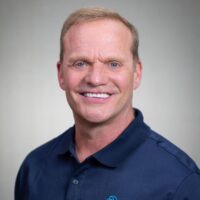
Dr. Paul Savage
While we may have developed a robust detoxification system to deal with naturally occurring toxins over the past millennium, the past 50 years have introduced the human race to advanced levels of synthetic chemicals, and unfortunately, these are not substances that the human body was designed to process and detoxify.
“Some people call these the forever chemicals, because once you have them, you have them forever. Things like PFAS, or things like plastics, the body doesn’t know how to get rid of these, and these bioaccumulate in the body, and things start breaking down.”
Breaking Down Toxins
So, which environmental toxins should we be worried about? Well, there are a few of them, including air quality and pollution,
“You see a lot of that in China… in Taiwan… and it makes its way over to major United States cities like Los Angeles and New York,” Savage says, adding that he believes that’s why you see a lot of the poor health in those areas.
However, it’s more than just the air we’re breathing, with Savage adding,
“It’s about the pesticides. It’s about the plastics. It’s about the mold.”
As not all toxins exert the same effect on humans, Savage notes that the worst ones definitely have to be the ones that fall in the category of plastics, pesticides, the PFAs, the forever chemicals, and the mold, adding that mold developed its toxins to kill us so we would stay away from it.
What’s more, Savage also reveals that development is to blame, as society is behaving in a manner that enables more toxins from the world to be created.
For instance, our ancestors would enjoy a diet rich in fresh grain, but now, said grain isn’t fresh; it’s stored for years, and becomes moldy before being sprayed with anti-fungal, milled up, and served out.
“There are a lot of problems in our food chain, and some of it has to do with the storage of grain. But it’s also the transportation and many other different things in the process as well.”
What Is Therapeutic Plasma Exchange?
Founded by Dr. Savage, MDLifespan has become a pioneering health organization, thanks to its work with Advanced Serial Therapeutic Plasma Exchange (TPE) – a medical procedure by which the blood is removed from the body, centrifuged, and separated into two parts.
“The liquid part that we call the plasma carries everything – nutrients, minerals, hormones, and medications, but it also carries toxins and inflammatory markers and cancer,” explains Savage, sharing that the other part is your cells, “Those are things like your red cells, your white cells, and your platelets.”
With Advanced Serial Therapeutic Plasma Exchange, Savage and his team take the plasma and throw it away before then recombining the patient’s cells with a replacement fluid and reinfusing it into their body. Savage details how, in one exchange, he and his team basically remove about two-thirds of a patient’s plasma, substitute it with this replacement fluid, and then, within about a couple of days to a couple of weeks, the body starts to regenerate new plasma again.
“The new plasma that the patient generates is free of toxins, infections and cancer. It’s fresh, new, non-inflamed, non-oxidized plasma. That way, it dilutes down all the bad parts that are in your body.”
Savage adds that over a period of about a month, the toxins that are in the patient’s tissue return to the plasma because everything in the body tries to equilibrate, and then the patient can do it again. He adds that you just keep repeating this process, with their research finding that it takes about a month in between each plasma exchange to get the maximum amount of toxins out every time one does it.
TPE vs PRP
While you may think of platelet-rich plasma (PRP), also known as a vampire facial, when you hear the word ‘plasma’, it’s important to distinguish it from TPE.
With PRP, the plasma is concentrated before being reintroduced into the body to stimulate inflammation and collagen production, whereas TPE removes plasma entirely.
“This is very different,” Dr. Savage explains. “We’re taking the plasma out, discarding it, and allowing the body to replace it with new, fresh plasma.”
Does TPE Actually Work?
According to Savage, yes, and he’s the perfect reference as he served as his own first case study.
“I was patient number one,” he reveals, “Out of 109 toxins tested, I had 18 in the top 25%. After treatment, that dropped significantly, and today, none of them are in that range.”
He adds that he’s observed similar results in certain patient populations, sharing that he’s treated patients like this for 30 years without getting them significantly better, but now he’s seeing energy come back and headaches resolve.
Yet, he’s also careful to add that these findings are observational and have yet to be published or fully verified.
Is TPE Safe?
Now, despite its potential, Savage emphasizes the serious complexities associated with TPE and how it’s not a casual treatment but rather a complex medical procedure. After all, when plasma is removed, it doesn’t just take out the toxins but also essential components like nutrients, hormones, antibodies, and clotting factors.
“One of the reasons we space the procedures out a month apart is to give the body plenty of time to regenerate all those vital components that the body needs to function,” shares Savage.
Now, due to the severity of the procedure, some complications can occur, including bleeding, infections, low blood pressure or blood sugar, and allergic reactions to citrate.
As a result, it’s important that TPE is only performed by experienced medical teams in controlled settings.
Who Should Get TPE?
According to Dr. Savage, TPE may be great for those living with chronic conditions like chronic fatigue, fibromyalgia, mold toxicity, mercury toxicity, Lyme’s disease, mast cell activation syndrome, or chronic inflammatory response syndrome.
With these treatments, Savage adds that their protocol isn’t just limited to plasma changes, as they also add other things to it to magnify the effects, like teaching people how not to put in the toxins.
“We also use both IV and oral nutrients to replenish the things they’ve lost between treatments.”
Additionally, they also incorporate education on reducing environmental toxin exposure, ongoing monitoring, and individualized care as part of their treatment protocols.
Can Everyone Get TPE?
Not everyone is an appropriate candidate for TPE, which is why MDLifespan is very careful about the patients they select. Individuals who may not be suitable include:
- Those on medications that cannot be removed during treatment (e.g., seizure medications, blood thinners)
- Patients with active infections
The Economics of Longevity
Interest in longevity continues to grow, but so do the costs for those hoping to improve their healthspan. So, what does this mean for those who aren’t as privileged as the Bryan Johnsons of the world?
“The major components of longevity are nutrition, exercise, stress management, sleep, and detoxification,” Dr. Savage says, believing that many of these things are available to the masses.
Adding that many foundational health interventions require more awareness than wealth, Savage further emphasizes the importance of education and awareness in the public health realm and how growing awareness can represent the importance of improving global health.
As for those looking to use TPE?
“If a protocol could be delivered at a cost of approximately $40,000 and delay the progression of Alzheimer’s by even a decade, that represents a clear economic benefit for both insurers and public health systems,” says Savage, adding that TPE should not only make sense clinically, but also mathematically and economically.
“From that perspective, my goal is to contribute to the research needed to refine and optimize plasma exchange protocols – both to improve outcomes and to reduce overall cost.”
Savage adds that if they can lower the cost of treatment while increasing its effectiveness, it will then become far more feasible for insurance companies to support it.
A Guide to Avoiding Toxins
The world is filled with toxins, and unfortunately, you’re never going to get rid of them. For Savage, it’s about helping people understand how they can minimize their exposure, adding, “You can get the majority of them down. You don’t have to get them all down, but if you get enough of the bad ones down, it seems to give relief to the system, and you can progress forward with good health.”
Referencing his book Avoiding Toxins, now in its second edition and co-authored with five other toxicology specialists, Savage reminds us of the first rule of detox: don’t put them in.
As the book provides a step-by-step guide on how to avoid toxins, Savage reminds us that controlling our environment at home and at work can be enough to stay healthy.

Photo by Sidekix Media on Unsplash
Low toxin practices
According to Dr. Savage, patients who have undergone TPE should later adopt the following low-toxin practices to continue to enjoy improvements over time:
- Filtering air and water
- Choosing and properly cleaning whole foods
- Reducing chemical use in the kitchen
- Using clean skincare and beauty products
- Preventing mold exposure in the home
Additionally, Savage believes that toxin testing may become the next new biomarker, with it featuring alongside your standard labs that include blood counts, cholesterol levels, and inflammation.
Detoxification methods
Regarding more traditional detox methods, Savage shares that they still work for a vast majority of patients and they include;
- Exercise and sweating
- Infrared sauna therapy
- Binders such as activated charcoal or clay, which can capture toxins in the gastrointestinal tract
- Chelation therapy, which helps remove heavy metals
However, Savage adds that he has noted that a certain group of people doesn’t always respond well to these types of treatments,
“These are people who have a higher susceptibility, and their detox pathways aren’t functioning optimally, and they can become significantly ill.”
These patients often include those with severe mold toxicity, chronic infections, long-standing inflammatory conditions, and chemical sensitivities.
Dr. Savage’s Guide to Longevity
Now, despite his work with advanced plasma therapy, Dr. Savage’s personal longevity habits are a little simpler, but effective nonetheless:
- Sleep: In bed by 9 p.m., waking naturally around 5 a.m.
- Exercise: Daily gym sessions from 7 am. Additional physical activity includes walking his dog
- Nutrition: Whole, fresh foods
- Supplements: 14 supplements in total, but the top 5 include a good multivitamin, vitamin D, CoQ10, magnesium, and fish oil.
- Hormonal support: Hormonal injections once a week
- Mentorship: “If I could go back in time, it would be: find a mentor. Find somebody who’s done what you want to do and get them close.”
- Purpose: “One of the greatest secrets of longevity is having something that you love to do every day. For me, it’s this business and the patients I serve.”
With the conversation around health and longevity continuously evolving, Dr. Paul Savage’s work sits at the forefront of this shift.
Watch the interview
View this post on Instagram
MAIN IMAGE CREDIT:Photo by Daria Nepriakhina on Unsplash
Read more from Dr Paul Savage here: New Biomarker of Aging: The Overlooked Role Environmental Toxins Play

![women [longevity live]](https://longevitylive.com/wp-content/uploads/2020/01/photo-of-women-walking-down-the-street-1116984-100x100.jpg)