

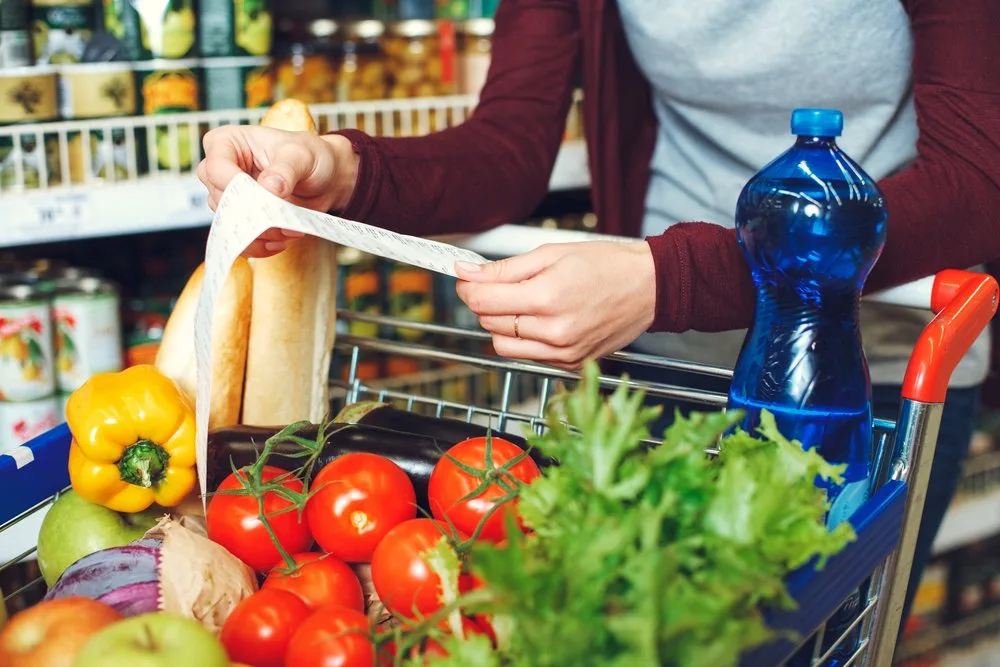
How many people actually know where their food comes from? What farming practices are used and whether the food is clear of harmful practices. Martina Polley reveals why we must pay more attention to the quality of the food we eat.
What’s In Your Food – Longevity Or Carcinogens?
The first thing we all have to agree on is that the current system isn’t feeding the world. We’re sick, infertile, and we’re overeating,” says Farmer Angus McIntosh, who has a regenerative farm Spier, in Stellenbosch. “They’re all forms of malnutrition. Our food is devoid of nutrients… and it’s filled with poisons.
”Remember Monsanto? Monsanto was a major player in the rise of genetically modified (GMO) crops, particularly through the development of Roundup Ready seeds, which were engineered to withstand its herbicide Roundup.
Human carcinogens
Roundup has become the go-to weedkiller for gardeners and industrial farmers. But things changed when a growing body of research started linking glyphosate, its main ingredient, to serious health risks, such as cancer. As evidence mounted, some international health bodies listed glyphosate as a possible human carcinogen.
“Let’s be clear: glyphosate is not a ‘probable’ carcinogen; it’s a proven one,” says Gary Jackson, founder and owner of Jackson’s Real Food Market in Johannesburg. “And it makes up over 80% of all pesticides sprayed in South Africa. It’s in our maize, our wheat, and our sugarcane.”
As of March 2025, Bayer (which acquired Monsanto in 2018) has reportedly paid out $11 billion in settlement agreements in nearly 100,000 Roundup lawsuits. In 2025, a US court ordered the company to pay $2.1 billion to a plaintiff who developed non-Hodgkin lymphoma after using Roundup. According to the Lawsuit Information Centre, approximately 67,000 Roundup lawsuits remain.
Why Glyphosate is a problem in South Africa
Glyphosate is the most widely used herbicide in South Africa, says Anna Shevel, network coordinator at UnPoison.org. Shevel says it’s important for the public to know that risk assessments aren’t conducted on pesticide formulations. They are only done on the active ingredient in isolation, and many other ingredients are added to the final product that can have severe synergistic health impacts.
“Studies have shown that certain glyphosate formulations can be up to 2,000 times more toxic to human cells than glyphosate alone. This raises important concerns that global regulatory review processes, including South Africa’s, neither assess the risks, nor protect us from the effects of the full formulations that people are exposed to,” she reports.
“Out of hundreds of registered glyphosate products, there are only two in South Africa that don’t contain these toxic co-formulants: Kilomax and Seismic. So an ideal world would be one without glyphosate entirely, but the next best thing would be to use the least toxic glyphosate option,” she says.
Your health risk
Glyphosate is so prolific that it’s even been picked up in our urine, and now in tampons. A 2024 report found high levels of glyphosate in a brand available at UK retailers, about 40 times higher than the legal limit for drinking water.
“Creating a water-soluble toxin that would go into our soils and water systems is a profoundly bad idea on a planet that is 70% water,” notes Dr Zach Bush, a physician specializing in internal medicine, endocrinology and hospice care.
An alarming number of related illnesses
UnPoison.org has put together a list of highly hazardous pesticides (HHPs) that are actively being used on South African farms. HHPs are a class of pesticides that are either acutely toxic (they can kill you or cause irreversible harm after one exposure) or chronically toxic (incremental exposure over time, which is common, can cause severe, irreversible harm and illness). Illnesses include various cancers, neurological disorders, reproductive disorders, and developmental disorders.
“Our latest 2025 update identified 195 legally registered pesticide active ingredients in use, with 116 of these being no longer authorized in the European Union due to serious health and environmental risks, but still allowed in South Africa,” Shevel says.
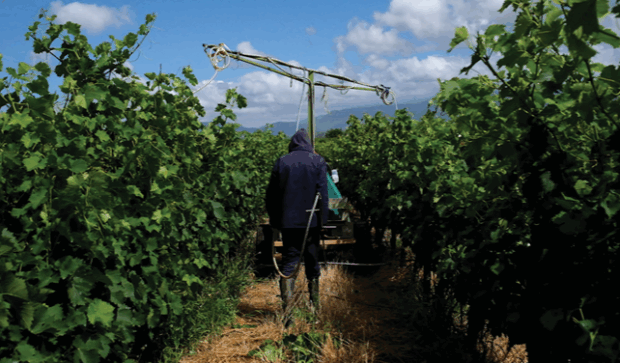
In Europe, when a pesticide is banned, it’s not a decision taken lightly. It follows a rigorous process involving multiple expert bodies and thorough scientific review. However, Europe continues to manufacture highly hazardous chemicals and export them to developing countries, such as South Africa, where they’re used in agriculture.
Double standards?
Ironically, food grown with these chemicals is often imported back into Europe and ends up on supermarket shelves.
Terbufos, which is alleged to have caused the death of six Soweto children in 2024, is widely used in our agricultural sector, while banned in Europe.
“This is what we call double standards,” says Kara Mackay of Women on Farms Project (WFP), a Stellenbosch-based NGO that supports women farmworkers and dwellers.
Subsequently, in June 2025, the Cabinet approved the ban on Terbufos in South Africa.
Workers exposed to chemicals
Mackay says many women working in vineyards are exposed to pesticides without any proper protection. They’re rarely given PPE, so they use their scarves to cover their faces when pesticides are sprayed. In some cases, they’re sent back into the vineyards and orchards soon after spraying, despite an advocated re-entry time of 24 hours for chemicals such as Dormex. Workers say the leaves are still wet when they return to work, making their hands go numb or wrinkly.
In many cases, farmworkers aren’t provided with clean water to drink or wash their hands, so they eat their lunch with pesticide-covered fingers. There are often no toilets in the fields, so women have to squat among the vines, further increasing their exposure.
Without proper facilities to wash and change clothes, farmworkers also risk carrying these chemicals home to their families, Mackay adds.
Why spraying should matter to all of us!
Shevel says that although what happens on farms differs, various crops can be sprayed up to 30 times per season.
“Soft fruit and berries are especially so, because consumers prefer perfect-looking fruit with no blemishes. Many commonly consumed fruits in South Africa are treated repeatedly with a mix of fungicides, insecticides and growth regulators during a single growing season,” she adds.
“The World Health Organization (WHO) estimates that about 25% of the global disease burden, and up to 70% of autoimmune diseases, are due to environmental contamination and pollution, which includes pesticides and chemicals. Remember that pesticides can drift via the air or be transported via our waterways and get into water bodies – even the ocean.
“It’s not just agriculture where pesticides may impact us,” says Shevel. “A study has just been published on how living on or near a golf course can increase the risk of Parkinson’s. Globally, it’s estimated that 385 million people suffer unintentional acute pesticide poisonings each year, with about 11,000 deaths, according to the Physicians Association for Nutrition International Foundation and the UN.”
And there’s no way for the public to truly know what the most common herbicides/pesticides in use in South Africa’s agricultural sector are, Shevel adds.
What about the people working with food?
“Without access to trade records or spray schedules, only industry or certain government departments would know.” Currently, the list of registered pesticides in use isn’t held by the Department of Agriculture, but by CropLife, the pesticide industry lobby that requires a vetted membership to access it.
According to Mackay, even the sprayers sometimes don’t know.
“They’ll come to work, and they [the farmers] say, ‘Today we’re spraying this product. Some sprayers report that only the farmer can mix the chemicals, so only they know what chemicals are being sprayed. Or sometimes the labels get ripped off.”
She believes we need transparency around how pesticides are traded and used in South Africa, including a public database that lists which chemicals are being used, what they contain, and the health risks they pose. Despite a commitment by Minister John Steenhuisen, in a letter to the South African People’s Tribunal on Agritoxins, that by 1 June 2025, there would be a public registry, this has yet to materialize.
“In 2024, when we asked women to find out what they’re spraying, the one name that kept coming up was Dormex, a growth regulator that’s used on wine farms as well as table grape farms,” reports Mackay.
Wine farms and the wine you drink are not exempt!
The active ingredient in Dormex is cyanamide. Cyanamide is harmful when swallowed or absorbed through the skin, causing severe skin damage, irritation, and allergic reactions. It can also cause serious eye damage, and long-term exposure may affect the thyroid, increase cancer risk, and harm reproduction. In addition, it poses a threat to aquatic life. Dormex has been banned in the EU since 2012.
Mekie Piet’s husband, Solomon, worked for eight years as a sprayer on a farm in Rawsonville. He applied pesticides with a pesticide pack on his back while walking behind a tractor that was also spraying. He performed his task without any protective gear. Over time, he became seriously ill and subsequently passed away.
“The doctor told me that he didn’t die of cancer; it’s because of the pesticides that he breathed in for years,” says Mekie. “Those pesticides are aggressive. It wasn’t only him who died on this farm because of pesticides,” she says.
“When spraying season starts, the helicopters spray the pesticides over the grapes, and if those things get on your clothes, they make black speckles,” shares Vuyiswa Ndleleni, a former seasonal farmworker who worked for over 20 years on export-wine grape farms in the Hex River Valley. “I swallow it in, and the farmer will say, ‘no, there’s nothing wrong, it’s just water’.”
She was diagnosed with asthma in 2005, and every year it’s gotten worse, requiring her to be hooked up to an oxygen machine.
The Regulatory Food Gap
Currently, in South Africa, pesticide companies register their products with the Department of Agriculture. Once registered, these pesticides are cleared for use on farms. Although the Department of Agriculture oversees registration, it doesn’t monitor how the pesticides are used in the field.
All these responsibilities fall to the Department of Employment and Labour (DEL) under the Hazardous Chemical Agents Act of 2021. The reason for this division is unclear, but the result is a fragmented system where no single department ensures full compliance.
According to the law, farmworkers are entitled to training, access to protective gear, and regular health screenings. But in reality, enforcement is weak. “Because the DEL’s labour inspectorate fails to enforce legislation, there are varying levels of compliance and to a large extent it’s left up to the discretion of the farmers to comply, who, in the absence of monitoring and enforcement, can act with complete impunity,” explains Mackay.
When non-compliance is reported to the Department of Labour, they lack the capacity and support to act effectively. If it’s reported to the Department of Agriculture, they refer the issue to the Department of Labour.
Meanwhile, pesticide companies are liable only for ensuring correct labelling, leaving a major loophole in accountability.
What’s behind your food?
Conventional agriculture, also known as industrial farming, is the dominant large-scale farming model used around the world. It typically involves growing single crops (monocultures), such as maize, wheat, or canola, over vast areas of land, often using genetically modified seeds.
This method relies heavily on synthetic chemical inputs, such as fertilizers, pesticides, and herbicides, which the seed is modified to withstand, to boost yields, and control pests. Large machinery, such as tractors and combine harvesters, is used during planting and harvesting, making the process highly mechanized and, as a result, employing fewer people.
While conventional farming is designed to produce high volumes of food efficiently, it often overlooks long-term environmental impacts, such as soil degradation, water pollution, loss of biodiversity, and the decline of pollinators.
One of the problems with conventional agriculture is how much pristine, indigenous land is cleared for crop farming. Think of the rainforests of Indonesia that are being cut down for palm-oil plantations, or the 1.98 million hectares of the Amazon that were cleared in 2022. Currently in Papua, a megaproject has started clearing 1 million hectares of land for rice fields, one of the world’s largest deforestation projects, which ignores Jakarta’s climate commitments and threatens endangered species.
Organic farming
Organic farming doesn’t use synthetic chemicals such as pesticides, herbicides, and artificial fertilizers, instead relying on natural methods to grow food. Farmers have to follow strict standards to be certified organic, making it a safer choice for both people and the planet.
Getting certified organic in South Africa is challenging
South Africa doesn’t have a dedicated national inspection and certification program for organic products, relying instead on international standards and accreditation from the EU and US, which is costly for farmers and a barrier to entry for small-scale producers.
“It’s ridiculous that South Africa still hasn’t managed to establish its own organic standards,” says McIntosh (Farmer Angus), whose first organic certification was through the EU in 2008.
He also thinks it’s unfair that the burden of labeling is on the organic community, and that conventional farmers who use GMO seeds and whatever sprays and chemical inputs they want don’t have to declare anything to the consumer.
This means that shoppers often don’t know if a product is truly organic or not, which can make it more difficult for people to trust what they see on food labels or hear via word of mouth.
Buy PGS – Certified products
The green-and-white Participatory Guarantee Systems (PGS) certification label may be a solution in the meantime. It allows organic farmers to form groups and assess one another’s practices, reducing costs and bureaucratic hurdles for smaller producers.
“By buying PGS-certified products, you’re supporting local farmers who are dedicated to their communities and the environment,” says Matthew Purkis, head of joint operations at the South African Organic Sector Organization (SAOSO) and Participatory Guarantee System South Africa (PGS SA).
However, Bush raises concerns about the limitations of organic certification, pointing out that you don’t need to build the soil or create nutrient-dense food, just focus on what not to do.
“Organic is a certification that requires no care of your soil, nor does it require any nutrient input into your crops to be an organic farm; you just have to not spray a few things.”
Why the quality of the soil counts
He says soil tests across North America show that some organic farms have no better soil quality, and sometimes the quality is worse than conventional chemical farms. Bush believes the health of our gut and the health of the soil are deeply interconnected. Our gut microbiome helps us to digest food, absorb nutrients, and fight disease, and the soil microbiome does the same for plants. But modern farming practices, such as herbicide use, tilling, and lack of crop diversity, are destroying that vital microbial life in the soil.
As a result, plants grow in biologically dead soil, making them less nutritious and more vulnerable to disease. When we eat this weakened food, we, too, become more prone to illness, as our body misses out on the compounds and nutrients once delivered by a thriving soil ecosystem.
The aha moment for Bush came when he uncovered soil molecules in a research paper that looked like the chemotherapy he used to make.
“We’ve been looking to plants for the medicine that would heal us, but what if the medicine is in the soil, and we’ve destroyed that?” These carbon molecules are made by bacteria and fungi in the soil – the very bacteria and fungi that are killed by Roundup,” he explains.
Regenerative Farming
Regenerative farming is an agricultural approach that works with nature, rather than against it. It seeks to restore, rather than deplete, the land. At its core, regenerative farming focuses on rebuilding soil health by using practices that draw carbon out of the atmosphere and return it to the earth, enhancing the soil’s organic matter and microbial life.
“Every aspect of our approach is mutually reinforcing – healthy soil means healthy plants, means healthy animals, means healthy people, means healthy society, means a healthy Earth,” says Farmer Angus McIntosh.
 In regenerative agriculture, the farm is seen as one big living system, including the well-being of the people who work the farm, and the wild and rewilded areas that aren’t used for farming.
Rest and recover
On McIntosh’s farm, he has egg-laying hens, grapevines, cattle, and pigs. He practices high-density, rotational grazing. His cattle are moved two to three times per day, the chickens are moved (in their Eggmobiles) daily, and the pigs once a week. It’ll be at least six weeks before the animals return to the same paddock, where the plant life will be thriving.
By allowing the land to rest and recover between grazing cycles, animal waste becomes a natural fertilizer, restoring the soil and boosting pasture growth.
“The goal of regenerative agriculture is to produce nutrient-dense food, heal the earth, and create employment opportunities,” he says.
“If you don’t have animals in your farming system, you can’t regenerate,” McIntosh explains. “Also, animals will graze areas you can’t do anything else in.”
Regenerative agriculture
Danie Slabbert, a farmer outside Reitz in the Free State, has gone from 185 cattle to 700 cattle by using regenerative-farming practices.
“There are grass species now being found on his farm that they thought had gone extinct. The water-holding capacity of his soil has gone up by a ridiculous percentage because the carbon has increased in his soil. There’s a plethora of ecological measures that they’re now measuring on Danie’s farm, and they’re all just showing this unbelievable abundance. And that’s just one regenerative farmer.”
McIntosh says regenerative agriculture is perfectly capable of feeding everybody. A former employee at Goldman Sachs reports that he and a friend built a spreadsheet and calculated that, if South Africa switched to regenerative agriculture, it could become a net exporter of grass-fed, grass-finished beef.
Biodynamic Farming
Biodynamic farming is rooted in the work of philosopher and scientist Dr Rudolf Steiner, who founded Waldorf education, and whose 1924 lectures to farmers opened a new way to integrate scientific understanding with a holistic approach to agriculture that observes planetary cycles, to enhance the vitality and health of the farm. As McIntosh puts it: “It’s the energetics of farming.”
Biodynamic farmers pay close attention to the cycles of the sun, moon, and planets, using a cosmic calendar to guide when they plant, harvest, and care for their crops. It’s not just about timing; it’s about tuning into the subtle environmental forces that influence how plants grow and thrive.
According to the Biodynamic Agricultural Association of Southern Africa (BDAASA), South Africa is still working towards getting more large-scale biodynamic food production, but does have some large farms that produce certified biodynamic (Demeter) wines and Demeter rooibos. Reyneke Wines in Stellenbosch is the only producer of Demeter-certified biodynamic wine in SA, while the Wupperthal Original Rooibos Cooperative is the sole producer of Demeter-certified rooibos in the world.
Is it certified?
In order to be certified biodynamic, a farm must first be certified organic with an EU-recognized certification authority. “This is extremely expensive and really only possible financially only for farms that are exporting product to Europe,” says the BDAASA. Demeter certification is also quite difficult to achieve because organic/biodynamic farm inputs are not readily available. Demeter standards are the strictest in the world, requiring 100% organic farming as a base. This means that all farm inputs (animal fodder/seeds/etc) must be Demeter (or at least certified organic).
“Alternative farming methods are not yet supported by the Department of Agriculture, the banks, or insurance companies, so the problem is systemic,” explains Shevel from UnPoison.org. “However, there are amazing examples of farmers who are taking it upon themselves to transition – although without support, guidance, or a financial safety net, many farms try and fail. If there were training, extension services, and the support of the financial system, it would be a very different story.”
Misleading marketing
You may think you’re making a healthy choice when you grab a health bar that boasts added nutrients, but many of these products hide a long list of additives or high sugar content.
“The food-and-beverage industry has taken over the food system,” says Zukiswa Zimela, communications manager at HEALA, a civil-society organisation advocating for equitable access to affordable, nutritious food in South Africa. “The food-and-beverage industry influences what foods South Africans consume through the quality of food and beverages made available, affordable, and desirable to consumers,” she says.
Almost 90% of the revenue of the top 20 global food-and-beverage companies comes from ultra-processed foods (UPFs), high in sugar, saturated fat, and salt. “With high profit margins, the food-and-beverage industry can invest a lot of resources into marketing these unhealthy products, often directed at children,” she adds.
What happens when we do nothing?
According to the Food Packaging Forum, UPFs are characterized by their convenience, long shelf life, and sensory appeal, often engineered for taste, making it hard to stop eating them. Examples include soft drinks, packaged snacks, instant noodles, mass-produced breads, ready-to-eat meals, and many breakfast cereals.
“Without intervention, obesity in South Africa is projected to affect 30 million adults and 10 million children by 2035,” says public-health medicine specialist Prof Susan Goldstein.
“In 2019, there were 55,238 deaths in South Africa from non-communicable diseases attributable to obesity, and, with an annual increase of 2.3% in obesity, deaths are going to increase.”
According to Statistics South Africa’s latest figures from 2017, diabetes, hypertension, and heart disease are among the top 10 leading causes of natural death in the country.
“Diabetes, the second killer in South Africa, and for diagnosed patients alone, costs South Africa’s health system about R2.7 billion,” Zimela points out.
Auto Immune Disease risk
The Global Autoimmune Institute says the Western diet has been linked to the development of autoimmune diseases.
“According to one study, commonly used industrial food additives, such as glucose, salt, emulsifiers, organic solvents, gluten, and microbial transglutaminase, all increase intestinal permeability and the subsequent activation of the autoimmune cascade.”
“We’re teetering on the edge of our own biology’s capacity to live here on this blue planet,” says Bush. “We’re all one degree of separation from cancer at this point.”
That’s based on the American Cancer Society’s statistic that, in the US, one in two men and one in three women will be diagnosed with cancer in their lifetime. Bush adds that other indicators of a problem in “our current environment of toxicity” are reproductive. “The species is experiencing low sperm levels and other forms of infertility.”
Read the labels!
There are so many undisclosed additives in the food we eat and the wine we drink. And many ingredients aren’t listed on food labels because they’re classified as processing aids rather than additives, such as microbial transglutaminase, which has been linked to enabling celiac disease (an autoimmune disease where the ingestion of gluten leads to damage in the small intestine).
And, according to Dr. Alan Gruning, an expert on biotoxin illnesses, you need to avoid products that contain citric acid.
In South Africa, there are currently no legal limits on how much sugar or how many preservatives can be added to processed foods. While the National Department of Health regulates food labeling under the Foodstuffs, Cosmetics and Disinfectants Act of 1972, the law focuses primarily on accurate labeling, rather than on limiting harmful ingredients.
This means manufacturers aren’t held accountable for the health impacts of their products, as long as the label discloses what’s inside. As a result, the burden falls entirely on consumers to scrutinize labels, navigate misleading claims, and decide where to draw the line in their own diets.
“The current nutrition labels at the back of packages are difficult for ordinary people,” says Zimela. And the small font size makes them hard to read.
Eating food and the danger of nitrates and nitrites
Synthetic nitrates and nitrites are chemical compounds often used to preserve processed meats such as bacon, ham, and salami, to extend shelf life, enhance color, and prevent bacterial growth, particularly botulism, a potentially deadly food borne illness. However, research has linked these artificial additives to an increased risk of colon cancer, especially when consumed frequently over time.
“People have managed to preserve meat for centuries,” explains McIntosh, through drying, smoking, and salting. “Artificial nitrites and nitrates only came into existence in the mid-1920s. It’s a $30 billion industry.”
Despite being a standard in the global food industry, health-conscious producers are moving away from these additives. The WHO has classified processed meats, including ham, bacon, salami, and frankfurters, as a Group 1 carcinogen, which means there’s strong evidence that processed meats cause cancer.
The sugar tax
South Africa was the first country in Africa to tackle obesity through taxation, introducing the Health Promotion Levy (HPL) in 2018. This initiative targets sugar-sweetened beverages, requiring manufacturers to pay approximately two cents for every gram of sugar per liter (the first four grams are free). Evidence from several countries shows that these taxes can encourage healthier eating habits, reduce healthcare costs associated with non-communicable diseases (NCDs), and boost government revenue.
Chicken or the egg?
Egg labeling is a con, says McIntosh.
“The only reason they call it free range is that it’s not caged. Caged hens are stacked four to eight layers high; the floor slopes a little bit so their manure falls out, but not on the chicken below. For free-range eggs, they’re in a warehouse, and there are small openings, one of those for every 700 chickens.”
The small openings lead to an outdoor space of about 1m2. It can just be a barren, cement enclosure – but it’s outdoors.
“Now, you tell me one chicken is going to fight 699 other birds to get outside? The food is inside, the water is inside, the shelter is inside. Why would they go out? And that’s called free range.”
In 2011, the Agricultural Product Standards Act, the South African law that dictates the labeling of agricultural products, was due for revision.
Don’t be an egg head
“A whole lot of people were pushing for the egg industry to change its labeling to go caged, barn-raised, outdoor, or free-raised. And the egg industry just killed it,” states McIntosh. “If you walk into a shop and it says caged, are you going to buy it? Of course you’re not.”
Eggs are a great source of protein because they contain all nine essential amino acids your body needs but can’t make on its own. They help with growth, repair, and immune support. When McIntosh did an amino-acid profile of free-range and caged eggs, the results were the same.
“You’re paying almost double for no better nutrients and not necessarily even better animal husbandry,” he suggests. “And let me tell you a dirty secret within the egg industry. Free-range birds are much sicker than the caged birds, because they’re standing in their feces, all day, all night. Yes, the other birds are in a cage, but their manure is being taken away. It’s under much less disease pressure,” he says.
…And wine
On wine, the label lists no ingredients, except sulphites, which, among other things, prevent spoilage from oxidation.
 “Drinking most wines is the equivalent of eating feedlot beef. It’s produced by the same reductionist mindset,” McIntosh says.
“Most grapes from conventional viticulture are mutilated in the vineyard because, when they get to the cellar, they can’t become wine. That’s when the winemaker needs to spray acids to strip whatever yeast might be there, add a yeast, add an enzyme for the yeast, add food for the yeast, add this acid, subtract this… and people say they get a wine headache from sulphur. But it’s more likely from the cocktail of additives and chemicals used both in the vineyard and in the cellar.”
Menopause and new food sensitivities
Why do many women, during menopause, develop sensitivities to foods they’ve previously tolerated, leading to symptoms such as bloating, indigestion, constipation, nausea, itchy skin, and headaches? Menopause expert Dr Anna Garrett explains that fluctuating hormone levels play a significant role.
“Estrogen, for example, has anti-inflammatory properties that may offer some protection against certain reactions. When estrogen levels decline during menopause, the body’s response to allergens and irritants may become heightened, leading to new sensitivities to foods that were previously not a problem.” Common culprits, she says, include wheat, dairy, eggs, corn, soy, and artificial sweeteners.
Annewikke Bouma, an Ayurveda expert and nutritionist, believes aging and our weakening agni (metabolism) also play a role.
“We have to see our digestive fire (metabolism) as an oven, and if that oven doesn’t burn and digest the food properly anymore, due to wrong eating habits, not drinking enough water or too much, for example, and aging, we develop food intolerances or sensitivities. When we’re young, Pitta (the fire element) dominates, until about our mid-40s. From around the age of 45, Vata (the air element) begins to rise.”
Vata
“A Vata increase is the cause of aches and pains in bones and joints, dry skin, hair, and eyes, and also for a lower digestive fire. “By looking into what someone eats and their health issues, I often see a clear correlation. The good news is that we can ‘correct’ what is going on by (sometimes very simple) adjustments in what, when, and how we eat.”
Bouma also points to processed and chemically treated foods as a key issue – that our bodies don’t recognize the foods and chemicals we’re eating today, and that it doesn’t know what to do with them.
“Many of the foods available to us today are highly processed and chemically treated. This affects our digestive system and creates an imbalance in the body over time. Unfortunately, we’ve disconnected ourselves from real, wholesome food and food that grows in healthy soil without using chemicals.”
“Look at meat replacers,” says Bouma, who’s vegetarian. “They’re a way to substitute meat, but they’re often highly processed and packed with artificial flavorings that aren’t healthy at all… This highly processed food is causing the fire element to go out of balance, and that causes inflammation in the body.”
She believes that if we take good care of our digestive fire and the Vata element as we age, they’ll take good care of us.
Does washing your fruit and vegetables help?
“Washing fruit may reduce some surface residues (especially ozone water), but doesn’t remove pesticides that are absorbed into the plant and distributed throughout the fruit or veg. These can break down into metabolites that may combine to create toxic cocktails,” Shevel says.
Systemic pesticides don’t just sit on the surface of a plant; they’re absorbed by it. Unpoison.org shares that in South Africa, pesticides are also applied to certain seeds before they’re planted. These include, conventional maize, wheat, soybeans, sunflowers, canola, and some vegetables, including peas and carrots, to protect the seedling during early growth stages. Coatings can have unintended impacts, including pollinator toxicity, soil microbiome disruption, and residue buildup in food and the environment.
Systemic pesticides can also be sprayed on the soil or directly onto the plant. Once inside, the chemicals travel through the plant’s tissues, from roots to leaves, which means they can target pests that feed from within.
Unlike regular contact sprays, which work only where they’re applied, systemic pesticides work from the inside out.
Know your clean 15 and dirty dozen
The Clean 15 and Dirty Dozen are annual lists published by the Environmental Working Group, ranking fruits and vegetables based on their levels of pesticide residue (based on US data). The Clean 15 highlights the produce with the lowest pesticide levels, while the Dirty Dozen flags the most contaminated. In 2024, avocados, sweetcorn, and pineapples topped the Clean 15, while strawberries, spinach, and kale were found to have the highest pesticide levels.
Other Alternatives
“Replacing the use of chemicals with biologicals in agriculture has been the fight of my life,” says Brazilian microbiologist Mariangela Hungria, who’s the overall winner of the 2025 World Food Prize (regarded as the agricultural equivalent of the Nobel Prize). Her biological seed and soil treatments enable wheat, corn, and other major crops, including soybeans, to source nutrients through soil bacteria, significantly increasing yields, while reducing the need for synthetic fertilizer.
Unfortunately, in South Africa, we’re moving in reverse.
“There’s no effective registration process for biological products yet, and so thousands of products waiting to be registered are backlogged, or have been rejected due to an incompatible process designed for toxic synthetic compounds,” reports Shevel. “A new, optimized, and efficient process for biologicals should be the core focus of the Department of Agriculture, Land Reform and Rural Development under the newly appointed Minister Steenhuisen, to ensure sector resilience and growth.”
Leading the way
BE LIKE MA JOYE, THE KZN FARMER WHO GROWS HER OWN
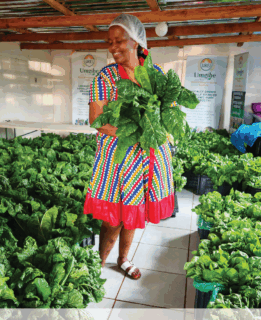 After a cancer diagnosis in 2014 left her unable to support her family, Nonhlanhla Joye turned to farming, something she’d disliked as a child. She began growing vegetables in her backyard to feed her household, but when chickens destroyed her crops, she devised an off-the-ground growing system using plastic bags. The setup protected her produce, conserved water, and allowed her to sell surplus food to neighbors.
“When I got sick, I was left with little choice… I started growing vegetables, and knew that the vegetables I was growing had to be organic, so my immune system would be strong enough to fight my diagnosis,” she recalls.
“The plastic-bag farming method is something I’m proud of,” says Joye. “It came about because we needed a way to farm in areas with poor soil. We fill plastic bags with good soil, and then plant in them. It’s simple, affordable, and it works! It’s allowed people to grow food in places they never thought possible.”
This solution led to the founding of the Umgibe Farming Organics and Training Institute, which supports 259 farming co-operatives in KwaZulu-Natal. The organization uplifts unemployed and disadvantaged communities by empowering them to grow their own food and collectively market surplus produce, turning small-scale farming into a sustainable livelihood.
“The biggest challenge has been changing mindsets,” says Joye. “Many people think farming is only for those who have land and resources. Convincing them that they can farm, even in small spaces, with limited resources, has been a journey, but it’s been worth it.”
She doesn’t believe farming should be a lonely endeavor. “It should be a shared one. Seeing people learn from each other, support each other and celebrate their successes together – that’s what makes my heart sing.”
*If you need help getting your vegetable garden started in a small space, visit the likes of RebelEarth, which installs EarthPods. These raised wooden beds are covered by a hoop tunnel that creates a microclimate. Keen foodies and entertainers can install multiple EarthPods.
Shop organic
Sure, organic doesn’t tick all the boxes, but it’s still pushing the industry towards a non-chemical-based system, which is encouraging the scalability of resources and research and development for a non-chemical approach, explains Bush.
- At the entrance to McIntosh’s barn office, it states in large letters: We are all farmers by proxy. Every time you buy, you permit someone to farm on your behalf. Buy your meat and eggs directly from Farmer Angus at Spier’s Cowshed, visit one of the many independent or big-brand stores, such as Spar or Pick n Pay, or order from his website.
- Visit Jackson’s Real Food Market in Bryanston and Kyalami, Johannesburg, the brainchild of Gary Jackson. The products at this clean food store are free of growth hormones, antibiotics, preservatives, chemically manufactured flavorings, and pesticides, and they conduct third-party audits. Follow Gary Jackson on LinkedIn for informative posts about food.
- Visit Wickedfood Earth Farm in Gauteng, which has just been recognized as one of South Africa’s first Slow Food farms. Wickedfood Earth cultivates a diverse range of crops, including fruits, vegetables, and grains, and rears sheep and pigs. The owners, Mike and Cilla Crewe-Brown, say that traditional agroecological methods are employed on the farm. “The farm’s philosophy emphasizes harmony with nature, avoiding pest control and chemical interventions.”
JOIN A FOOD CLUB HUB, OR START ONE
The Food Club Hub is a community-based buying group that sources food directly from verified local, ethical, and regenerative farmers and producers. You can join a Food Club Hub in your area or start your own.
Members place their monthly produce orders online. The producers harvest, bake, or make to order, and members collect their produce from the community host on market day. There’s no waste, the food is fresh, and producers receive payment for the price they set. There are around 50 Food Club Hubs across South Africa, with active groups in Johannesburg, Pretoria, Cape Town, Limpopo, and the Winelands.
GRAB A COPY OF OUR LATEST LONGEVITY
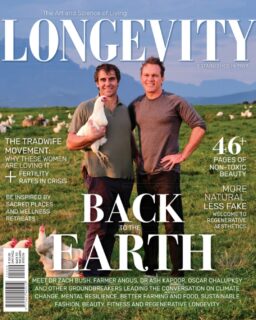 This article, and many others, can be found in our latest “Back to the Earth” edition.
From expert insights with Dr. Zach Bush, Dr. Ash Kapoor, Oscar Chalupsky, Dr. Ela Manga, Dr. Maureen Allem, Dr. Anushka Reddy, Dr. Des Fernandes, Dr. Craige Golding, and many more, this issue explores everything from food, clean beauty, sustainable living, fashion, travel, and other mindful choices.
While available nationally in Southern Africa at your nearest Woolworths, Exclusive Books, and selectively at Superspar, Pick’n Pay, Airport lounges, and your local garage shop, you can also buy a digital copy at Zinio.com.
Who is the author?
Martina Polley is a creative producer and journalist with over a decade of experience in media, coordination, and purpose-driven content. 
Her background spans editorial, production, and facilitation, giving me a deep understanding of how to bring stories to life from both the creative and logistical sides. She is drawn to human-led narratives that celebrate people, the planet, and purpose, and is currently expanding her experience in film and production. She thrives in dynamic environments, brings calm under pressure, and loves collaborating with teams to produce meaningful, visually beautiful work.

![women [longevity live]](https://longevitylive.com/wp-content/uploads/2020/01/photo-of-women-walking-down-the-street-1116984-100x100.jpg)