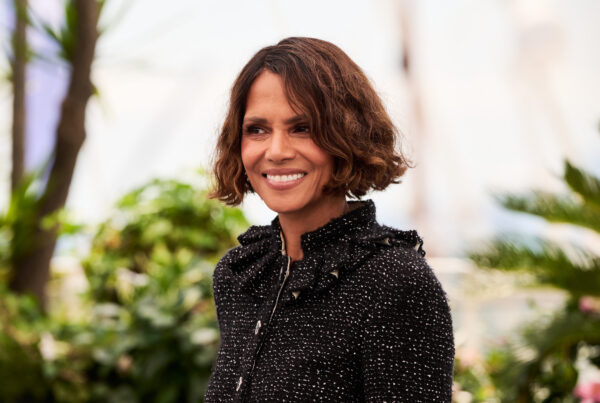

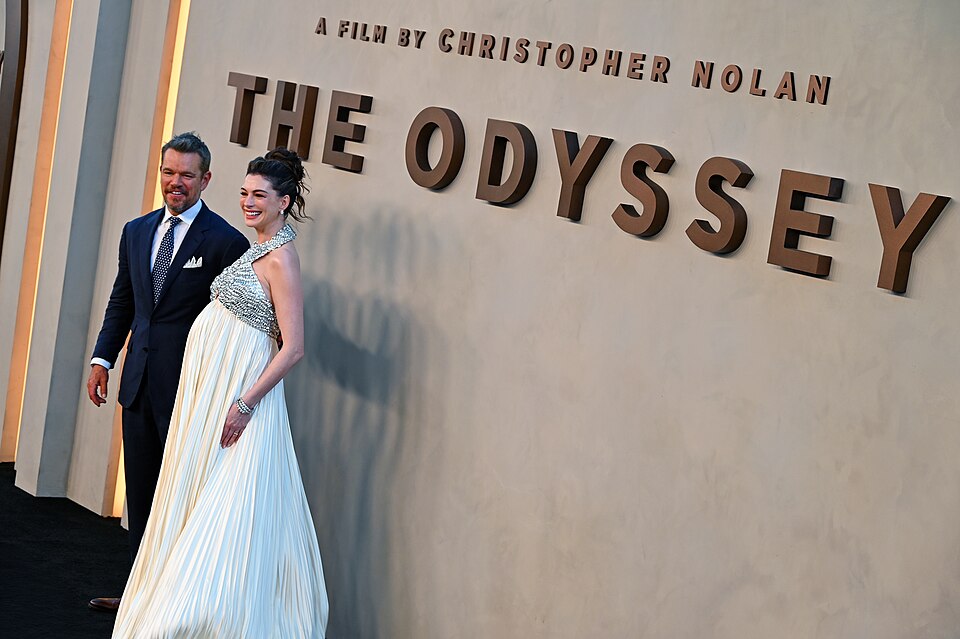
In June, Anne Hathaway posted a video to Instagram announcing that she is expecting her third child with her husband Adam Shulman. With the Odyssey press tour now behind us, it’s safe to say that Anne Hathaway truly makes her mark on maternity style. Her every appearance, whether sporting custom Prada or a pair of Gianvito Rossi boots, demonstrates an effortlessly chic look that elegantly shows off her bump.
What Anne Hathaway’s Third Pregnancy Reveals About Motherhood After 40
Underneath all of the extravagant styling is a compelling question: what does it mean, medically and culturally, to be pregnant at 43 in 2026, and why does the language we use to describe it still feel stuck in the past?
Doctors could file Anne Hathaway’s pregnancy under the clinical label: “advanced maternal age.” A term used for any pregnancy at 35 years and older. The number 35 comes from a decision made back in the 1970s. Doctors needed a cutoff age for when to offer amniocentesis, a test that can detect chromosomal conditions like Down syndrome. However, the test also carries a small risk of causing a miscarriage. The age of 35 is when those two risks balance out, and so it became the line used to determine who received the test. Unfortunately, over time, they repurposed the test as a blanket label for any risky pregnancy.
Decoding ‘Advanced Maternal Age’ — and What Anne Hathaway’s Pregnancy Reveals About Its Limits
While the data and complications associated with later-life pregnancies are real and worth taking seriously. Complications such as high blood pressure, gestational diabetes, and delivery complications. It is necessary to take into account that research increasingly demonstrates that, rather than actively delaying childbearing in order to prioritise their education and career, most women do not deliberately choose to become mothers at a later age. Researchers found that advanced motherhood is the outcome of life circumstances. Therefore, it is problematic to portray older mothers as deliberate risk-takers.
Additionally, research has shown that older mothers, like Anne Hathaway, feel more “ready” and less stressed about having children. Hathaway told PEOPLE that,
“You know, I was in my 30s with my other two, and I’m so different now …. Something happened when I turned 40. I just realized that this isn’t a dress rehearsal. It’s all real. I’m not, like, saving it up for my future self. It’s all happening right now. And so I think I’m just better at being present in the moment, living in gratitude, not taking anything for granted.”
A self-assured and anxiety-free approach can result in higher levels of happiness. Hence why mothers of advanced age do not have reduced parenting capacity. Children born to older mothers often have higher cognitive and non-cognitive abilities and better socio-economic positions in their adult lives.
Importantly, thanks to improved healthcare and lifestyles, life expectancy has increased. Meaning that it is unlikely that “older” mothers, aged 40 or older, will pass before their children reach maturity.
Anne Hathaway Opens Up About Fertility Struggles
Hathaway has been outspoken about her struggles around fertility, including one miscarriage in 2015. She previously told Vogue in 2019,
“All kidding aside, for anyone going through infertility and conception hell, please know it was not a straight line to either of my pregnancies”
Hathaway felt that by sharing her journey, others would not feel so alone.
“I just want them to know they have a sister in me”
A woman’s fertility begins to decline around age 30. At 40 years old, the chances of conceiving naturally in any given cycle are roughly 10%, down from about 25% in her early 30s. Egg quantity and quality both decline with age, which is part of why chromosomal conditions become more common in pregnancies where women conceive later in life. Although it’s worth noting that it is a gradual slope, not a sudden drop-off after any single birthday.
As of yet, there is no effective strategy for delaying ovarian aging or improving oocyte quality. However, researchers associate maintaining a healthy diet and lifestyle with better fertility outcomes and that it may support overall reproductive health. Lifelong diets rich in omega-3 fatty acids can prolong murine reproductive function into advanced maternal age. Additionally, avoiding smoking, moderating alcohol consumption, and adhering to a Mediterranean diet that includes vegetables and healthy fats could support a later-life pregnancy.
When Two Transitions Collide
Anne Hathaway is just one of the many women around the world who are experiencing a later-life pregnancy. At 43 years and older, these mothers could face the overlapping symptoms of postpartum and perimenopause. What stood out was how thin the research is on what happens when the two coincide.
According to research done last year in the United States, the number of births occurring among women over 39 was up 90% since 1990. In 2023, births among women ages 40 and older exceeded teen births for the first time in the country’s history. Healthline reported that postpartum symptoms can last up to 6 months. Peri-menopause can arrive as early as your 30s. Due to changing cultural norms and the improvement of fertility medicine, many first-time mothers could hit perimenopause while being postpartum.
According to The Week, these symptoms can overlap because post-childbirth, estrogen and progesterone drop to their pre-pregnancy levels. During perimenopause, progesterone begins to decline steadily due to missed ovulation, and estrogen bounces unpredictably between very high and low levels.
Shockingly, there are few medical resources with a deeper insight into the true hormonal overlap that can occur for women having a later-life pregnancy. However, studies have shown that this hormonal chaos has little effect on an older mother’s ability to parent. Several longitudinal studies have linked older maternal age to decreased risk of child hospital admissions and accidental injuries in the first three years of life. Furthermore, older women show high coping abilities, which may mitigate the obstetrical risks associated with later life pregnancy.
Low Expectations, Full Presence
Hathaway is not taking her blessing for granted. In New York, at a premiere for The Odyssey, she admitted that her family did not have high hopes about getting pregnant for the third time.
“There’s always hope until there’s not, but when you get to a certain age, that hope looks like 1 percent to 2 percent. So we just decided to see where life took us, with a very, very healthy, realistic expectation, which was very low.”
Appearing assured and elegant on the red carpet, Anne Hathaway’s pregnancy at 43 serves as a juxtaposing image to the cautionary tale society has told all women about getting pregnant later in life. Nothing should limit women in exercising their right to reproduce — or not to — especially as they age. And it’s just as essential that real medical research equips them for the realities of later-life pregnancy: the possibility of experiencing peri-menopause and postpartum at the same time, or knowing early on that a healthy diet can help support their reproductive health as they get older. With figures such as Anne Hathaway to propel these conversations, we can hope that in years to come this kind of information will become more mainstream.
References
Ahmad, Monica, et al. “Advanced Maternal Age: A Scoping Review About the Psychological Impact on Mothers, Infants, and Their Relationship.” Behavioral Sciences, vol. 14, no. 3, 20 Feb. 2024, pp. 147–147, 10.3390/bs14030147.
Valenti, Lauren. “Anne Hathaway Announces She’s Expecting Her Second Child—and Opens up About Infertility Struggles.” Vogue, 24 July 2019, https://www.vogue.com/article/anne-hathaway-pregnant-second-child-infertility
https://x.com/ahathawayfiles. “Anne Hathaway Archives 🦕 (@Ahathawayfiles) on X.” X (Formerly Twitter), 15 July 2026, https://x.com/ahathawayfiles/status/2077343639278108962
Jackson, Hannah. “Anne Hathaway Embarks on an Odyssey of Maternity Style—From Below-the-Bump ”Fits to Bespoke Gowns.” Vogue, July 2026, https://www.vogue.com/slideshow/anne-hathaway-the-odyssey-maternity-style
Coleman, Theara. “More Women Over 40 Face a Perimenopause and Postpartum Double Whammy.” The Week, 13 July 2026, https://theweek.com/health/women-over-40-perimenopause-postpartum
American College of Obstetricians and Gynecologists. “Pregnancy at Age 35 Years or Older.” Aug. 2022.
Walcott, Escher, and Amanda Champagne-Meadows. “Pregnant Anne Hathaway Shares Glimpse of Bare Baby Bump in Crop Top and Ultra Low-Rise Jeans at the End of Oak Street Premiere.” People.Com, PEOPLE, 10 Aug. 2026, https://people.com/pregnant-anne-hathaway-shows-off-baby-bump-crop-top-low-rise-jeans-the-end-of-oak-street-premiere-12037251
Eva De Clercq, et al. “Rethinking Advanced Motherhood: A New Ethical Narrative.” Medicine Health Care and Philosophy, vol. 26, 3 Sept. 2023, 10.1007/s11019-023-10172-w.
Yeditepe University Hospitals Medical Editorial Board. “Success in IVF After 43 Decreases to Five Percent.” Success in IVF after 43 Decreases to Five Percent, Yeditepe University Hospitals, 9 Mar. 2023, https://yeditepehastaneleri.com/en/health-guide/diseases-treatments/success-ivf-after-43-decreases-five-percent
Rasminsky, Abigail. “Timeline of Postpartum Recovery.” 2018.
Uy, Megan. “We Can’t Stop Thinking About Anne Hathaway’s The Odyssey Press Tour Looks—See Every Chic Outfit So Far.” Cosmopolitan, 10 July 2026, https://www.cosmopolitan.com/style-beauty/fashion/a71884413/anne-hathaway-the-odyssey-press-tour-outfits/
Yam, Kimmy. “What Anne Hathaway Has Shared About Fertility Struggles.” TODAY.Com, TODAY, 20 June 2026, https://www.today.com/parents/anne-hathaway-fertility-journey-third-baby-rcna350977

![women [longevity live]](https://longevitylive.com/wp-content/uploads/2020/01/photo-of-women-walking-down-the-street-1116984-100x100.jpg)