
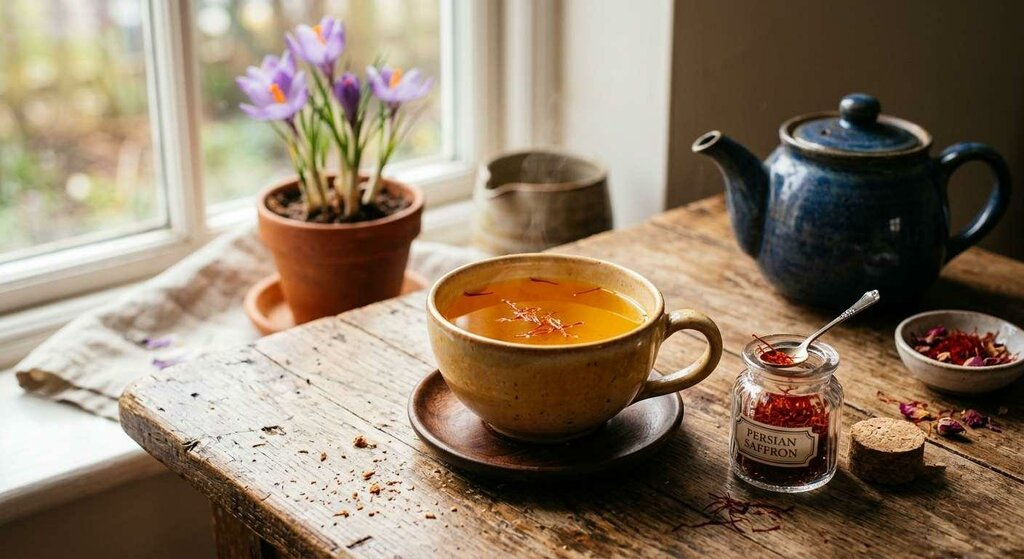
Saffron tea has been treasured for centuries across Persian, Indian, and Mediterranean cultures — not just for its stunning golden hue and floral aroma, but for the remarkable wellness properties it carries in every cup. Made from the dried stigmas of Crocus sativus, saffron is the world’s most expensive spice by weight, and even a small pinch transforms a simple pot of hot water into something truly extraordinary.
Whether you’re exploring saffron tea for the first time or looking to refine your brewing technique, this guide walks you through everything you need to know — from selecting high-quality saffron threads to the best combinations that unlock its full flavor potential. Longevity Partner Content.
What Is Saffron Tea?
Saffron tea is an herbal infusion made by steeping saffron threads — the dried stigmas of the saffron crocus — in hot water. Unlike green or black teas, it contains no tea leaves, making it naturally caffeine-free. The result is a warm, golden-yellow drink with a subtly earthy, floral, and slightly sweet flavor profile that’s unlike anything else.
The active compounds in saffron, including crocin, crocetin, and safranal, are responsible for both its vivid color and its celebrated health effects. These water-soluble compounds are released readily during brewing, making tea one of the most bioavailable ways to consume this precious spice.
What You’ll Need to Make Saffron Tea
Ingredients
- 8–10 saffron threads (a small but generous pinch)
- 250–300 ml of filtered water
- Optional: 1 teaspoon honey or a small piece of rock sugar (nabat)
- Optional add-ins: cardamom pods, cinnamon stick, dried rose petals, or a slice of fresh ginger
Tools
- Small mortar and pestle (or two spoons)
- Teapot or heat-safe mug
- Kettle
- Fine strainer or tea infuser
How to Choose the Right Saffron
The quality of your saffron directly determines the quality of your tea. Genuine, high-grade saffron should have:
- Deep red threads with slightly orange or yellow tips
- A strong, honey-like, and slightly metallic aroma
- No visible yellow or white threads (sign of dilution or low quality)
- Slow color release — real saffron turns water golden over several minutes, not instantly
For best results, look for Grade 1 (Super Negin or Negin) Persian or Spanish saffron, sourced from reputable suppliers. The origin matters — Iranian saffron accounts for over 90% of global production and is widely regarded as the finest in the world.
How to Make Saffron Tea: Step-by-Step
Step 1: Grind Your Saffron
Place 8–10 saffron threads in a small mortar and add a tiny pinch of sugar. Gently grind the threads into a fine powder. This crucial step — called “blooming” — dramatically increases the surface area of the saffron, allowing it to release its color, aroma, and active compounds far more efficiently than whole threads alone.
If you don’t have a mortar and pestle, crush the threads between two clean spoons or between your fingertips.
Step 2: Bloom the Saffron in Warm Water
Add the ground saffron to a small cup and pour 2–3 tablespoons of warm (not boiling) water over it. The ideal temperature is around 70–80°C (158–176°F). Let it steep for 5–10 minutes.
You’ll watch the water gradually transform into a gorgeous deep amber-gold — this is the blooming process, and it’s the secret to a richly colored and flavorful cup.
Using boiling water at this stage can degrade some of the delicate, volatile compounds responsible for saffron’s aroma, so keep the temperature moderate.
Step 3: Boil and Prepare Your Water
Bring 250–300 ml of filtered water to a boil in your kettle, then allow it to cool for 1–2 minutes to reach approximately 85–90°C (185–195°F). Filtered water is preferred as chlorine in tap water can interfere with the delicate flavor.
Step 4: Combine and Steep
Pour the saffron bloom (the small cup of steeped saffron water) into your teapot or mug, then add the hot water. If you’re including add-ins such as a cardamom pod, cinnamon stick, or rose petals, add them now. Allow the tea to steep for a further 3–5 minutes.
The longer you steep, the more intense the color and flavor — but avoid steeping beyond 10 minutes as it can introduce a mildly bitter note.
Step 5: Sweeten and Serve
Strain the tea into your cup. Add honey, rock sugar (nabat), or leave it unsweetened — that’s entirely a matter of personal taste. Serve hot and enjoy immediately for the fullest aromatic experience.
Popular Saffron Tea Variations
Persian Saffron Tea (Chai Zafaran)
The traditional Iranian way is to brew black tea and add a saffron bloom alongside cardamom and rose water. The combination of black tea’s tannins, saffron’s earthiness, and rosewater’s floral note is deeply warming and aromatic.
Saffron & Ginger Tea
Add a 1-inch piece of fresh ginger (peeled and sliced) when blooming your saffron. Ginger and saffron share anti-inflammatory properties and complement each other beautifully — a perfect choice during the winter months.
Saffron & Chamomile Tea
Combine saffron with one chamomile tea bag for a particularly calming and sleep-promoting blend. This combination is popular in functional wellness circles and makes an excellent bedtime drink.
Saffron Milk Tea (Golden Milk)
Replace the water with warm whole milk or oat milk. Add a pinch of turmeric, cardamom, and honey alongside your saffron bloom. This rich, golden drink bridges Ayurvedic and Persian wellness traditions — deeply nourishing and naturally anti-inflammatory.
Why People Are Drinking Saffron Tea Daily
Beyond its extraordinary taste and appearance, saffron tea has gained significant attention in modern wellness research. Studies have highlighted saffron’s potential role in mood regulation, cognitive support, and antioxidant protection.
If you want to go deeper into the science, this detailed resource on saffron tea benefits covers the research-backed advantages of making this infusion part of your daily routine — from its effects on serotonin to its role in supporting eye health.
What makes saffron particularly compelling is the dose — you only need a tiny amount (approximately 30 mg per day, achievable with 8–12 threads) to experience its effects. A single cup of properly brewed saffron tea can comfortably fall within that therapeutic range.
Pro Tips for the Perfect Cup
- Always grind your saffron before brewing — whole threads produce far less color and flavor
- Use warm, not boiling water, for the bloom stage to preserve volatile aromatic compounds
- Store saffron in an airtight container, away from direct light and moisture
- A genuine saffron thread will slowly release color — if it turns water red immediately, it may be fake or dyed
- Experiment with add-ins gradually — start plain to understand saffron’s natural flavor profile
Common Mistakes to Avoid
- Using too much saffron — more is not better; excess saffron creates a medicinal, overpowering taste
- Skipping the blooming step — this shortcut dramatically reduces the tea’s quality
- Boiling the saffron directly — sustained high heat destroys the delicate compounds you’re trying to extract
- Buying cheap or unknown-origin saffron — adulterated saffron products exist widely in the market
Where to Source Premium Saffron for Tea
The quality of your saffron is everything. For tea purposes, you need saffron that is:
- 100% pure, with no fillers, dyes, or added oils
- Harvested and dried properly to preserve crocin and safranal content
- Lab-tested for ISO 3632 compliance, the international standard for saffron quality grading
For consistently high-grade saffron that meets all of the above, visit Golden Saffron — a trusted source offering premium-grade Persian saffron with full traceability from farm to cup.
Final Thoughts
Learning how to make saffron tea properly is one of the simplest and most rewarding rituals you can add to your daily routine.
With just a pinch of high-quality saffron, a little patience during the bloom, and the right water temperature, you’ll have a golden cup of warmth that carries thousands of years of tradition in every sip.
Start with this classic recipe, experiment with cardamom or ginger as your confidence grows, and pay close attention to your saffron source — because the best tea always begins with the best ingredients.

![women [longevity live]](https://longevitylive.com/wp-content/uploads/2020/01/photo-of-women-walking-down-the-street-1116984-100x100.jpg)