

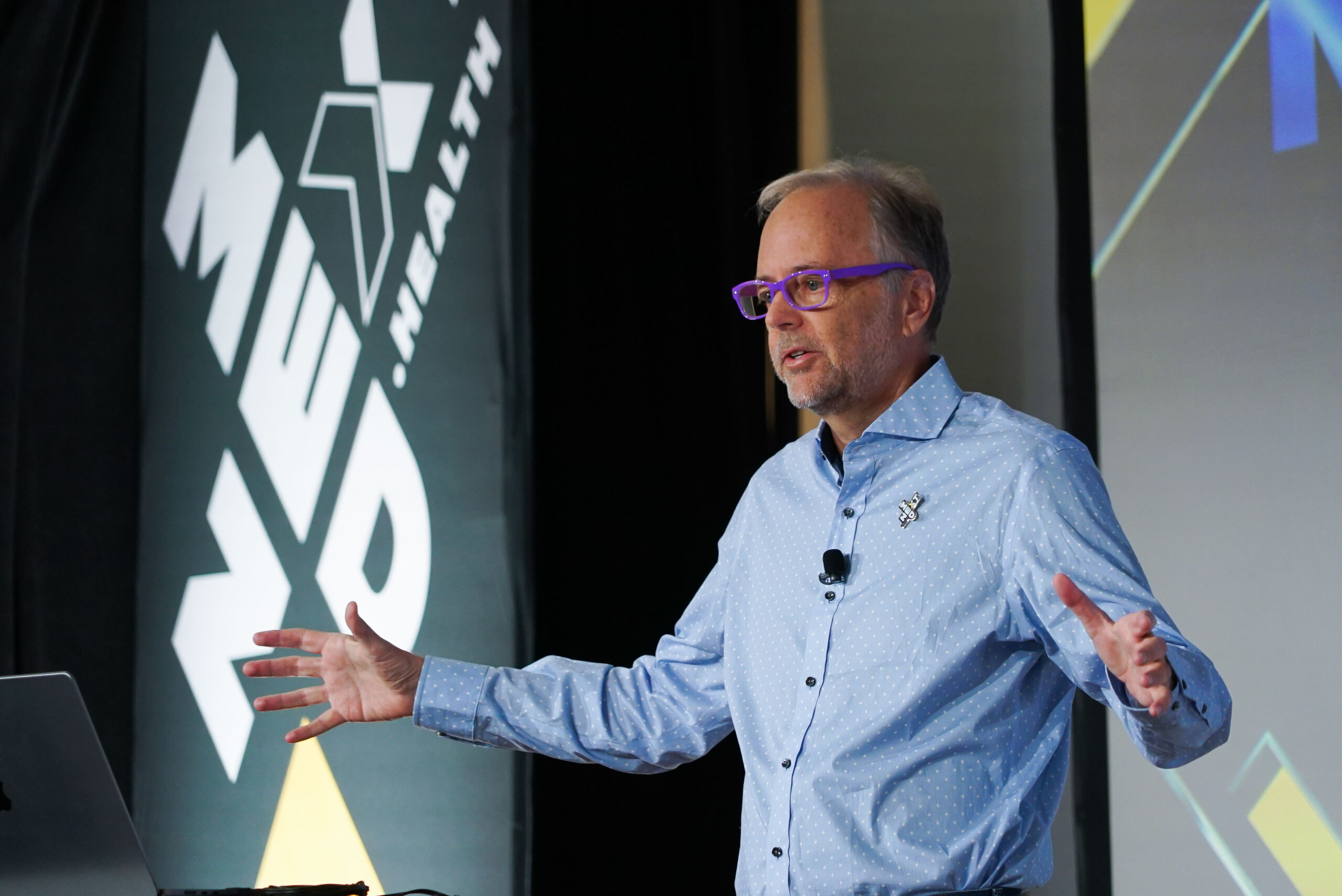
With a career that has always lived at the frontier of technology and creativity, Steve Brown has spent a large portion of his life exploring how media and technology can strengthen human connection and leave a lasting social impact. Today, he faces one of the most life-changing new ventures in his professional and personal life.
Steve Brown is the Founder and CEO of CureWise, an AI-powered platform that helps cancer patients become more informed, prepare better questions for their doctors, and work with their care teams to get the best treatment available.
When Steve was admitted to the hospital, he had already been working on the idea of CureWise, so it began less as a startup idea, and more as a survival tool.
CureWise has all the potential to be life changing. Not just for Steve Brown, but for many more who receive a cancer diagnosis. This article highlights some of the key insights from a recent conversation Longevity had with Steve Brown.
AI Innovation in a Slow-Moving Industry
With a highly successful career that began with computer science and physics in Silicon Valley, Brown found himself working with tech startups, but focusing on healthcare, not only because it’s the biggest industry, but also because there are massive unmet needs and problems in healthcare that can be better addressed.
Yet, despite the innovations, Brown soon grew impatient with the slow pace of healthcare and technology, and so he turned to filmmaking. However, it wasn’t long before healthcare called him back.
Tech Expert Meets Health Crisis
“I was doing startups focused on other people’s problems, but now I’m back in healthcare and technology because of my own problems that dragged me back in.”
Just over a year ago, Brown was diagnosed with a rare and aggressive blood cancer, and instead of solving other people’s health problems, he was now propelled to solve his own.
“I needed to understand what was really going on and, more importantly, what I was going to do about it,” he shared, adding that as a founder, he slips into founder mode: “There’s a problem, so how do we solve it?”
Years of experience in the healthcare space taught him that while healthcare is run by trained and compassionate humans, humans do get overwhelmed and can make a lot of mistakes.
“Doctors, in particular, are overloaded – your doctor may have hundreds or even thousands of patients. Meanwhile, you just have you.”
That’s why Brown suggests that if you’re dealing with something serious, such as cancer, it’s advisable to become an expert in what’s going on,
“You have a deep personal stake in it, while your doctor has many other demands on their time. That gap matters.”
A personal diagnosis
So what happens when, like Brown, you’re diagnosed with cancer, in a world where there’s a shortage of oncologists, whose diagnostic power is governed by their time, and an overwhelming amount of information held in many different places?
Well, for one, if your oncologist is left with limited time to properly evaluate your case, then your care will likely default to the standard guidelines. Now, this doesn’t take away from the effectiveness of these guidelines, especially if you’re close to the average patient,
“They work well for some people, maybe 30% of the time. In medicine, that’s often considered a success.”
But what happens if you have cancer and you’re in the other 70%?
According to Brown, cancer is caused by mutations in your own genes, which then makes every cancer a one-of-one disease. A unique set for you. Unfortunately, patients are still grouped based on the type of cancer that they have, which then makes them follow a guideline.
“There may be a treatment out there that’s far more targeted to the specific defect driving your cancer – but if you don’t know about it, if you don’t get tested for it, and if you don’t advocate for it, you may never receive it.”
Per findings published in Cancer Statistics, approximately 2,114,850 new cancer cases and 626,140 cancer deaths are expected to occur in the U.S. this year.
Sadly, despite many of these patients possessing a known genetic mutation with available targeted treatment, they were never tested for it, or if they were tested, they never received the therapy. This very gap is a big part of what Brown and the rest of the CureWise team are trying to close.
AI Bridging The Knowledge Gap
If you’re part of the lucky elite, you may find yourself receiving select care at places like the Mayo Clinic or Dana-Farber, where a top specialist will confirm exactly what you have and then suggest a precision therapy that’s best for you. Unfortunately, for the other 99% of people, care often stops at the guidelines.
This is why having the right knowledge – like what to ask for and how to advocate – can help you access far more advanced treatments. In fact, before a correct diagnosis, Brown was actually misdiagnosed, adding him to the 13.2% of cancer diagnostic errors that may lead to death or permanent disability.
A common challenge
Brown’s symptoms were dismissed, and while abnormal test results were noted, they were not fully followed up on. Eventually, Brown fed his full medical record into an AI system, and the results were immediate. Not only did the AI flag abnormalities, but it also recommended further testing, and these tests were what ultimately led to the correct diagnosis.
With his newfound knowledge, Brown was able to explore treatment options, some of which are still in clinical trials, with the science being there and the results being compelling. Yet, sometimes a condition is so rare that there isn’t even a clinical trial.
“That was my situation – my condition was too rare for a trial.”
Yet, the drug that ended up working extremely well for Brow was approved for something else, and so it was prescribed off-label. Revealing that he had to convince his doctors to prescribe it, Brown adds that they then had to convince his insurance company to pay for it.
“In the end, they both did – because doing the right thing early is better for everyone than waiting until the situation becomes far more complicated and expensive.”
Admitting that while the treatment wasn’t cheap, Brown adds that it was the right choice, and it was far better than the alternative.
AI Sees More Than the Human Eye
Following his diagnosis, Brown believed that the AI tool he had used had a specific code that human clinicians would be unable to recognize. Yet, when he reviewed his medical records manually on the first anniversary of his diagnosis, he discovered something unsettling,
“I had a blood test done there, and there was a note at the bottom of the blood test from the lab that suggested I may have a plasma cell issue, and encouraged me to get more tests done.”
“It wasn’t that the AI found some mysterious pattern. This was already known. It’s just that the AI was thorough and read everything, and my doctors didn’t read everything.”
As infuriating and alarming as this realization was, Brown soon understood that the brilliance of AI in healthcare was its thoroughness and attention to detail, and this insight became the foundation of CureWise.
Many qualified opinions count
As a next-generation diagnostic and treatment support AI, CureWise is built around one radical idea: patients don’t just need a second opinion — they need ten, all in dialogue.
For many, the greatest fear is not knowing what’s going on with their health, but once you know, this gives way to strategy.
“It’s still scary,” Brown says. “But once you understand what’s happening, it’s empowering.”
Recovery Launches a Platform
CureWise wasn’t Brown’s first foray into AI, as he’d been working on a lot of it before in other fields like education and even film and entertainment, so when he found himself admitted to the hospital, he had already been working on the idea of CureWise, so it began less as a startup idea and more as a survival tool.
As his treatment began to work and his energy returned, CureWise helped Brown identify treatment options, immune-support strategies, and even insurance appeals, and it wasn’t long before colleagues and clinicians took notice.
Why is CureWise better than other data gathering tools
After being invited to speak at a medical conference by a Stanford hematologist, audience members asked how they could invest, and he recalled telling them that if he got better, he’d think about it. Well, he did get better, investors stepped forward, and the CureWise team was formed.
Now, with the growth of AI platforms, Brown is adamant about what CureWise is and what it is not.
Tools like ChatGPT or Claude can be extremely helpful for learning, but they’re mostly for episodic problems, whereas cancer evolves.
“What you really need is a system designed to manage this over the long term—one that doesn’t require you to keep re-entering the same information, but instead tracks how you’re doing, how things are changing, and how your situation evolves.”
As medical information is quite sensitive, there are definitely concerns about privacy and data. The good news is that CureWise uses anonymization, zero data-retention policies, and healthcare-optimized models, including work within Anthropic’s developer ecosystem.
When AI talks
Also, as it’s always encouraged to get a second opinion when dealing with a health emergency, CureWise is designed similarly,
“What we want to do is gather a wide range of perspectives, have AI systems ‘talk’ to each other, and see where they agree, where they diverge, and where new ideas emerge. That’s how we designed the AI-to surface insights by synthesizing diverse viewpoints.”
Cancer-coded
While the platform requires a medical record, the team’s focus is on cancer, as it has some of the most significant unmet needs in medicine, and it’s where the gap between what’s possible and what patients receive is often the widest.
Also, for many, cancer is something that one can manage for the rest of their lives, as diagnoses that were once considered terminal are increasingly being managed for long periods of time. As explained by Brown, it’s not about living forever – it’s about staying alive long enough for the next wave of research and treatments, which are coming quickly,
“Things are evolving so fast that staying informed over time becomes essential, and that’s what CureWise is designed to support: long-term, rigorous disease management.”
From Invitation-Only to Open Access
Currently, CureWise is in private beta, which means that you need to sign up and then be invited, as there are some things users need to review and consent to.
“It’s still new, and we’re being careful,” explains Brown, “This is an experiment, and we’re testing it with many people to make sure we’re setting the right expectations.”
Brown adds that they are gradually opening access, and later this year, they plan to make it available to anyone who wants to sign up. But for now, they’re taking a few careful steps to get there.
As the relationship between health and AI grows every second, there are hundreds of startups working on AI in healthcare. For CureWise, they made the decision to focus and commit to being the best in the world at something, which was cancer.
Eventually, they aim to release APIs so other innovators can build on their tools and contribute to a broader ecosystem of patient-centered healthcare technology.
Unique Attributes of CureWise
Here is a summary of the key attributes of CureWise and how it works for the patient.
Diagnosis at Scale
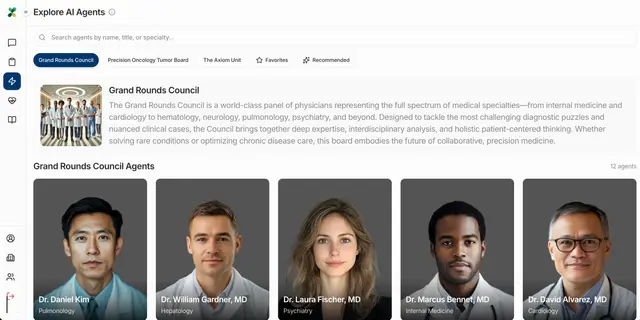
CureWise runs patient data through a swarm of AI agents, each trained with a unique clinical perspective. It doesn’t just return a single verdict — it reveals the internal debate and the diagnostic reasoning behind it.
CureWise Is Led by a Founder Who Lived It
Steve’s AI flagged a test that saved his life — using the same lab data that three human specialists misread.
It Goes Beyond Search, Toward Strategy
Unlike ChatGPT-style advice bots, CureWise is an orchestration engine. It compares hypotheses, recommends next diagnostic steps and models treatment resistance curves using longitudinal lab data — all personalized to the patient’s genomic and clinical profile.
Longevity Meets Agency
CureWise is not a replacement for doctors — it’s a co-pilot for patients. For those navigating cancer, chronic illness or high-risk aging, it provides what modern medicine often lacks: cognitive clarity and strategic foresight.
Built for the Outlier
The standard of care is designed for averages. CureWise is designed for exceptions — a diagnostic partner when the guidelines no longer apply.
Pushing the Frontiers of Cancer Care with AI
Brown is clear that CureWise isn’t just aimed at improving patient awareness, but it’s also seeking to improve the relationship between patients and healthcare practitioners.
“We talk a lot in the U.S. about shared decision-making and collaborative care, but shared decision-making only works if you understand what’s going on,” says Brown, who adds that the doctor knows everything and you know nothing, then that’s not shared decision-making. As such, patients need to do their own homework, learn about their condition, and be informed enough to advocate for themselves.
“The goal is not to replace doctors, but to empower patients.”
While not everything can be absolutely perfect, Brown clarifies that CureWise can be extremely helpful in educating people, helping them advocate for themselves, and enabling better conversations with their doctors so that patients can get closer to what’s possible for them.
“I don’t claim to have the single right answer. What I do know is that we’re committed to being on the frontier of what’s possible in cancer care—and to pushing that frontier forward. AI acceleration can make people nervous.”
“But if you’re facing a serious medical condition and AI can help improve outcomes, acceleration isn’t something to fear—it’s something you want.”
Steve Brown’s CureWise has the potential to not only improve his own personal health outcomes but also to have a profound impact on the longevity of many more.
Watch the Full Interview with Steve Brown
View this post on Instagram
References
Siegel, R. L., Kratzer, T. B., Wagle, N. S., Sung, H., & Jemal, A. (2025). Cancer statistics, 2026. CA: A Cancer Journal for Clinicians, 76(1), e70043. https://doi.org/10.3322/caac.70043
Read more about CureWise Founder Steve Brown
Steve Brown is a tech entrepreneur, AI expert, and award-winning documentary filmmaker whose work explores how media and technology can deepen human connection and create enduring social impact. Steve is the Founder and CEO of CureWise, an AI-powered platform that helps cancer patients become more informed, prepare better questions for their doctors, and work with their care teams to get the best treatment available. He also serves as the Founder and CEO of independent film/media company Ignite Channel Inc., Chief AI Officer of Peter Diamandis’ Abundance360 and XPRIZE Ventures, and partner/Board member of AI platform SignalPop LLC.
Previously, Steve served as Co-Founder, CTO and Executive Producer of Sneakertopia; Founding Partner and CTO of Invently; Co-Founder and CEO of Catch.com (acquired by Apple in 2013); Founder and CEO of Health Hero Network (acquired by The Bosch Group in 2007), which pioneered remote patient monitoring and chronic care management; and Founder and CEO of Raya Systems, the first “digital therapeutics” company distributed through major pharmaceutical and diagnostics companies, including Novo Nordisk, Boehringer Mannheim and AstraZeneca. Steve also directed and produced SPARK: A Burning Man Story. He received his bachelor’s degree in physics from Stanford University.

![women [longevity live]](https://longevitylive.com/wp-content/uploads/2020/01/photo-of-women-walking-down-the-street-1116984-100x100.jpg)