

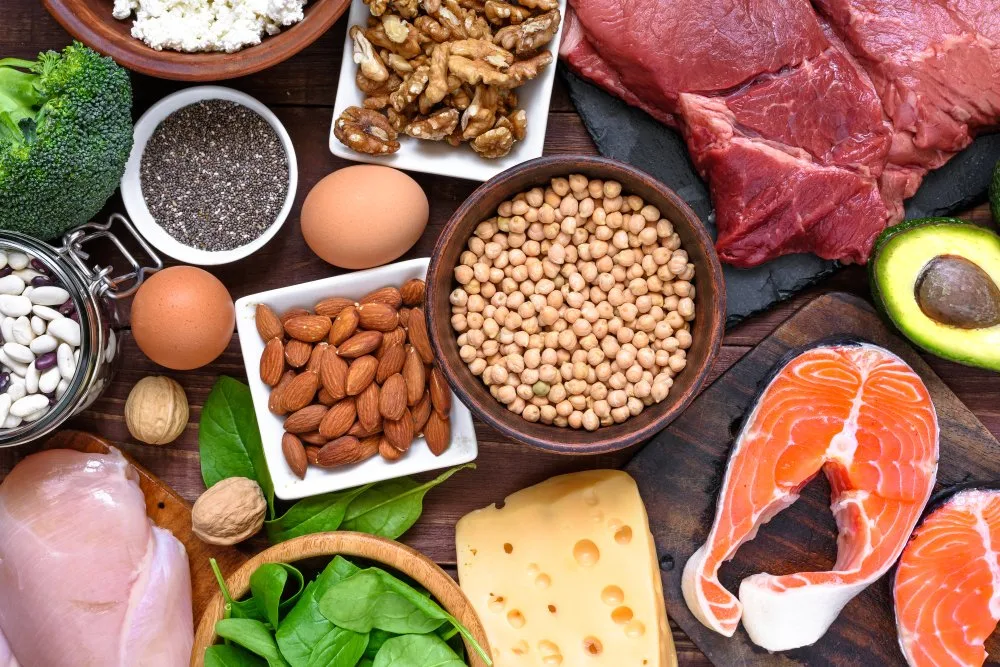
Protein is everywhere. Protein powders. Protein water. Protein bars. Protein is having a moment, and consumers can’t seem to get enough. Coupled with the Trump Administration releasing new U.S. dietary guidelines earlier this year stating that “every meal must prioritize high-quality, nutrient-dense protein,” protein clearly isn’t going anywhere. However, a new study suggests that protein may be more hero than villain and that cutting back on protein could be the better option if you want to live longer.
Is protein affecting longevity?
Protein helps to maintain muscle mass, support recovery and improve satiety, which is why high-protein diets are considered the healthier eating plans for general health, weight loss and fitness.
Yet, a recently published study suggests that this may not be the case.
For the review, researchers analyzed 350 studies on protein-restricted diets in animals and people, and found that mice, rats, flies, and fish that consumed less protein consistently lived longer and healthier. In a small human study, those who followed a protein-restricted diet for several weeks not only lost weight and fat mass, but also saw improvements in their fasting blood sugar.
“We think of protein as beneficial because it promotes satiety and it’s good for muscles, but at the same time, a series of epidemiological studies have shown that people eating higher protein diets tend to have higher rates of cancer, diabetes, cardiovascular disease, and even, in some studies, mortality.” – Dudley Lamming, study co-author and professor of medicine at the University of Wisconsin-Madison
Speaking more on the findings, especially in contrast to other studies that have shown the benefits of protein for longevity, Lamming says that the benefits of protein, like muscle growth, are more evident in active individuals, yet since a growing number of people have become sedentary, they are likely consuming more protein than they need, which probably has negative health consequences.
How does protein restriction slow aging?
According to the findings, published in Cell Press Blue, reduced protein improved metabolic function, including increasing levels of Fibroblast Growth Factor 21 (FGF21), a hormone that helps protect against aging, with mice overexpressing Fgf21 having a significant increase in lifespan.
The low-protein diet also inhibited mTORC1, which prevents autophagy – the process cells use to recycle broken parts and improve longevity – when active and, as such, when inhibited, helps to extend lifespan.
Cutting back on protein also reduced the number of senescent cells, which have stopped dividing but refuse to die, accumulating and becoming a major hallmark of aging.
Should we stop eating protein to live longer?
No, protein is vital for good health, so it would not be a good idea to adopt a low-protein diet.
For one, the study took place in a tightly controlled environment, and the protein restriction extending lifespan in fruit flies, mice, and rats won’t necessarily happen in humans.
As such, more research is needed on how protein restriction might affect people, because low protein levels can result in poor immune function and lower bone density. Additionally, Lamming points out that the people involved in the studies followed moderate diets and not restrictive ones that border on malnutrition.
So, how much protein do I need?
This depends on the type of person you are.
Pregnant women, older adults, and athletes each have different protein needs and different activity levels.
“Recent recommendations have encouraged people to eat more protein, but they’ve also encouraged people to exercise more,” Lamming says.
“We probably need to personalize protein recommendations based not just on age, but also on how physically active people are.”
Rather than obsessing over meeting your ‘protein goals’, try instead avoiding protein sources like red meat and instead focus on healthier sources like turkey breast, salmon, lentils and beans, and eating more whole foods and vegetables.
References
Knopf, B.A. and Lamming, D.W. (2026). The hallmarks of protein and amino acid restriction in aging and longevity. Cell Press Blue, [online] p.100079. doi:10.1016/j.cpblue.2026.100079.
U.S. Department of Agriculture and Health (2025). Eat Real Food. [online] Eat Real Food. U.S. Department of Health and Human Services. Available at: https://realfood.gov/

![women [longevity live]](https://longevitylive.com/wp-content/uploads/2020/01/photo-of-women-walking-down-the-street-1116984-100x100.jpg)