

In 2002, the Women’s Health Initiative published a study in The Journal of the American Medical Association, linking hormone therapy to an increased risk of breast cancer, heart disease, and stroke. Not only did the findings lead to a decreased number of prescriptions, but they also created the perception that hormone therapy is dangerous for women’s health. However, recent years have seen attitudes towards hormone therapy shift, especially regarding managing menopausal symptoms.
Hormone Therapy: Friend or Foe?
For one, the Food and Drug Administration is moving to lift its black box warning about hormone therapy, and the American College of Obstetricians and Gynecologists issuing new guidelines strongly embracing hormone therapy as a first-line treatment.
“Hormone therapy is a really important tool we have to help with menopause symptom management. Unfortunately, misconceptions about the risks of hormone therapy have affected some clinicians’ willingness to prescribe it and some patients’ interest in using it.”
“This new guidance importantly includes a comprehensive review of the evidence on menopausal hormone therapy to guide individualized patient counseling and shared-decision-making conversations about treatment options.” – Bruce Pier, MD, FACOG, coauthor of the guidance.
Now, with the conversation around hormone therapy and women’s health shifting, researchers are looking into how this may influence the brain, and one study suggests that hormone therapy may help to reduce the risk of Alzheimer’s in women.
Hormones, Alzheimer’s and Women’s Brains
Women are disproportionately affected by Alzheimer’s, accounting for nearly two-thirds of Americans, and this may be linked to estrogen fluctuations. While it’s mostly associated with reproductive health, estrogen also has neuroprotective and vasoprotective effects, and by affecting inflammation and blood flow to the brain, this may influence neurodegenerative health.
That said, menopause comes with many changes, and this includes estrogen decline, so researchers sought to examine whether a woman’s lifetime exposure to estrogen may affect her brain in later life, specifically, with natural estrogen and medical estrogen (from birth control pills or menopause hormone therapy).

Lightspring/Shutterstock
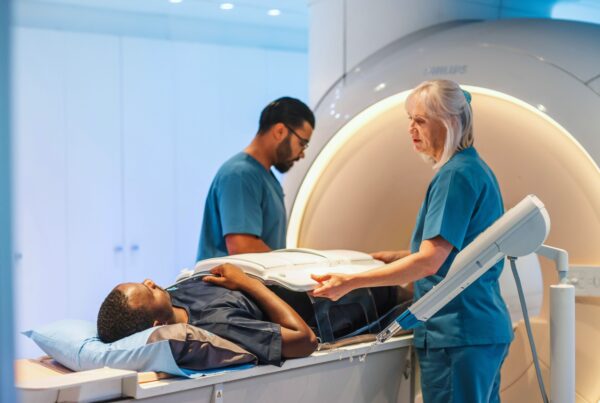
The researchers studied 352 women in Gothenburg, Sweden, all 70 and with no memory or thinking problems. Each person underwent a brain MRI, and 205 had a second scan five years later.
In the scans, the researchers looked for four signs of damage to the brain’s smallest blood vessels, all signs of cerebral small vessel disease – a condition that’s been linked to memory issues, cognitive processing problems, and dementia.
The women also reported their first period, when they went through menopause, and whether they had ever used birth control pills or hormone therapy, with three-quarters having taken the pill, and about 6 in 10 having used hormone therapy.
Estrogen and Alzheimer’s
According to the findings, published in Neurology, women who had used hormone therapy had about a 59% reduced risk of developing signs of cerebral small vessel disease compared to women who had never used hormones.
“We also found that use of hormonal birth control and menopausal hormone therapy was associated with better-preserved white matter, the tissue connecting different brain regions. Women who had used both had the highest white matter integrity.” – Giulia Lorenzon, study author
“Our results suggest that hormonal exposure across different periods of a woman’s life may have cumulative effects also on the cerebrovascular health in later life,” added senior author Anna Marseglia, PhD, assistant professor of neurobiology and care sciences and society at Karolinska Institutet in Stockholm.
This is not the first study to examine the link between estrogen and brain health, nor is it the first to find a positive association.
For instance, a study published in September, also in Neurology, found a small association between women who used menopausal hormone therapy and lower rates of Alzheimer’s disease signs and memory decline.
A second study, published in August in Alzheimer’s & Dementia: The Journal of the Alzheimer’s Association, analyzed medical data from over 183,000 postmenopausal women in the U.K. Biobank and found that women who had taken HRT had a 10% reduced risk of dementia and a 16% reduced risk of Alzheimer’s disease. The researchers also noted that women who started HRT between the ages of 46 and 56 had the greatest reduction in dementia risk, and that the link was stronger in women who had surgical menopause rather than natural menopause, and carriers of the Alzheimer’s-related gene.
How Estrogen Protects Brain’s Health
“First, estrogen may help maintain blood vessel health by supporting the cells lining blood vessels and regulating blood flow, potentially reducing damage to the small vessels supplying the brain,” explains Lorenzon to EveryDay Health, adding that the hormone also fights inflammation and acts as an antioxidant.
“This may be particularly relevant around menopause, when estrogen levels decline, or after surgical menopause, when the decline can be more abrupt,” she says.
“Another possibility involves the glymphatic system, the brain’s waste-clearance pathway. Enlarged perivascular spaces, one of the markers we examined, may reflect alterations in this system,” says Lorenzon.
Should You Take Estrogen to Protect Against Alzheimer’s?
Lorenzon’s research on estrogen and menopause has not focused much on changes in the brain’s blood vessels and white matter.
“Our findings help us better understand how women’s reproductive history may relate to the biological and neurovascular changes underlying their vulnerability to cognitive decline and dementia, potentially even before cognitive symptoms become apparent.”
That said, the findings do have their limitations, including not finding a verifiable link between estrogen or hormone therapy and the findings. The women were also well-educated, healthy Swedes who self-reported their hormone use, but the researchers were unaware of the type, dose, or timing of said hormone treatment. 
Additionally, hormone therapy may not be accessible or best for everyone, especially in women with health conditions that include estrogen-sensitive cancers or other cardiovascular conditions.
With that, it’s imperative to consult your doctor before starting any hormone therapy, and there are other ways in which you can reduce your risk for Alzheimer’s, and these include:
- Regular exercise
- Managing stress and blood pressure
- Following a Mediterranean style diet
- Avoiding cigarettes, vaping, and alcohol
- Maintaining a healthy social life (group classes, community groups)
- Engaging in brain exercises like reading, learning a new language, playing an instrument, or taking up new hobbies.
References
Bruno, J., Shaw, J.S., Hosseini, S.M.H. and for Alzheimer’s Disease Neuroimaging Initiative (2026). Association between menopausal hormone therapy and alzheimer disease neuropathology. Neurology, 107(5). doi:10.1212/wnl.0000000000218413
Lorenzon, G., Garcia-Lluch, G., Coughlan, G.T., Sindi, S., et al. (2026). Reproductive lifespan and hormonal therapy in relation to later-life neurovascular health in community-dwelling older women. Neurology, 107(11). doi:10.1212/wnl.0000000000218706.
Rossouw, J. E., Anderson, G. L., Prentice, R. L., LaCroix, A. Z., et al. (2002). Risks and benefits of estrogen plus progestin in healthy postmenopausal women: principal results From the Women’s Health Initiative randomized controlled trial. JAMA, 288(3), 321–333. https://doi.org/10.1001/jama.288.3.321
Squires, S., Saleh, R.N., Pilling, L.C., Atkins, J.L., et al. (2026). Hormone replacement therapy and dementia risk among postmenopausal women: Identifying responsive subgroups in the UK Biobank. Alzheimer’s & Dementia, 22(8). doi:10.1002/alz.71679.