

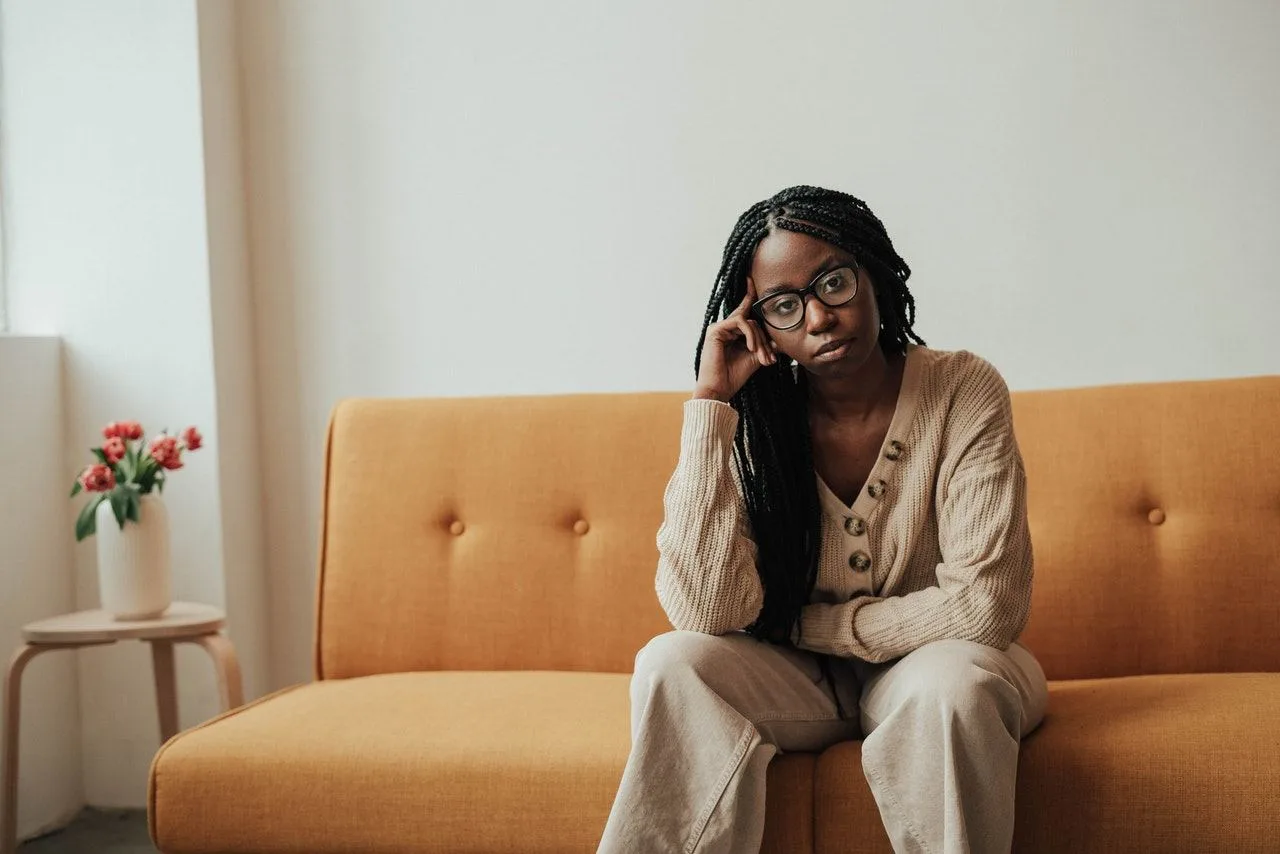
In recent years, research has sounded the alarm on harmful hair products, especially those marketed towards and mainly used by black women. In fact, one study found a 50% increased risk of uterine cancer among black women who regularly used chemical hair relaxers. Yet it’s not just chemical relaxers that pose a threat. Recent findings suggest that hair extensions, and more so braiding hair, may be significantly harming the longevity of black women.
How Hazardous Are Hair Extensions?
Hair extensions and braiding hair are typically used by women of color for protective styles such as braids, twists, and weaves. Created from synthetic fibers and other materials, including human hair, and then later treated with chemicals to either make them flame-resistant, waterproof, or antimicrobial, these products remain poorly regulated.
With that, Dr. Elissia Franklin, a research scientist at the Silent Spring Institute, and her team set out to explore the potential harmful exposures associated with hair extensions and braiding hair.
For the study, the team purchased 43 popular hair extension products online and from beauty supply stores, ranging from synthetic fibers to unprocessed and minimally processed human hair. The researchers then used a screening test to detect any compounds. Despite detecting over 900 chemicals, the team could only identify 169 across 41 of the 43 products.
After establishing the presence of the chemicals, Franklin and her team checked their findings against chemicals listed in the PlastChem database, which classifies chemicals in plastic, and found that many of the hair samples contained chemicals that PlastChem lists as hazardous.
Are Our Braids Causing Cancer?
Per the findings, published in Environment & Health, the researchers noted that the chemicals found in the 41 products could increase the risk for many health conditions, ranging from skin irritation to fibroids and cancer.
First, it should be noted that the researchers couldn’t identify just over 80% of the chemicals detected. This suggests that consumers are being exposed to unknown toxins.
As for the chemicals identified, the researchers revealed that 12 compounds are listed under California’s Proposition 65 (the Safe Drinking Water and Toxic Enforcement Act of 1986). The act warns of chemicals linked to birth defects, cancer, and reproductive issues.
What’s more, the researchers added that in 36 samples, 17 compounds linked to breast cancer were found, including dibutyl phthalate and DEHP, both of which are used in plastic production.
Human carcinogens in products
One chemical identified was benzyl chloride, which is commonly used in the production of sanitizers and plasticizers, but research has suggested it to be a possible human carcinogen.
Now, while the team also identified flame retardants, phthalates, and pesticides, the most surprising finding was that four samples contained over 20 organotin compounds.
“It was the organotin compounds that stood out to us, in particular because that’s not commonly found in consumer products,” Franklin reveals,
“It is used in polyvinyl chloride (PVC) as a stabilizer. However, we do know that they’re linked to cancer and hormone disruption as well, and they’re really bad for the environment.”
In fact, research has identified that organotin compounds can increase the risk for uterine fibroids, which impacts Black women disproportionately – the same Black women who make up the majority of braiding hair consumers. Furthermore, shockingly, some levels of organotin found in the hair extensions exceeded safety thresholds set by the European Union.
Hair products that didn’t disclose what type of synthetic fiber they were using were found to contain significantly more hazardous chemicals.
“When the fiber was not disclosed, those had some of the most hazardous chemicals in them,” said Franklin to Healthline.
It should be noted that synthetic hair extensions weren’t the only ones posing health risks, as Dr. Franklin revealed that they “also found several harmful chemicals in human hair.”
We need to unpack braiding hair
Dr. Franklin’s research is not the first to identify the dangers of braiding hair.
A 2025 Consumer Reports study tested 10 popular synthetic braiding hair products and found that all 10 contained cancer-causing chemicals, with 9 exceeding California’s safety limits for lead.
Unfortunately, Dr. Franklin’s latest findings only confirm the presence of chemicals, and not their short- and long-term health impact.
Nonetheless, with over 70% of Black women reportedly wearing hair extensions at least once a year, further studies are needed.
“We know that exposures are cumulative, and so what the study suggests is that hair extensions should be considered when thinking about our total exposure,” explained Franklin to Everyday Health.
Regulating the industry
Despite a global value of over $5 billion, the hair extensions market remains largely unregulated, which poses a great threat to its biggest consumers – Black women.
Already facing higher health risks – largely thanks to the use of chemical straighteners or relaxers, which are now the subject of numerous lawsuits – Black women then find themselves directed towards products that will help them meet (European-centered) societal and professional beauty expectations. As such, regulations that emphasize increased awareness and transparency become essential to protect their health.
Safe braiding habits
As a Black woman, I understand that braiding hair has always been a staple. So, instead of the recent findings, how do we move forward?
Well, for one, the same study did manage to identify two products that contained no hazardous chemicals: Latched & Hooked and Spetra.
Aside from changing your braiding hair to those labelled non-toxic, you can also use your trusted bottle of apple cider vinegar to soak the hair in the solution, which will help reduce irritation.
“We have some support that the apple cider vinegar rinse can have very limited protection in that it does reduce the number of chemicals by a bit, but it doesn’t completely eliminate the hazard,” Franklin shared.
It would also be advisable to reduce the frequency and duration you wear hair extensions. You should also immediately remove the extensions if you begin to experience sores, rashes, or itching after installing.
Nonetheless, Franklin maintains that the responsibility lies with the companies and manufacturers. After all, it shouldn’t fall on Black women to curb the dangers of products released to the public.
“These companies should not make products that harm their consumers. People should not be allowed to sell these products without testing them for safety and making sure that they do not cause harm… I don’t think we should have to choose between beauty or our culture.”
References
Bertrand, K. A., Delp, L., Coogan, P. F., Cozier, Y. C., Lenzy, Y. M., Rosenberg, L., & Palmer, J. R. (2023). Hair relaxer use and risk of uterine cancer in the Black Women’s Health Study. Environmental Research, 239, 117228. https://doi.org/10.1016/j.envres.2023.117228
Chen, Y., Guo, X., Wu, J. et al. Association between combined exposure to organochlorine pesticides and history of uterine fibroids in NHANES: findings from four statistical models. BMC Public Health 25, 1112 (2025). https://doi.org/10.1186/s12889-025-22274-6
Franklin, E.T., Favela, K., et al. (2026). Identifying Chemicals of Health Concern in Hair Extensions Using Suspect Screening and Nontargeted Analysis. Environment & Health. doi:https://doi.org/10.1021/envhealth.5c00549
Jackson, L.A. (2025). Dangerous Chemicals Were Detected in 100% of the Braiding Hair We Tested. [online] Available at: https://www.consumerreports.org/health/wigs-hair-extensions/dangerous-chemicals-detected-in-braiding-hair-cr-tested-a4850978424/.
Reed, K.B. (2026). Hair Extensions May Contain Harsh Chemicals Linked to Breast, Uterine Cancer. Healthline. Available at: https://www.healthline.com/health-news/hair-extensions-chemicals-breast-uterine-cancer
Upham, B. (2026). Hair Extensions, Used by Millions, Often Contain Toxic Chemicals. Everyday Health. Available at: https://www.everydayhealth.com/skin-care/hair-extensions-often-contain-toxic-chemicals/

![women [longevity live]](https://longevitylive.com/wp-content/uploads/2020/01/photo-of-women-walking-down-the-street-1116984-100x100.jpg)













Thanks for sharing this information. As someone who regularly wears braids and extensions, it’s a bit concerning to hear about the possible health risks. Hopefully brands will start focusing more on safer materials and transparency about what goes into their products.
Interesting and eye-opening article. It’s concerning to learn that some braiding hair products may contain chemicals linked to health risks, highlighting the need for better transparency and regulation in the beauty industry. Studies have found numerous chemicals in certain hair extension products, some associated with irritation, hormone disruption, and potential cancer risks.
While many people still enjoy protective styles using options like 613 braiding hair, it’s great to see conversations like this encouraging safer products and more awareness.
Thanks for reaching out to us. We note you include a link to your website that sells hair products. Are your products safe?