
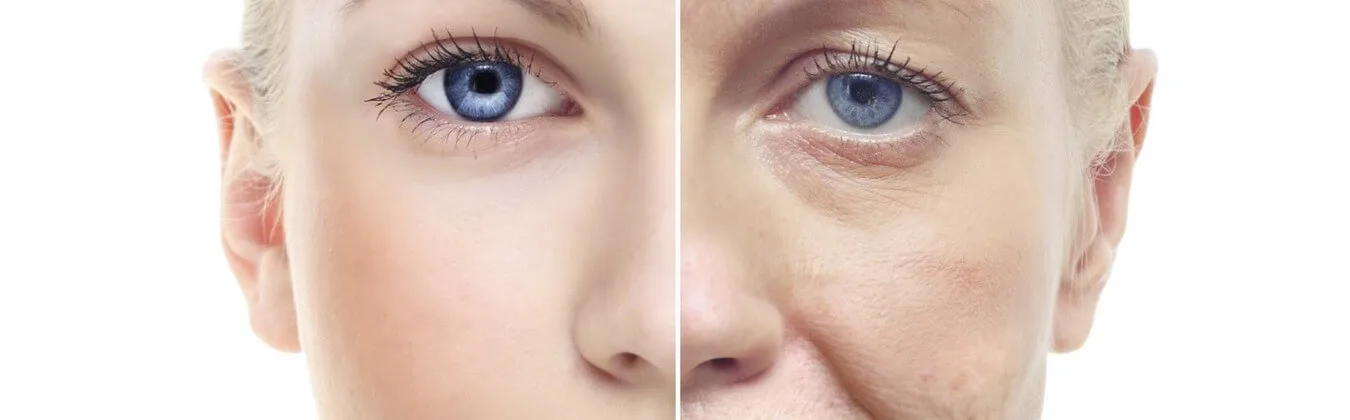
Over the past decade, the fear of aging has driven and dominated the wellness industry, with various diets, supplements, treatments, and innovative eating habits being marketed as tools to manage aging. Yet, according to physician and aging researcher Dr. Michael Fossel, many of these therapies misunderstand what aging actually is:
“We tend to think of longevity in terms of diet and exercise, which are all excellent, but they sort of miss the point.”– Dr. Michael Fossel
What Exactly Is Aging?
Dr. Michael Fossel is a former clinical professor of medicine at Michigan State University and the current chairman of Telocyte, a company exploring telomere science and the development of telomerase therapy to treat Alzheimer’s disease.
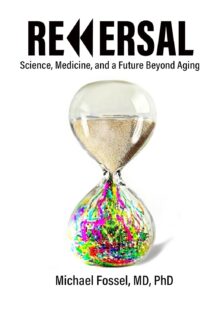
Having spent the past three decades studying the biology of aging, particularly telomeres and telomerase therapy, Fossel’s focus goes beyond slowing down aging, but rather potentially reversing the process on a cellular level, and reducing the risk for age-related diseases, and this is evident in his latest book, Reversal: Science, Medicine, and a Future Beyond Aging, which explores the science behind cellular aging and the future of telomerase therapy.
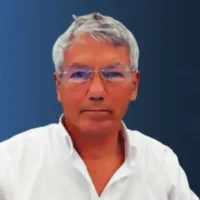
Dr Michael Fossel
In discussing aging, Fossel suggests that aging is not simply the result of entropy – the notion that systems eventually break down over time -but rather a “failure of maintenance in the face of entropy.”
He elaborates by explaining, pointing out that the cells humans inherit have been continuously reproducing for billions of years,
“In a very strict biological sense, you’re literally 4 billion years old, and you look marvelous for that age.”
Thus, if human cells can maintain themselves for billions of years across generations, then Fossel argues that aging cannot technically be because of deterioration. Instead, if aging does occur, it’s because the human body and cells have gradually lost the ability to repair themselves,
“You stop repairing the house, you stop repairing your car, you stop repairing your body – then things fall apart,” adds Fossel, and it is this distinction that makes aging not an unavoidable, decaying outcome, but rather a biological maintenance problem that could eventually be solvable.
The Body Is Constantly Rebuilding Itself
The human body is not static, and bones, explains Fossel, adding that cartilage, proteins, enzymes, and bones are being recycled.
“You’re tearing them down and building them up, tearing them down and building them up.”
Now, the main issue with aging isn’t necessarily the damage – young people also accumulate damage – but it’s the speed at which the body repairs itself,
“When you’re 20, and you’re jumping up and down on your knees, you’re entirely damaging chondrocytes (only cells found in healthy cartilage),” he explains, adding that you’re also rebuilding them at the same rate. Yet, over time, this shifts toward degeneration.
Treating Aging
In regards to treating aging, Fossel references historical periods before major medical breakthroughs.
For instance, a thousand years ago, physicians could diagnose infectious diseases, but they had no understanding of bacteria, sanitation, antibiotics, or immunization.
“Another example is polio in the 1950s. The prevailing response was rehabilitation, braces, and iron lungs,” explains Fossel, “While those interventions helped people manage the disease, they neither cured nor prevented it. In many ways, it was a narrow approach to a much larger problem.”
Fossel further adds that this approach is similar to where medicine is today with age-related diseases.
“We focus on gaining a few extra years of health, delaying a knee replacement, or targeting a specific protein or pathway. But fundamentally, these efforts are not aimed at fully reversing the aging process itself.”
It’s this line of thinking that has developed into an idea Fossel has been working on for 30 years, and for the first time, he believes they finally have the technical capabilities to pursue it.
“The goal is now within our reach.”
Toxins and Aging
Addressing accelerated aging means identifying the factors that contribute, and while some toxins can lead to it, Fossel challenges the simplistic idea that modern toxins alone explain aging.
“We’ve changed toxins,” he says. “If you go back thousands of years, we were still exposed to toxins, but different ones.”
He further argues that exposure to toxins isn’t enough, but rather the body’s declining ability to properly tolerate and repair damage over time, as well as its ability to handle toxins (heavy metals, metabolic stress, environmental carcinogens) in general, goes down with age.
Biomarkers of Aging
Biomarkers of aging are physiological, molecular, or cellular indicators that evaluate a person’s biological age, and Fossel works to highlight the distinction between addressing these biomarkers and the actual cause of the disease.
“Aging itself is a biomarker,” says Fossel,
“If someone asked me whether a patient is likely to have Alzheimer’s disease and I was allowed only one question, I wouldn’t ask about their genes or their family history. I’d ask, “How old are they?” Five-year-olds don’t get Alzheimer’s; 85-year-olds often do. Age is one of the strongest biomarkers we have.”
He further adds that there are many other biomarkers, and they include classic biochemical markers, genetic markers, and numerous newer measures. However, he once again emphasizes that biomarkers are not the disease itself, just as symptoms are not COVID.
If a patient in the ICU has COVID, they may exhibit low oxygen levels, fever, aches and pains, nausea, and abnormal white blood cell counts. However, those findings are not COVID; they are biomarkers and manifestations of the disease, so if Dr. Fossel places that patient on oxygen, he’s doing so to manage a symptom, not to cure the underlying infection.
“Too often, when we think about aging, we focus on treating biomarkers. But treating biomarkers alone means treating downstream signs and symptoms rather than addressing the underlying processes driving them.”
However, Fossel cautions against thinking of biomarkers as unimportant, as they are tools for measurement and monitoring,
“We should follow them closely, but our real target should be the underlying biological process that produces them.”
Telomerase Therapy
At the heart of Fossel’s theory to address aging are protective structures found at the ends of chromosomes known as telomeres,
“Think of telomeres as a clock inside your cells,” he explains, detailing how by themselves, they’re not especially important, but each time a cell divides to create a new cell, the telomeres become slightly shorter,
“What’s important is not the shortening itself, but what it does to gene expression.”
Now, as the telomeres shorten, they change which genes are turned on and off, and this changes the turnover rate of proteins that ensures cells function properly,
“You can think of it as affecting the cell’s recycling and maintenance systems. This includes proteins such as DNA repair enzymes and mitochondrial enzymes.”
The result? Less efficient cells, which means less efficient tissues, and ultimately, aging and age-related disease.
As for telomerase therapy, Fossel uses a musical metaphor to explain the mechanisms behind it.
Genes are like instruments in an orchestra, and epigenetic expression is the musicians playing them. Telomeres, on the other hand, are the conductor and the musical score.
Now, instead of changing individual genes or focusing on isolated cellular pathways, Fossel says telomerase therapy can reset the entire biological ‘score.’
Based on past studies, including this one from the Stanford University School of Medicine Research, resetting telomeres can make old human cells behave like younger ones, and with that, Fossel raises whether we can do it to ourselves. “The answer is probably.”
Alzheimer’s Disease and Cellular Health
Founded in 2015 by Dr. Fossel and Peter Rayson, Telocyte explores telomerase therapy for Alzheimer’s disease.
Speaking on how aging contributes to neurodegeneration, Fossel shares that proteins like beta amyloid are constantly produced, broken down, and recycled, yet this cycle is corrupted once cellular recycling slows with age.
“Certain genes, such as ApoE4, produce stickier forms of beta amyloid that accumulate more, causing plaques as turnover slows, and this results in Alzheimer’s.”
Cancer also accounts for over 8 million deaths yearly, and the risk rises dramatically with age, with Fossel pointing out that this, once again, comes down to the body’s declining ability to deal with cellular damage.
“It’s not your rate of exposure to carcinogens that results in increased cancer over a lifetime of exposure. It’s your declining ability to deal with that damage.”
Cell Aging
Factors that influence how we age, upstream risk factors, affect us all, and they include diet, exercise habits, genetics, epigenetic regulation, infections, and environmental factors.
On the other hand, downstream biomarkers are associated with age-related diseases, and they include DNA methylation patterns, acetylation, telomere length, and Yamanaka factor activity – a group of four special proteins that act like a genetic reset button – amongst others.
Yet, Fossel asks, why, amongst two people who have very similar genetic backgrounds, does one develop Parkinson’s disease while the other develops Alzheimer’s? Also, how can two people share similar lifestyle risks, like smoking or excessive alcohol consumption, yet only one ends up with heart disease while the other does not?
Fossel reveals that the answer is complex, but also suggests that neither end of the spectrum provides the complete solution.
Addressing upstream risk factors includes making better choices – better nutrition, regular exercise, stress reduction. In contrast, downstream biomarkers need to be monitored as they provide valuable information about what’s happening in the body.
However, Fossel cautions against focusing exclusively on either end, as treating risk factors alone won’t fully explain individual outcomes, and targeting only downstream can produce disappointing results, since it focuses on consequences rather than underlying causes.
As such, if we want to influence multiple age-related diseases at once, Fossel says that the optimal point of intervention is cellular aging.
Glycation and the Aging Process
Glycation has been presented as one of the primary drivers of premature aging, and it’s the process by which sugars attach themselves to proteins, fats, or DNA.
“It’s important to understand that sugars themselves are not the enemy,” says Fossel, “Natural sugars are present in many foods, including fruits and vegetables, and glucose is one of the primary fuels used by our cells, particularly by the mitochondria that generate energy.”
Now, while Fossel does admit that excessive sugar intake can be harmful, he also points out that eliminating sugar is neither practical nor desirable. The issue with glycation isn’t just exposure to sugar, it’s – once again – the body’s ability to repair and replace damaged molecules.
“Even a five-year-old has glycated molecules, yet the difference is that a young body maintains an extremely efficient recycling system. Glycation does occur, but the body clears the damage so effectively that it rarely accumulates.”
Yet, with aging comes a slowing down of that turnover process. Molecules are still being glycated, and sometimes a poor diet or metabolic dysfunction may increase the rate, but the body’s ability to remove and replace those damaged molecules declines, and this results in an accumulation of glycated, dysfunctional molecules.
“Aging is often less about an increased rate of damage and more about a reduced capacity for maintenance, repair, and recycling.”
Glycation is just one example of this reduced capacity, showing how, when it comes to aging, the main issue isn’t about how quickly the damage occurs, but more about how effectively the body can repair, replace, and clear that damage over time.
What about Autophagy?
In terms of cellular aging, autophagy is a critical cellular process that identifies, breaks down, and recycles damaged components, and without it, cells can quickly accumulate waste, lose function, and this could potentially cause aging. Unfortunately, autophagy becomes less efficient as we get older, and this is true for other maintenance and repair systems in the body, including DNA repair and mitochondrial function.
“All of those things slow with age, and so you begin to get more and more damaged and dysfunctional cells and therefore dysfunctional organs and tissues, and therefore disease and aging.”
The Truth About Blue Zones
Blue Zones are five areas around the world virtually free of disease and inhabited by healthy octogenarians, nonagenarians, and a few centenarians. Because of these statistics, many people adopt similar habits in hopes of aging as well as the people found in the Blue Zones, yet Fossel is not exactly a fan.
“In some towns, there were now more people claiming to be 110 years old than there had been people claiming to be 100 just a decade earlier. Something’s wrong there.”
Despite this clerical error, Fossel acknowledges that many of these communities share important characteristics that can improve health, such as better diet, better genes, and living in relatively stress-free areas.
Does Lifestyle Still Matter?
“Almost nothing you can do will reverse or stop aging. All you can do is slow it down.”
Fossel supports traditional health practices like avoiding alcohol and sugars, reducing stress, maintaining a healthy diet, and exercising.
However, he warns against obsession:
“It’s a balance. You certainly don’t want to stress so much over your diet or your exercise or your stress, that you become stressed.”
He also rejects extreme longevity lifestyles:
“If I could prove to you that I could triple your healthy lifespan by living in the dark and eating only cardboard, would you do it? No.”
So, is Aging a Disease?
Aging is a natural process that everyone experiences, but because it does involve degradation of bodily mechanisms and functions, many argue that it should be classified as a disease.
Fossel’s stance is largely disinterested, especially because people will insist aging is natural, yet spend resources trying to counteract it through Botox and other modifications.
“I’m not interested in whether aging is a disease or not. It’s something that makes people uncomfortable; it causes discomfort and fear, and so I’d like to do something about it. The point of all this is not to make you live forever, but it’s to make you live a better life.”
Reiterating this philosophy is a story that Fossel references at the end of his book, Reversal, and it features anthropologist Margaret Mead, who proposed the idea that the first sign of civilization was a healed femur bone.
“A healed femur takes months to heal and is the first sign of civilization: evidence that people cared for one another,” Fossel explains.
AI and medicine
Artificial intelligence (AI) has begun to incorporate itself into many industries, and medicine is one of them.
Now, while Fossel admits to having around seven different AI systems on his phone, and rarely going a day without spending at least an hour using AI to make your life more productive or more informed, he warns against thinking that AI alone can solve medicine’s conceptual blind spots,
“We ask, ‘What’s the best protein to target?’ or ‘What’s the optimal drug for Alzheimer’s?’ Those may be reasonable questions within our current framework, but they may also reflect the limits of that framework,” explains Fossel, adding that we may know a great deal about the things we know, but we are still missing the deeper underlying mechanisms,
“That’s why AI is only as useful as the questions we ask. If you want to get a really good answer from your AI, you’d better ask a really good question.”
Human trials and telomerase therapy
Fossel’s latest book, Reversal, explores the causes of aging, the translation of cellular science to human clinical trials, and the profound social implications of curing age-related diseases.
Thirty years ago, he gave what was, to his knowledge, the first lecture on reversing aging at the National Institutes of Health in Bethesda.
Now, after decades of laboratory research, Fossel believes that telomerase therapy may soon enter meaningful human clinical trials within the next two years.
Still, despite the prospects, he does remain scientifically cautious,
“Anyone who leaves this room thinking they’re going to reverse aging is naïve, but anyone who leaves thinking they can’t reverse aging is just as naive.”
The next step, he insists, is rigorous evidence, as his ideas must be tested against evidence, and what he’s shared so far is consistent with the available data, consistent with what he knows about aging biology, and consistent with existing clinical observations.
“It provides a coherent and, I believe, elegant framework for understanding aging. But until it is tested rigorously in human clinical trials, it remains a hypothesis.”
The research process
The first step is funding, and Fossel and his team have received anonymous commitments that would fully fund the program, but a commitment is not the same thing as money in the bank. Second, there’s manufacturing and development, as they have to produce the therapy, scale it appropriately, and complete the large-animal studies that regulators will likely require.
The third is the regulatory process itself, as, regardless of the regulatory body, the FDA or the EMA, clinical development requires extensive testing and review.
“As I often tell people, you don’t have to agree with every regulatory requirement, but you do have to work within the system. The regulators set the rules. Our job is to meet those standards and demonstrate safety and efficacy,” shares Fossel.
Telomeres are a complex area of study, especially because mice are born with telomeres that may be ten times longer than those of humans, yet they live a fraction of the time.
“The relationship between telomeres and aging is real, but it is not straightforward. Like much in biology, it is more about dynamics than static measurements.”
Improving telomeres
When people ask whether they should try to protect or support their telomeres, Fossel says there are a few ways to address it.
The first is lifestyle, which includes limiting alcohol and excessive sugar intake, maintaining a healthy diet, exercising regularly, and managing stress, all of which matter.
The second category involves so-called telomerase-activating compounds, which have been studied for more than 30 years,
“Examples include estrogen and estrogen-like compounds, as well as others such as epithalamin, which suggests certain compounds can have biological effects.”
However, Fossel says there are important limitations, such as how none of these interventions appear to reverse aging in any meaningful sense.
“They may have modest effects, but they do not take someone from 70 back to 30. Second, the evidence is often difficult to interpret because claims are inconsistent and not always reproducible. And third, there are real questions about the quality, sourcing, and reliability of many of these compounds.”
Then there is the question of cost and value, with Fossel saying that if you are young and wealthy, the risk-benefit calculation is different than if you are older and wealthy: “For most people, affordability and uncertainty make widespread use impractical.”
With that, there’s also the option of waiting for more definitive solutions, and these are currently being developed and tested in human clinical trials, which Fossel hopes to advance in the next few years.
Takeaway
Unlike some longevity ‘aficionados’, Fossel’s goal is not immortality, but something much more practical: longer periods of health, function, and vitality.
At 75 years old, Fossel’s habits include spending time in his garden and in his Japanese tea house that he built, doing a lot of baking and cooking, and writing books, trying to see if we can solve aging, proving that longevity is less about extending time and more about preserving the ability to embrace every minute.
Michael Fossel has a comprehensive website with more information here: https://michaelfossel.com/
Watch Our Interview
View this post on Instagram

![women [longevity live]](https://longevitylive.com/wp-content/uploads/2020/01/photo-of-women-walking-down-the-street-1116984-100x100.jpg)