
Our body is an ecosystem, just like the planet we live on. Yet, as modern life pulls us further from nature, the disconnect is reflected in our health. Longevity isn’t just about step counts or staying wrinkle-free; it’s about syncing up with where we came from using exercise!
Nature and Your Fitness Journey
We talk a lot these days about biohacking: using science, technology, and lifestyle interventions to “upgrade” the body and mind. But let’s pause on the word itself: “bio”, meaning life. Nature. The body. And yet, most of the focus has shifted to the “hacking”, treating ourselves like smartphones in need of upgrades and precision tweaks.
We track, inject, and optimize ourselves into performance mode, forgetting that some of the most powerful longevity “hacks” aren’t hacks at all; they’re simply returning to what is most natural to us.
To live longer, better lives, we need to get back to the earth. This doesn’t mean abandoning modernity (my fitness watch is pretty much surgically attached). It means making space for nature’s ancient intelligence in how we move, breathe, and live. Sounds overwhelming? Start by taking a breath.
Air: the invisible fuel
Breath is our body’s most constant input – yet it’s the one we think about the least. Every breath we take fuels a biological chain reaction: oxygen travels from our lungs into our bloodstream, muscles, and cells. Air quality doesn’t just affect how we breathe; it affects how we live. Much of our movement happens indoors, in recycled air, under artificial lights, making it easy to forget the power of clean, oxygen-rich air for the body, mind, and mood.
“Breathing poor-quality air not only has an impact on lung growth and function, but it can also have an impact on growth and development, and even neurocognitive development,” says pediatric pulmonologist Prof. Aneesa Vanker, of the UCT/Red Cross Children’s Hospital in Cape Town. “Clean air is vital for growth and health.”
She adds that moving and exercising in clean air is ideal, especially in natural or green spaces.
“Try to move when air quality is optimal, such as in the morning before traffic.”
There’s a reason why your body feels different when you work out outdoors – even if the workout is the same. Your breathing becomes more efficient. Your heart rate steadies. Recovery feels easier. It’s not just the vitamin D talking (although that does help); it’s your nervous system responding to cleaner oxygen and lower stress signals.
Whether it’s a quick mid-morning stretch on your balcony or walking your dog after work, that one outdoor breath can feel like hitting reset, for your body and your mind. And if something as simple as air can do that, what about the rest of the elements?
Terrain: the natural gym
Fitness and tech go hand-in-hand these days – it’s all machines and workout apps. But step outside, and you’ll find a gym more dynamic than any studio: the natural ground beneath your feet.
Whether it’s trail-running, hiking, or outdoor yoga, moving on natural terrain turns every step into a challenge for balance, strength, and coordination. “Each step is slightly different,” explains Fred Richardson, founder of Mindful Runner,“That variability strengthens the big movers – hips, knees, ankles – and the smaller stabilizers that control your joints.”
This constant recalibration not only builds better balance and a stronger core, but it engages the brain too.
“The brain has to stay fully engaged: adjusting balance, reacting in real time. Over time, that makes you more agile in everyday life.”
For Richardson, now in his sixth decade, trail-running is the reason his body stays pain-free. “If I run trails exclusively, I have no aches or pains.”
But you don’t need a mountain to get the benefits. A walk across a bumpy park path, or lunges on sloped grass, offers the same kind of neurological and physical engagement. “When you move outdoors, especially through natural spaces, you’re part of the world again,” says Richardson. “There’s a primal part of us that recognizes that.”
And once we start moving with nature, we start recovering with it too.
Cold water, hot topic
Cold plunging is the coolest wellness trend right now – but it’s far from new. From ancient rituals to Nordic traditions, cold immersion has long helped us to recover, regulate, and build resilience.
These days, #ColdPlunge is sold as a fix for everything from inflammation to anxiety, but what’s really happening beneath the surface? Dr. Leila Sadien, medical doctor and shaman, dives in: “Cold-water immersion restores balance in the nervous system and circulation, supporting resilience and regulation.”
But it’s not for everyone. Cold therapy requires respect, especially when it comes to pregnant or postpartum women, women with thyroid or heart conditions, or trauma history.
“This is an important conversation, especially as cold therapy becomes trendy. The cold isn’t just a dopamine hack or mental-toughness test; it’s medicine, and, like any medicine, it must be respected,” Sadien says.
- Prepare thoughtfully: Focus on steady breathing before entering the cold
- Consider your cycle: Avoid immersion during menstruation or low energy – it’s best during follicular and ovulatory
- Keep it brief: Limit exposure to one minute or less at first, with mindful awareness as you
- Pay attention to your body: Cold should strengthen and support you, not drain you

coldwatersocialclub/instagram
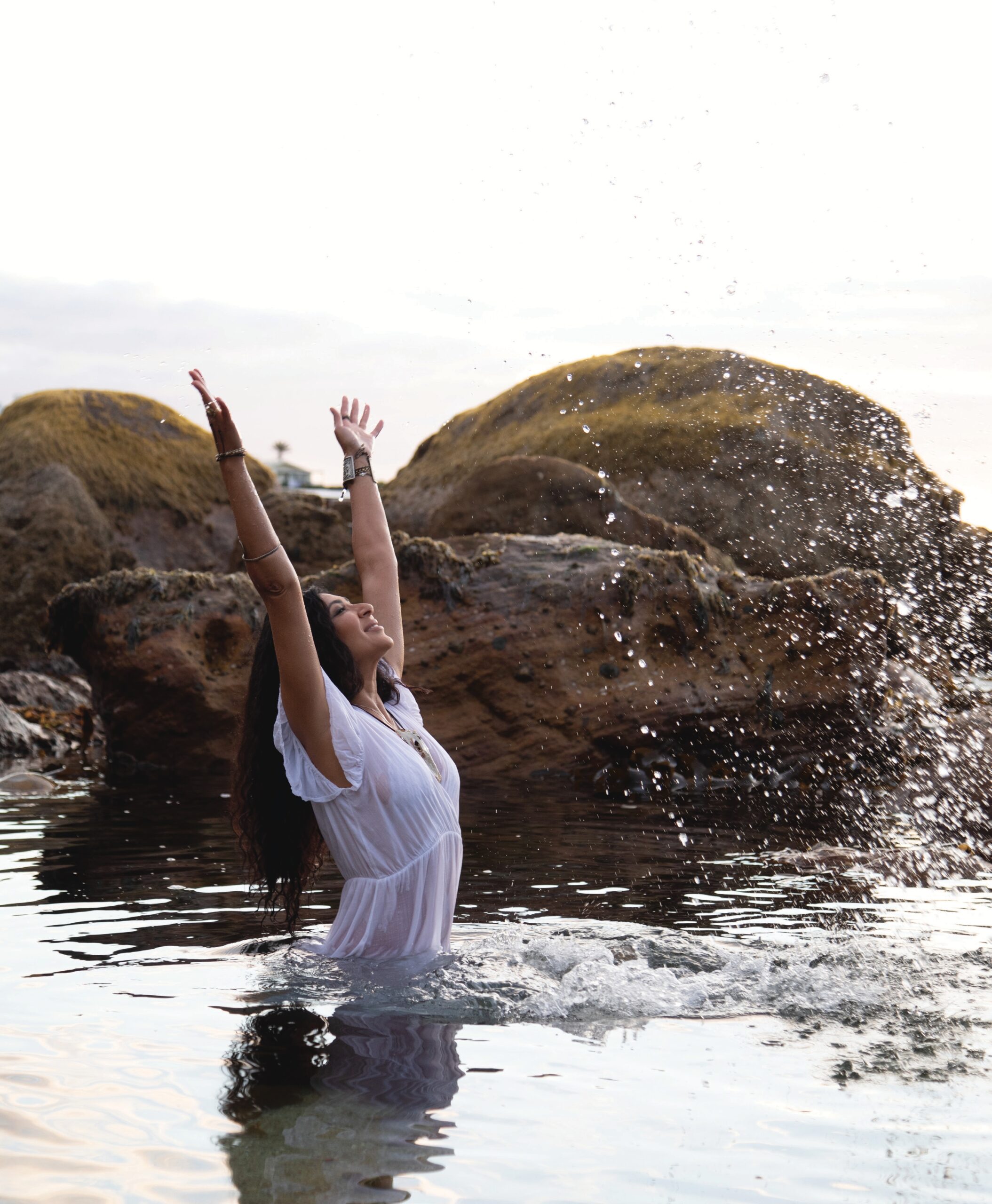
While cold-water immersion demands mindful practice, it’s also become a joyful social experience: “chilling” with friends.
The Cold Water Social Club in Cape Town (@coldwatersocialclub) hosts sea dips, saying, “There’s something magical about being in the ocean at sunrise.”
But its popularity isn’t just about physiology. The laughter, courage, and shared ritual of stepping into icy water together tap into something ancient: our instinct to connect. This return to joyful movement is a return not only to nature, but to human nature.
Playing outside: the longevity of sport, joy, and connection
Some of the most powerful forms of movement for longevity aren’t necessarily the most high-tech, but rather the most fun. Racket sports such as tennis draw on a powerful blend of physical and mental benefits, such as agility, coordination, endurance, and focus. But the secret ingredient that keeps people coming back to it is the joy of human connection; the banter across the net, as well as the playful competitiveness that makes you feel more energized, even when your calves are burning.
The facts on paper? A large-scale study published in the British Journal of Sports Medicine found that people who played racket sports had a 47% lower risk of death from any cause, the highest of any sport measured.
The real-life proof? The late Petro Kruger continued to compete at the highest level well into her 70s, and local leagues regularly host players well into their 80s. Even new-kid-on-the-block padel reflects the power of The Game.
At Africa Padel Claremont, a group called The Vintages meets once or twice a week, with up to 16 players.
“A lot of them had stopped playing other sports,” explains coach Bridget Visée, “but padel is easier on the knees, less strain on the joints, and just as good for mental wellbeing. You don’t need a high skill level to have fun. It’s very social and team-based.”
Stillness is movement, too
If playful movement reconnects us to others, mindful movement reconnects us to ourselves.
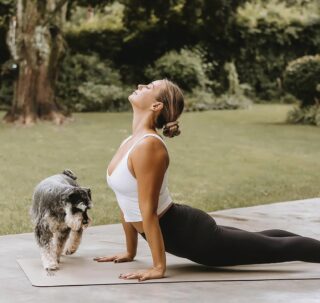 Practices such as tai chi, yoga, and breath-led flow don’t drain your energy; they renew it. And while that may sound like something embroidered on an organic tote bag, these practices go deeper than pretzel poses and palo santo. They’re about returning to your body and giving your nervous system space to breathe.
“Tai chi is a return to harmony,” says Dr. Michael McLoughlin, founder of Long Hu Tai Chi. “It invites the body, breath, and mind to work together again – and that’s what health really is.”
A doctor of Chinese medicine and acupuncture with over three decades of experience, McLoughlin describes tai chi less as a workout and more as a recalibration: slow, deliberate movements that restore balance and resilience over time, improving leg strength and bone density, while supporting circulation and metabolism.
Tegan Sammons, a certified yoga instructor and founder of Tegan B Yoga, echoes this view.
She explains:
“We live mostly in fight or flight. Yoga and breathwork help shift us into rest and digest. They calm the mind, and, in doing so, calm the system.”
In a world where burnout is baseline, that’s not just helpful; it’s necessary. Studies show these slower practices reduce blood pressure, lower cortisol, and support immunity.
Sammons adds that stillness gives us agency over the mind. “We have tens of thousands of thoughts a day. Yoga gives you the tools to slow the chaos and choose what stays open.”
It doesn’t take a membership or a Himalayan salt lamp. A few slow breaths, 10 minutes, legs up the wall before bed. Slowing down is a strength. And it brings us back to what the body has always known.
Back to basics
In a wellness world full of gadgets and gimmicks, it’s time to get back to what’s simple, sustainable, and human.
Few embody this philosophy better than Jenni Rivett,a trailblazing trainer and former coach to the late Princess Diana. With decades of experience, Rivett champions long-term consistency over short-term extremes. “You can get fit in 20 to 30 minutes a day,” she says. “It’s about doing what works, and doing it often.”
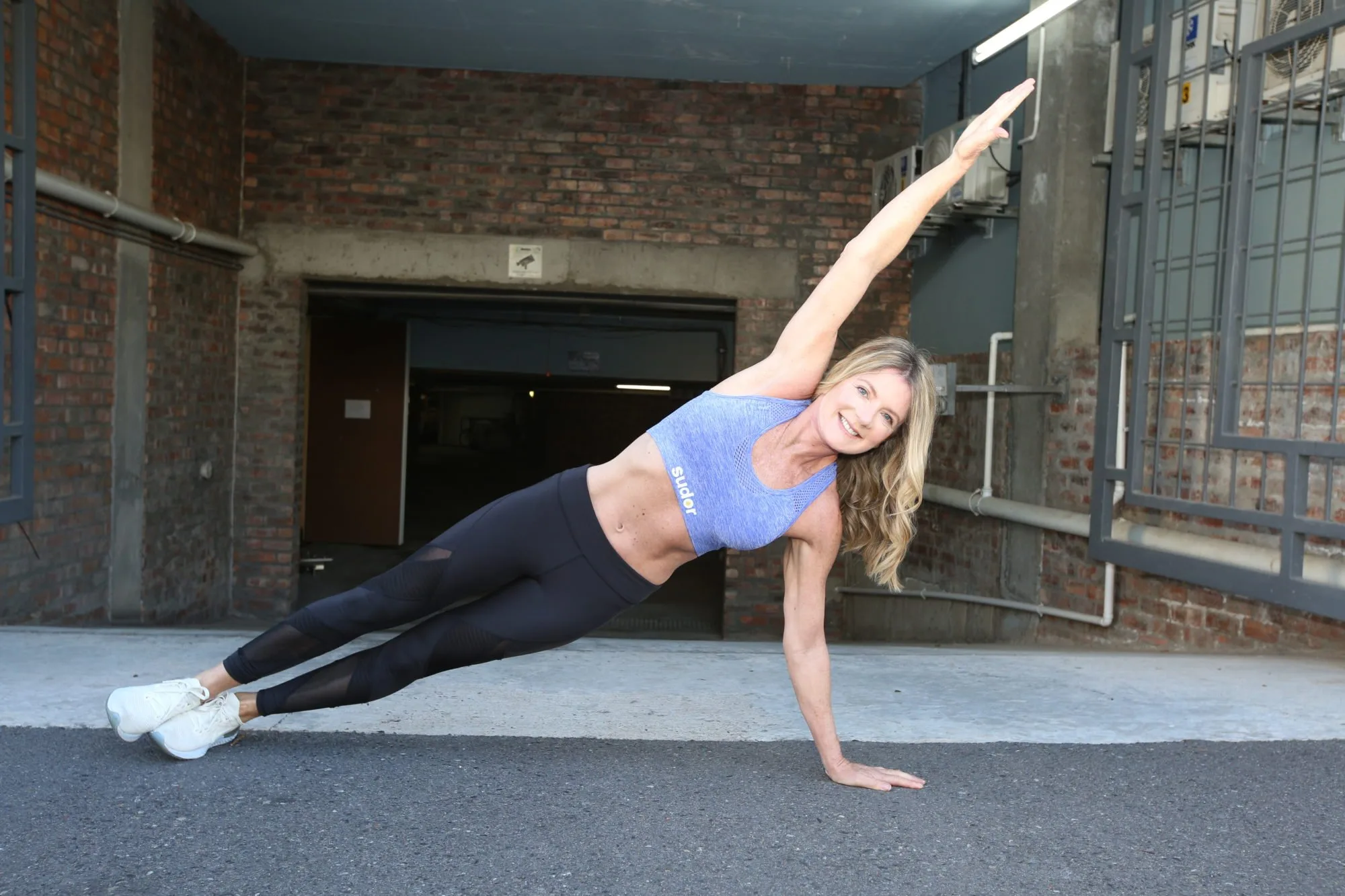 Her approach strips fitness to essentials: functional movement, daily walking, and simple strength work. Rather than heavy equipment, she encourages accessible, everyday routines using bodyweight or light resistance.
She’s also critical of some of the more extreme wellness trends. “HIIT is one of the best tools for fat loss,” she explains, “but if your cortisol is already high from stress or poor sleep, it can do more harm than good.”
And when it comes to fasting, her advice is simple: “Fasting is not for everyone. We’re all designed differently and one size does not fit all.”
Fitness is a lifelong conversation with your body
This refreshing return-to-basics approach isn’t just showing up in training plans; it’s reshaping wellness culture itself. Jenna Rivera, marketing director at Planet Fitness, sees the shift up close. “People are tired of pressure and perfection. They want routines that feel good and fit into their lives.”
For her, it’s all about a great morning routine. It doesn’t have to be anything fancy or extreme, just something you can and want to do every morning. “Fitness isn’t a sprint or a competition; it’s a lifelong conversation with your body.”
Modern life gives us a million ways to monitor, measure, and optimize our health, and let’s be honest, it’s easy to get swept up in the latest trend, app, or gadget.
But the faster we go, the easier it is to forget what we need. The further we drift from nature – from fresh air, clean water, joyful movement, and stillness – the more complicated wellness becomes.
The bottom line
The solutions aren’t new. They’re ancient. And they’ve been here all along. Strength doesn’t have to be loud. Stillness doesn’t have to be earned. Real wellness doesn’t pull us away from the earth; it brings us home to it.
GRAB A COPY OF OUR LATEST LONGEVITY
 This article, and many others, can be found in our latest “Back to the Earth” edition.
From expert insights with Dr. Zach Bush, Dr. Ash Kapoor, Oscar Chalupsky, Dr. Ela Manga, Dr. Maureen Allem, Dr. Anushka Reddy, Dr. Des Fernandes, Dr. Craige Golding, and many more, this issue explores everything from food, clean beauty, sustainable living, fashion, travel, and other mindful choices.
While available nationally in Southern Africa at your nearest Woolworths, Exclusive Books, and selectively at Superspar, Pick’n Pay, Airport lounges, and your local garage shop, you can also buy a digital copy at Zinio.com.

![women [longevity live]](https://longevitylive.com/wp-content/uploads/2020/01/photo-of-women-walking-down-the-street-1116984-100x100.jpg)