
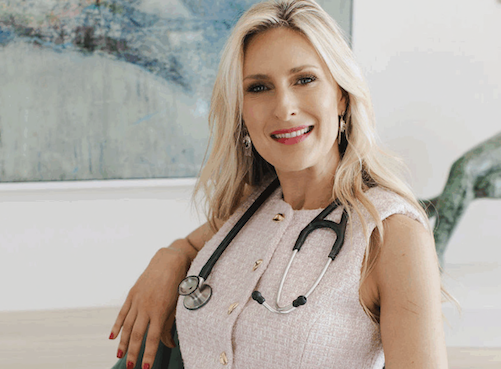
It’s a new year, which means taking steps that can improve our health and longevity, but where do we start? For Dr. Simone Silver, adopting an integrative approach, one that pays attention to and connects the dots, is the best way to go. A qualified medical doctor and general practitioner, she has a strong desire to understand the complex connections between the body, mind, environment, hormones, genetics, and lifestyle.
Dr. Silver has now brought her expertise to Cape Town and recently launched a dedicated Hormonal Health and Wellness Centre. With that, she spoke to us about the importance of reclaiming our health, confidence, and sense of self in 2026.
Reframing menopause
According to the Health Professions Council of South Africa (HPCSA), neither Dr. Silver nor her colleagues are defined as endocrinologists or medical specialists. However, they are still a group of general practitioners practicing with a functional medicine lens.
Following years of clinical practice, Dr. Silver soon noticed a recurring theme of patients experiencing often debilitating symptoms that could not be explained away by standard blood tests or diagnostic criteria. Sadly, a large number of these patients were women, and they were frequently told that everything was ‘normal,’ despite feeling contrary to that belief. This anecdote aligns with a recent survey of 900 women aged 25-34, where 93% reported feeling dismissed when seeking medical help.
“Medical school trains us to think in boxes of symptoms, but people don’t live in boxes.”
Silver believes that functional medicine not only offers hope, but also provides a different approach to diagnosing and managing the condition. Instead of focusing solely on disease, functional medicine redirected to other aspects by seeking the meaning behind symptoms rather than dismissing them, and it is this very philosophy that drew Dr. Silver into the world of hormonal health.
Misdiagnosed menopause
While menopause and women’s hormonal health are trending topics and getting plenty of attention, especially with the likes of Halle Berry and Shania Twain opening up about their experiences, this wasn’t always the case.
“When I started, 10 to 12 years ago, we weren’t having these conversations,” Dr. Silver reveals, “Unless a woman was very clearly menopausal in a measurable, and definable way, she often wasn’t being heard.”
As a result, many women were living in crisis, especially if they were perimenopausal. After all, perimenopause can last for years and is often more complex than menopause and, as such, is frequently overlooked.
According to a survey published last year, nearly 40% of women say they were misdiagnosed during perimenopause, with many turning to Google instead of their doctors. Sadly, this speaks to how many women in the past, and currently, begin to question their mental health, their relationships, even their sanity.
“There was a huge divide between what women were experiencing and what healthcare was offering them.” Silver reflects.
With this gap, Silver sought to improve health literacy as true wellness begins with understanding what is happening in the body, especially when it comes to one of the most misunderstood systems in medicine – our hormones.
Hormones: A longevity factor
There’s more to hormones than just hot flushes and irregular periods, as they play a critical role in maintaining our health and longevity.
“One of the major drivers of accelerated aging and the development of chronic disease is chronic inflammation that goes unchecked. Hormones – particularly the sex hormones estrogen, progesterone, and testosterone – play a vital role in regulating and mitigating this inflammatory process.”
Silver further adds that female hormones can also provide antioxidant benefits,
“When we look at female hormones and the menopausal brain, many of the changes that occur are linked to a loss of cellular protection. As hormone levels decline, brain cells become more vulnerable to damage,” she explains, detailing how these hormones help provide this antioxidant protection, keeping cells resilient and healthy. “For this reason, they play a vital role in healthy aging and in the prevention of chronic disease.”
Rethinking menopause
It would be silly to discuss women’s hormonal health without talking about ‘the big M.’ And it is exactly that narrative that Dr. Silver is most passionate about changing, especially the idea that menopause is the start of a woman’s decline. Instead, she sees it as the complete opposite, one marked by wisdom, boldness, and growth,
“I truly believe that menopause can be the most magnificent phases of life I see women rising like phoenixes every day, stepping into their true identity and sense of empowerment.”
Now, despite this perception, Silver is well aware of the physical challenges that come with hormonal transitions and changes, and cautions against minimizing them. Rather, she urges that the systems be acknowledged, understood, and managed skillfully so that women can fully enjoy and embrace this stage of life.
Symptoms
Contrary to popular belief, hot flashes and vaginal dryness are not the most common hormonal symptoms that Dr. Silver sees,
“It’s low libido, weight gain, and mood changes,” she notes.
Unfortunately, if these symptoms sound pretty common, it’s because they are. Low libido, weight gain, and mood changes can be associated with other health conditions like thyroid issues, stress, and even depression. As such, it’s imperative to do the necessary work to not only find out the cause behind the symptoms, but also to provide management tools.
Metabolic dysfunction
For many women, midlife weight gain (menopot) is one of the most distressing changes they experience, yet Dr. Silver cautions against believing that eating less or exercising harder is the solution.
“It’s important to understand that as estrogen levels decline, one of the key metabolic changes is increased insulin resistance. This makes us more prone to gaining weight around the abdomen,” Silver explains, “At the same time, fat distribution shifts with age, moving away from the hips and thighs, which are hormonally supportive of reproduction in our 20s and 30s, and redistributing toward the midsection.”

Photo by Andres Ayrton
“It can feel deeply unfair, and I have this conversation with women every day, but it is a very real and common biological change.”
The menopause toolkit – why do we need it?
Before delving into the complexities of menopause and hormonal management, Dr. Silver reiterates an important fact that needs to be taken into consideration before starting your journey with hormonal management:
“Once those hormones are lost, they’re gone. They cannot be replaced through diet, lifestyle changes, or supplements-there is no supplement that can truly replace a hormone.”
Also, while you may choose to just let your body be, as menopause is a natural process, your health may suffer from the lack of care.
“Without hormones, women face an increased risk of osteoporosis, where bones become thinner and more brittle,” shares Silver, adding that by prioritizing bone health, we can ensure that we remain mobile, strong, and active, and avoid falls and fractures, which can significantly increase health risks later in life.
Mobility matters
Joint health is another area that Silver believes doesn’t receive enough attention, as around 70% of menopausal women experience increased joint pain, stiffness, or worsening osteoarthritis.
“When thinking about how we want to age, mobility matters,” she says, “So does mood.”
Silver further details how female hormones can influence the feel-good brain chemicals serotonin and dopamine, and how, without them, many women may experience significant changes in mood and sleep.
If that’s not enough, we also need to take into consideration both our cardiovascular and neurological health,
“After menopause, the loss of the cardioprotective effects of female hormones significantly increases a woman’s risk of heart disease,” reveals Silver, who further adds that cognitive changes, memory issues, and the risk of dementias such as Alzheimer’s disease may also be accelerated by hormonal loss.
With that said, these are all essential factors to weigh when making decisions about going through with menopausal care and management.
Building the menopause toolkit
The menopause toolkit is a vital health tool, and while it is quite broad, the aim is to draw from multiple approaches and personalize them for each woman.
For instance, supplements may help ease certain menopausal symptoms, like hot flushes or insomnia, yet they will never deliver the same systemic benefits as hormone replacement therapy.
“I’m not saying that everyone out there should take hormone replacement. It’s a nuanced discussion between each woman and her practitioner. But we have to understand that we’re not just treating the symptoms of menopause – we’re looking at restoring balance in the body and looking to the future to prevent chronic disease and things like that.”
Thankfully, the past decade has seen the narrative around hormone replacement evolve, with many older studies-including those around breast cancer risk-being re-examined.
Hormone replacement
While the focus used to be on the risks of using hormones, Silver reveals the importance of looking at both sides of the equation and examining both the risks of using hormones and the risks that come with avoiding them, which may include an increased risk of osteoporosis, joint degeneration, mood disorders, cardiovascular disease, and cognitive decline.
“Hormone replacement is not risk-free, and it’s not the right choice for everyone,” admits Silver, “However, it deserves careful consideration from multiple angles as there are real risks associated with declining hormones that we need to acknowledge.”
With that said, Silver emphasizes that when hormones are replaced, they can help, but they are not a magic solution, especially when it comes to weight.
“Replacing hormones can certainly help, but it does not simply ‘melt’ fat away,” she reveals, “The idea that HRT (hormone replacement therapy) will automatically restore the body and eliminate belly fat is a misconception.”
Weight gain and your hormones
Rather, what it can do, as explained by Silver, is to help moderate the metabolic shift that occurs with hormonal loss,
“For some women, this shift can lead to rapid and alarming weight gain, and hormone replacement may help temper that change rather than reverse it entirely.”
In conclusion, an effective menopause toolkit requires sustainable management and the right combination of tools that may feature tailored nutrition and lifestyle strategies, supportive supplements, sometimes newer metabolic medications like GLP-1 medications, and increasingly, precision medicine approaches like genetic testing.
Hormones and your genes
Dr. Silver and her practice focus on a strong emphasis on personalized and precision medicine, which is why they incorporate genetic or epigenetic testing to look for clues about how they can optimize nutrition and lifestyle.
“This process is gradual and highly individualized-it’s a bit like chipping away at an ice sculpture until the final form begins to emerge.”
Now, while Silver does recognize how privileged her team is to live in an era of unprecedented access to data and information, she cautions against viewing any single set of results as the full truth,
Understanding your genes
“Genetic profiles and blood tests offer insights, glimpses rather than definitive answers,” she says, “The more pieces of information we have, the clearer the picture becomes, but they must always be interpreted in context.”
With that said, Dr. Silver adds that epigenetic and nutrigenomic tests do not dictate our health outcomes; rather, they highlight potential tendencies. Now, while this information may seem frightening because nobody wants to know how they could potentially die, Dr Silver sees it as empowering,
“We now understand that gene expression is not fixed. The outdated idea that we are stuck with the genetic hand we were dealt has been replaced by the knowledge that we can influence which genes are switched on or off through how we live.”
So how does this relate to hormonal health?
Hormones are primarily tested through conventional blood tests, yet hormone testing remains a controversial area, especially for sex hormones, which naturally fluctuate.
“In menstruating women, hormone levels vary significantly throughout the cycle, meaning test results can differ depending on timing,” says Silver, adding that this has caused debate within the medical community on how useful certain hormone tests truly are.
That said, Silver reveals that there are well-established and widely accepted scenarios where blood testing can be extremely valuable. For instance, measuring progesterone around day 21 of the menstrual cycle can help confirm ovulation in younger women. She also shares how they commonly use a blood test called FSH (follicle-stimulating hormone) for assessing menopause.
“The brain produces FSH and reflects a woman’s estrogen reserve. As estrogen levels decline during menopause, FSH rises, making it a standard and reliable screening test.”
Some practitioners choose to measure estrogen and progesterone levels during perimenopause or after menopause, while others are not exactly fans. What’s more, male-type hormones are getting attention as testosterone and DHEA levels are being increasingly assessed,
The bottom line
“Women require healthy physiological levels of testosterone for energy, libido, mood, muscle mass, and overall wellbeing, and so testing testosterone is particularly relevant for women in their 40s and 50s.”
Ultimately, Dr. Silva believes that testing should always be tailored to the individual and guided by their age, symptoms, and personal health goals.
“If something feels off-whether you’re in your 20s or 30s and experiencing stress, fatigue, or a sense of imbalance-it’s worth seeking medical advice, having appropriate tests done, and exploring possible causes with a practitioner.”
Watch The Interview
For Dr. Simone Silver, her work is not only helping hundreds of women, but it also reflects a broader shift in medicine, with Cape Town Hormonal Health and Wellness Centre being part of a growing movement to ensure women are heard, understood, and supported through every stage of their lives.
View this post on Instagram

![women [longevity live]](https://longevitylive.com/wp-content/uploads/2020/01/photo-of-women-walking-down-the-street-1116984-100x100.jpg)