

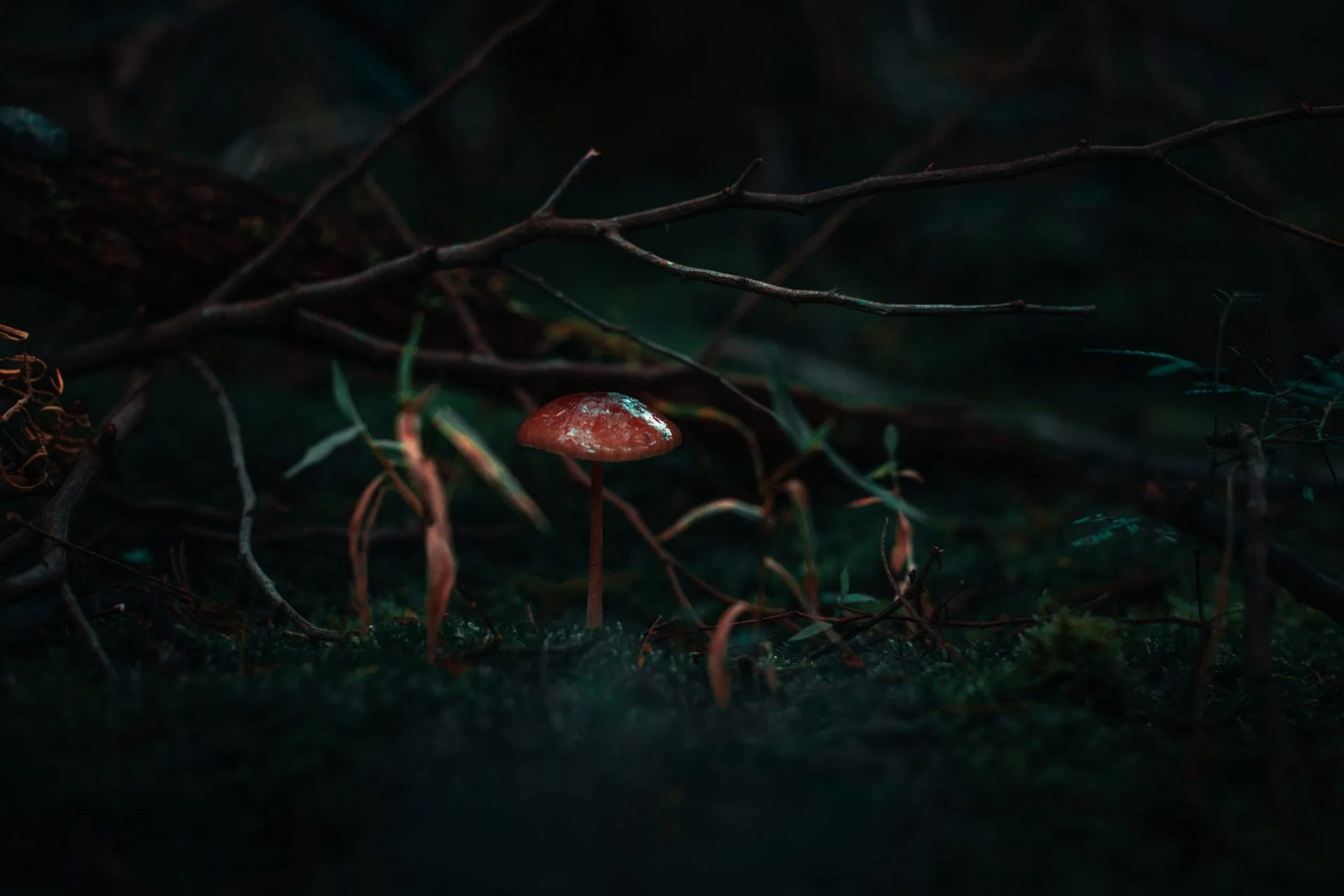
What’s a New Year’s resolution if you’re not embracing the magic of mushrooms? While longevity biohacker and centenarian wannabe Bryan Johnson is known for his unconventional and controversial therapies aimed at improving his health, his appreciation for magic mushrooms as a vital longevity therapy should not be dismissed. In fact, magic mushrooms may be exactly what you need to improve your longevity in 2026.
Bryan Johnson: You Need Psilocybin Mushrooms in 2026
Taking to X, the unverified 48-year-old biohacker revealed that he had received psilocybin doses under medical supervision, in a legal setting, with a professional facilitator, and experienced multi-system improvements.
The first dose occurred on the 9th November 2025 and was 4.67 g (24.98 mg psilocybin and 3.5 mg psilocin), whereas the second dose occurred on the 30th November 2025 and was 5.35 g (28 mg psilocybin and 4 mg psilocin). Unlike the first dose, the second dose happened in a relatively open space, with friends and family joining virtually, and live-streaming.
This article will unpack the benefits that Johnson experienced to determine whether there are scientific explanations behind them, or if they’re the ravings of a man looking to live forever.
1. Improved blood sugar control
According to Johnson, the psilocybin doses helped improve his blood sugar control from the top 2% of the population to 0.2%, which Johnson claims is better than 99.75% of 18-25 year olds.
As for the research, a recent animal study suggested that low doses of psilocybin may have similar benefits. The findings, published in Pharmacological Research, showed that mice on a high-fat, high-sugar diet were then given low-dose psilocybin over several months. The psilocybin helped to lower blood sugar levels and improve the body’s response to insulin, which highlights its potential as a future treatment for type 2 diabetes and obesity.
2. Reduced chronic inflammation
Inflammation is the body’s natural line of defense, yet chronic inflammation can increase the risk of many health conditions. Thankfully, Johnson didn’t have to worry about that, as his psilocybin doses reduced his inflammation to below detectable levels one week post-dose.
A study published in Brain, Behavior, and Immunity found that after receiving either psilocybin or a placebo, a group of healthy volunteers who received the psilocybin quickly experienced lowered levels of a key inflammation-related substance in the body. What’s more, this effect faded after about a week, yet other markers of inflammation remained lower for at least seven days.
3. Lower stress levels
We’re a few weeks into the year, and there’s a chance that a few of us are stressed about the year ahead. But if you’re anything like Bryan Johnson, you may find magic mushrooms to be a stress reliever.
“Psilocybin calmed my body and mind…Both my cortisol and DHEA (another product of the adrenal cortex) dropped 42% and 45%, respectively, indicating an overall adrenal reset associated with rest and recovery.”
Johnson also adds that psilocybin helped to reduce an inhibited HPA-axis, which, per the Cleveland Clinic, is how your body responds to stress. Unfortunately, an inhibited HPA-axis can result in insufficient cortisol production, as well as a weakened stress response. In a 2025 study, stressed-out animals with symptoms similar to an inhibited HPA axis who were administered psilocybin had their stress-related behaviors improve.
4. Increased brain plasticity
As we age, we begin to lose brain plasticity (neuroplasticity), which is the brain’s ability to reorganize itself, its function, as well as its connections. Necessary for learning and memory, as well as recovery, brain plasticity is vital for maintaining cognitive function through the years. Aside from age, chronic stress, poor diet, lack of sleep, sedentary living, depression, and head injuries can impact brain plasticity, so we must adopt habits that protect it.
For Johnson, one of those habits is microdosing psilocybin, which, he claims, enhanced his creativity, playfulness, and openness/vulnerability, all with reduced mental rigidity.
According to findings published in Nature, psilocybin can improve brain activity in healthy adults, as it makes the brain more flexible and open to change. Not only did brain areas that don’t normally interact begin to share information, but rigid boundaries between different networks softened, indicating increased neuroplasticity.
5. Improved motor function
Primary sensory-motor integration is the brain’s ability to take in information from the senses and then instantly use that information to coordinate body movements. Neurological disorders such as stroke and Parkinson’s disease, as well as chronic pain, substance abuse, and aging, can influence primary sensory-motor integration.
While Johnson admits that both doses of psilocybin helped to increase his primary sensory-motor integration, it’s not unheard of for psychedelics and narcotics to impact, rather than support, primary sensory-motor integration. So, what does the research say?
Yet to be peer-reviewed, one study’s findings did not directly align with Johnson’s experience. For instance, it indicated that basic movement remained normal at low and moderate doses, but there were some slightly improved skills, especially on tasks that involved speed and coordination. However, this could be due to increased focus or engagement.
What’s more, higher doses made complex tasks harder, with some participants struggling with tasks that required combining movement with thinking, speed, or attention. While the findings suggest that one could safely perform different types of movements after taking psilocybin, they do not support the idea that magic mushrooms could improve motor function.
Dosing Psilocybin in 2026
Despite Johnson’s enthusiasm and continued global research, psilocybin is still a Schedule I controlled substance. So, if you’re looking to enjoy its benefits this year, you should only do so with the help of a trained professional in a controlled setting.
Want to know more?
If magic mushrooms aren’t the sort of therapy you’d adopt, Bryan Johnson’s latest tips don’t require you to have millions in your bank account or to live in abnormality. In fact, his 10-step guide is the perfect 2026 health resolution.
References
@bryanjohnson_(2025). X. Available at: https://www.x.com/bryan_johnson (Accessed: 21 January 2026).
Colognesi, M., Gabbia, D., Signor, A., Sarill, M., et al. (2026). Low, non-psychedelic doses of psilocybin as a novel treatment for MASLD, obesity and type 2 diabetes via 5-HT2B receptor-dependent mechanisms. Pharmacological Research, 224, 108080. https://doi.org/10.1016/j.phrs.2025.108080
Mason, N., Szabo, A., Kuypers, K., Mallaroni, P., et al. (2023). Psilocybin induces acute and persisting alterations in immune status in healthy volunteers: An experimental, placebo-controlled study. Brain, Behavior, and Immunity, 114, 299-310. https://doi.org/10.1016/j.bbi.2023.09.004
Siegel, J. S., Subramanian, S., Perry, D., Kay, B. P., et al. (2024). Psilocybin desynchronizes the human brain. Nature, 632(8023), 131-138. https://doi.org/10.1038/s41586-024-07624-5
Wang, Z., Robbins, B., Zhuang, R., Sandini, T., et al. (2025). Early psilocybin intervention alleviates behavioral despair and cognitive impairment in stressed Wistar rats. Progress in Neuro-Psychopharmacology and Biological Psychiatry, 136, 111243. https://doi.org/10.1016/j.pnpbp.2024.111243

![women [longevity live]](https://longevitylive.com/wp-content/uploads/2020/01/photo-of-women-walking-down-the-street-1116984-100x100.jpg)