

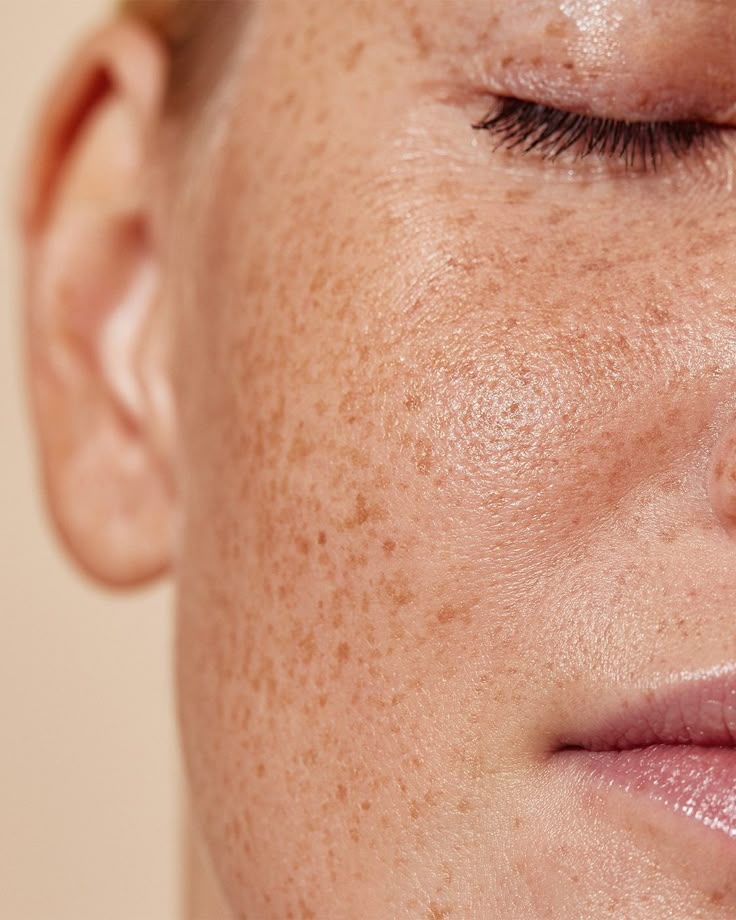
By late summer, many people notice the same shift: their skin tone looks less even than it did a few months ago. Freckles darken. Patches along the cheeks or jawline become more pronounced. When pigmentation changes, it’s rarely random. It’s the skin responding to UV exposure, inflammation, or hormonal shifts.
Hyperpigmentation: your skin’s defence mechanism at work
Hyperpigmentation occurs when melanocytes, the cells responsible for producing melanin, which provides our skin with its colour, become overactive. Melanin plays a protective role, shielding skin from ultraviolet (UV) damage. But when triggered repeatedly by sun exposure, inflammation, or hormonal shifts, this protective response can become exaggerated.
Melanin production is controlled by an enzyme called tyrosinase. When the skin is repeatedly exposed to UV radiation or inflammation, that enzyme becomes more active. Over time, excess pigment accumulates in certain areas rather than being distributed evenly.
The result is visible darkening that can persist long after the original trigger, whether that was acne, a hormonal shift, or a long summer outdoors.
Why does pigmentation happen in the first place?
There are usually three main drivers behind hyperpigmentation. Sun exposure is the most obvious.
Ultraviolet radiation stimulates melanocytes, whether or not you burn. In a country like South Africa, for instance, where UV levels remain high for much of the year, even incidental sun exposure keeps pigment cells active.
Inflammation is the second major trigger. Post-inflammatory hyperpigmentation (PIH) develops after acne, eczema, skin irritation, skin trauma, or overly aggressive skincare. When the skin becomes inflamed, chemical messengers signal melanocytes to produce extra melanin as part of the healing response. The darker and more prolonged the inflammation, the more persistent the pigment. This is why picking at breakouts or over-exfoliating often makes pigmentation worse.
Hormonal changes are the third factor. Melasma, often seen as symmetrical patches on the cheeks, forehead, or upper lip, is closely linked to hormonal fluctuations. Pregnancy, contraceptives, and hormone therapy can all stimulate melanocyte activity. UV exposure then worsens the condition, making it particularly stubborn.
Not all dark marks behave the same
One of the biggest mistakes people make is assuming all pigmentation should be treated the same way. Epidermal pigmentation sits closer to the surface and appears brown or tan. This type generally responds well to consistent topical treatment. Whereas dermal pigmentation sits deeper and may look grey or slightly bluish. Because it sits in the lower layers of the skin, it can be more resistant and may require professional intervention.
The depth of pigment determines the strategy. Treating all dark spots the same way often leads to frustration.
How the treatment works
Effective treatment isn’t about using one miracle product. It’s about interrupting the pigment pathway at different stages. Certain ingredients like Vitamin C, alpha arbutin, kojic acid, and azelaic acid work by slowing down tyrosinase, the enzyme that drives melanin production. Niacinamide works differently. Instead of reducing production, it limits the transfer of pigment to surrounding skin cells.
Retinoids increase cell turnover, helping pigmented surface cells shed more quickly. Over time, this can soften the appearance of dark marks. Tranexamic acid has gained attention for melasma, as it targets some of the inflammatory and hormonal pathways that keep that condition active.
My top picks to treat pigmentation
- Lamelle Corrective Vita C Lipid
- NeoStrata Enlightening Skin Brightener SPF35
- Dermalogica Powerbright Dark Spot Peel
However, even the most advanced treatment will fail without consistent sun protection. No brightening ingredient can outwork ongoing UV exposure. Daily broad-spectrum sunscreen is non-negotiable. Without it, pigmentation will continue to reactivate.
Why patience matters
Pigmentation does not form overnight, and it does not fade overnight. Most superficial pigmentation begins to improve within eight to twelve weeks of consistent treatment. Deeper, hormonally driven pigmentation may take several months and can relapse if triggers aren’t managed.
Importantly, over-treating can also worsen inflammation. Harsh peels, aggressive scrubs, or layering too many active ingredients can trigger inflammation, which can stimulate more pigment. For people with darker skin tones, whose melanocytes tend to respond more vigorously, this is important to note.
Listen to what your skin is signalling
Hyperpigmentation is often viewed purely as a cosmetic frustration. In reality, it reflects how your skin has responded to its environment to UV stress, inflammation, injury or hormonal change. Understanding pigmentation shifts the conversation from “How do I remove this?” to “What triggered this, and how do I prevent it from returning?”
Pigment is information. When we understand what it’s responding to, treatment becomes more strategic and less reactive. In a high UV environment, a strategic approach matters because managing pigmentation isn’t about chasing spots; it’s about managing the triggers that created them in the first place.

![women [longevity live]](https://longevitylive.com/wp-content/uploads/2020/01/photo-of-women-walking-down-the-street-1116984-100x100.jpg)