

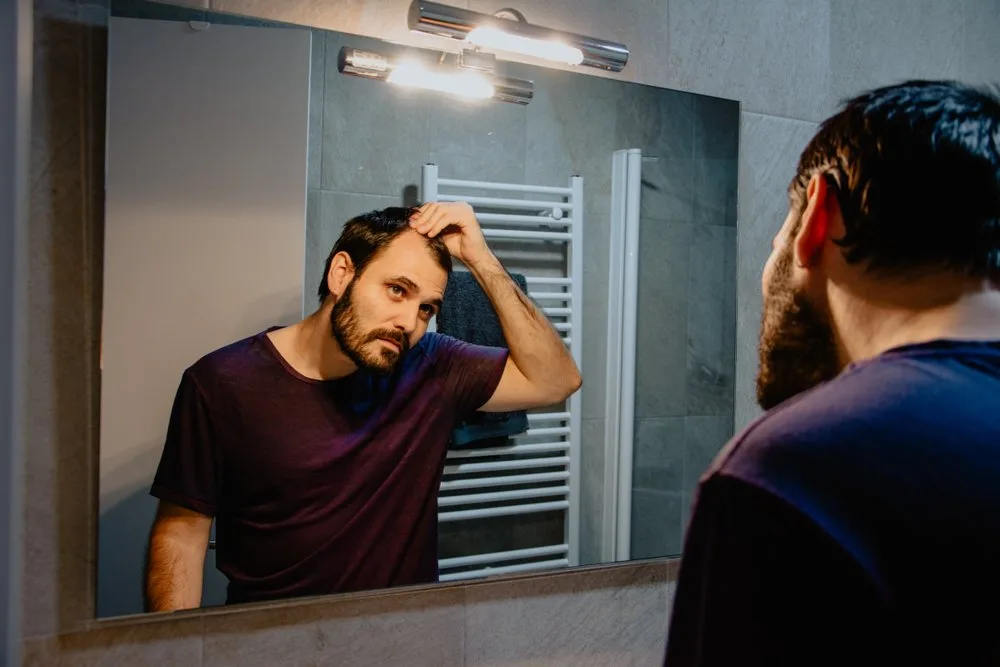
In 2023, global prescriptions for GLP-1 weight loss medications rose by more than 40%, with drugs like Ozempic and Wegovy moving from specialist clinics into everyday conversation. Alongside this surge, a new concern is appearing more frequently in consultation rooms: unexpected hair loss.
Hair Loss and Glp-1s: What’s the Link?
For many patients, the timing is deeply unsettling. After months of discipline and visible progress, they start to notice more hair in the shower, on their pillow, or in their brush. The immediate fear is that something has gone wrong – that the medication is damaging their body, that the weight loss has come at a hidden cost, or something more serious.
In most cases, the reality is more nuanced. At our clinic Alvi Armani, we’re seeing a consistent pattern: hair loss following rapid weight loss is real, but it is rarely caused by GLP-1 medications alone, despite how often this link is assumed. Instead, it reflects how the body responds to sudden physiological stress.
Hair loss often arrives late
The most common diagnosis in these cases is telogen effluvium, a form of temporary shedding that occurs when a large number of hair follicles shift prematurely into a resting phase. The critical detail is timing – the hair does not fall out immediately but rather sheds months after the original trigger.
This delay is what makes the experience so confusing. By the time hair begins to thin, weight loss may already feel stable, lifestyle changes established, and the initial stress long past. But biologically, the body is only now expressing the shock it absorbed earlier.
In some individuals, this shedding also unmasks an underlying genetic tendency toward patterned hair loss, known as androgenetic alopecia. While rapid weight loss does not create this condition, it can reveal it sooner than expected. What begins as temporary shedding may gradually shift into more persistent thinning – a progression that is emotionally difficult precisely because it feels so unexpected.
Why does the body sacrifice hair first?
Hair is not essential to survival. When the body experiences stress – whether through rapid fat loss, hormonal shifts, illness, or nutritional restriction – it reallocates resources to protect vital systems. Hair growth is one of the first processes to be downregulated.
Importantly, stress-related shedding does not create a new condition. It accelerates what is already encoded in the body. The hair is not “breaking down”; it is responding to a shift in internal priorities.
The speed of change is critical. Gradual, steady weight loss allows the body time to adapt hormonally and metabolically. Rapid weight loss, particularly when paired with appetite suppression, elevated stress hormones, or inadequate protein intake, creates a perfect storm for hair disruption.
From a biological perspective, shedding is not a malfunction, but rather an adaptive response. But from a patient’s perspective, it feels personal, visible, and deeply unsettling.
Who tends to notice it the most
Women often become aware of thinning first, partly because longer hair makes shedding more obvious, and partly because changes in density carry greater emotional weight. Individuals with a family history of hair loss are also more vulnerable, as are those who lose a significant percentage of body weight in a short period of time.
Nutrition matters more than most realise
Hair is a metabolically demanding tissue. It requires consistent access to protein, iron, zinc, and a range of micronutrients to maintain its growth cycle. When intake drops sharply because of appetite suppression, restrictive dieting, or poorly supervised medication use, hair becomes collateral damage.
This is why medically guided weight loss is so important. GLP-1 medications can be powerful tools, but they must be paired with nutritional planning. The body can tolerate change; what it struggles with is deprivation disguised as progress.
Temporary or permanent?
For many patients, telogen effluvium resolves within six to nine months once the body stabilises. Hair regrowth is slow, but it does occur.
However, in those with genetic susceptibility, the episode may mark the beginning of more sustained thinning. This does not mean damage has been done, but it does mean the window for early intervention matters. The earlier changes are recognised, the more options exist to slow or stabilise progression.
When hair loss deserves attention
Shedding should not be ignored if it persists beyond three to six months, if overall density continues to decline, or if there is a strong family history of pattern hair loss. Hair changes are often the first visible sign that the body is struggling to adapt to internal stress.
Early assessment allows for accurate diagnosis, realistic expectations, and far better long-term outcomes.
A final thought on balance
GLP-1 medications have transformed the weight loss landscape, and for many people, they offer genuine health benefits. But transformation should never come at the cost of physiological stability.
Hair is not separate from health. It is one of its most sensitive mirrors. Protecting the body protects the hair. Sustainable change, guided by medical support, remains the most reliable way to achieve results that last – without unexpected consequences.

![women [longevity live]](https://longevitylive.com/wp-content/uploads/2020/01/photo-of-women-walking-down-the-street-1116984-100x100.jpg)