

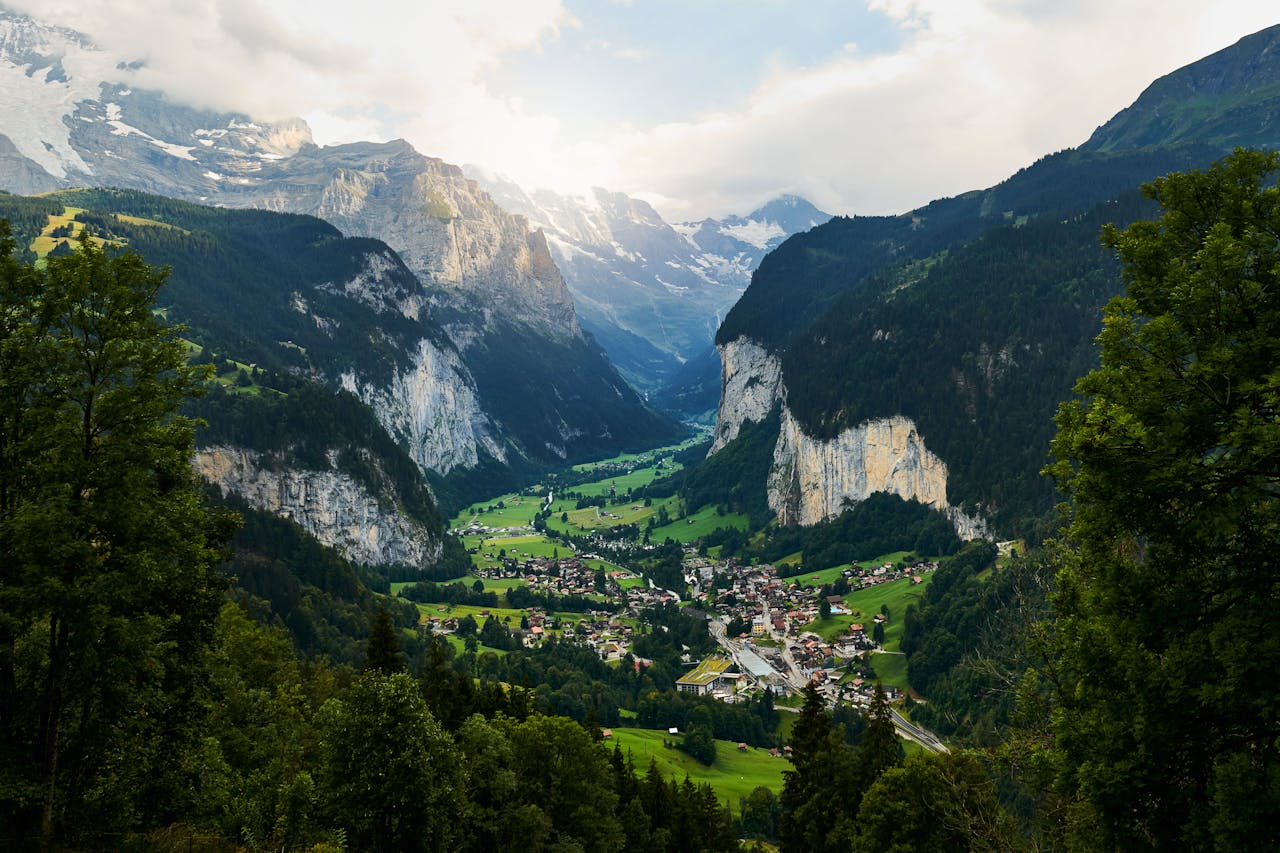
With growing interest in living longer and healthier, centenarians have become celebrities in a way, with countless studies funded to find the secret to living beyond 100. An example of this is a recent study that delves into centenarians found in Switzerland. With 0.02% of the Swiss population being centenarians, the researchers sought to determine whether their biological characteristics could underpin their exceptional longevity.
Examining Swiss Centenarians
A team from the University of Geneva (UNIGE) and the University of Lausanne (UNIL) developed the “SWISS100” study – the first large-scale Swiss research project dedicated to centenarians.
For the study, the team evaluated and compared the blood profiles of centenarians with those of hospitalised older adults aged 80–90 and healthy younger adults aged 30–60. The researchers focused on proteins in the blood, as these proteins can reveal a lot about the body’s function.
Not only did they find that 583 proteins in the centenarians were different when compared to the other groups, but they also matched 23 of these proteins to a known list of aging-related proteins created by the Targeting Aging with Metformin (TAME) consortium.
The researchers then used an advanced statistical method to monitor how protein levels change with age and identified that certain proteins are involved in numerous processes, which may explain why some Swiss continue to live long, healthy lives.
The Secrets of a Swiss Centenarian
Less oxidative stress
Oxidative stress is one of the major factors behind premature aging, as well as age-related diseases, so it’s important to manage and prevent it.
Per the study’s findings, published in Aging Cell, the research team identified 37 proteins in the centenarians that could also be found in younger, healthier adults.
“This represents approximately 5% of the proteins measured, suggesting that centenarians do not entirely escape ageing, but that certain key mechanisms are significantly slowed down,” explained Flavien Delhaes, researcher at the Department of Cell Physiology and Metabolism at the UNIGE Faculty of Medicine and first author of the study.
The study’s strongest finding involved five proteins associated with oxidative stress, prompting the researchers to wonder whether centenarians produce free radicals, the molecules responsible for oxidative stress, or whether they simply have stronger protection against them.
The answer?
Well, antioxidants are a great protection against oxidative stress, yet centenarians have lower levels of antioxidant proteins than typical elderly people. So, since they experience less oxidative stress, their bodies don’t need to produce as many antioxidant proteins to defend themselves in the first place.
You don’t need Swiss genes to reduce your oxidative stress, as you can easily do so by staying active, managing your stress levels, following a plant-based diet, and avoiding smoking and alcohol.
Improved metabolic health
In terms of metabolic health, the researchers identified proteins that help the body’s tissues appear ‘younger’ in centenarians, and a few of these proteins may even offer cancer protection.
What’s more, there were noted differences in how the body handles fat. In elderly people, several proteins linked to fat metabolism increase with age, whereas in centenarians these increases are much smaller; the same pattern was observed with interleukin-1 alpha, a key protein involved in inflammation. It was found to be lower in centenarians than in typical older adults.
Yet there’s more: it involves a protein called DPP-4, which breaks down the hormone GLP-1 – yes, that GLP-1 behind modern diabetes and weight-loss drugs. In centenarians, DPP-4 remains well preserved, and, by breaking down GLP-1, DPP-4 may help keep insulin levels relatively low, which is linked to metabolic syndrome and type 2 diabetes.
A Swiss Lifestyle
The research team hopes that their findings will spark discussions on new therapeutic approaches to combat age-related decline, especially among the elderly population.
As their study highlights the importance of healthy living, they emphasise that a healthy lifestyle in adulthood is a powerful lever, especially when it includes nutrition, physical activity, and social connections.
“Eating a piece of fruit in the morning can reduce oxidative stress in the blood throughout the day. Physical activity helps maintain the extracellular matrix in a more ‘youthful’ state. And avoiding excess weight also helps preserve a healthy metabolism, similar to that observed in centenarians.”
Want to know more?
While they are scattered around the world, Brazil does have a notable population of supercentenarians, housing three of the world’s top 10 oldest living validated men and women.
Read about the biological and immune processes of Brazilian supercentenarians.
References
Delhaes, F., Falciola, J., Hoffman, A., Carnesecchi, S., Cavalli, S., Jopp, D. S., Herrmann, F. R., & Krause, K. H. (2026). Plasma Proteome Profiling of Centenarian Across Switzerland Reveals Key Youth-Associated Proteins. Aging Cell, 25(2), e70409. https://doi.org/10.1111/acel.70409

![women [longevity live]](https://longevitylive.com/wp-content/uploads/2020/01/photo-of-women-walking-down-the-street-1116984-100x100.jpg)