
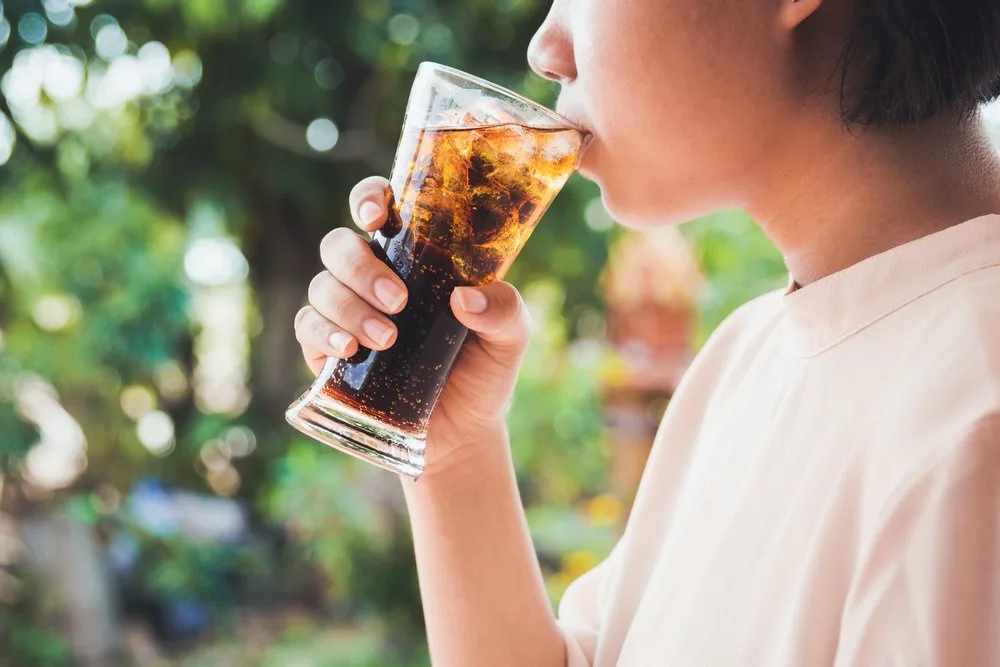
Gastric cancer, most commonly known as stomach cancer, is ranked as the sixth most common cancer globally and the fifth most common form of cancer death, according to the World Health Organization (WHO). Due to this high mortality rate, prevention of stomach cancer is important. With that, a recent study has suggested that our soda habits may increase our risk for stomach cancer.
Soda, Sugary Drinks and Stomach Cancer
“We already had strong evidence linking sugar-sweetened beverages to a higher risk of colorectal, breast, and liver cancers,” says Andrew T. Chan, MD, MPH, a gastroenterologist and epidemiologist with the Mass General Brigham Cancer Institute, to Healthline.
“Given how almost 65% of U.S. adults consume at least one of these beverages a day, it seemed important to ask whether that same relationship might extend to stomach cancer.”
Dr. Chan and his team then examined data from 112 284 participants who were enrolled in the Nurses’ Health Study and Health Professionals Follow-Up Study. The participants were followed for many years and asked about their diets, lifestyles, and health over several decades. For the current study, the participants were grouped by how often they consumed sugar-sweetened beverages, including carbonated drinks, punch, lemonade, and sports drinks. Over the course of follow-up, the researchers noted that 278 participants had developed stomach cancer.
Does soda increase stomach cancer risk?
According to the findings, published in Gastro Hep Advances, people who drank at least one sugar-sweetened beverage a day faced double the risk of developing stomach cancer, compared to those who drank less than one serving a month.
“Based on data collected from more than 100,000 people over decades, we found that consuming at least one sugar-sweetened beverage per day was associated with more than twice the risk of developing gastric cancer compared with those never consumed these beverages.” – Andrew Chan, Medical News Today.
Their findings were stronger in women who consumed sugary drinks daily, as they faced a 3.04fold higher risk of stomach cancer compared with women who very rarely consumed these beverages.
As for artificially sweetened drinks, the researchers noted that a higher consumption of those beverages was not linked to a higher risk of stomach cancer. With the researchers noting that a higher total intake of fructose was associated with a greater stomach cancer risk, this may be why artificially sweetened drinks may not have the same effects,
“It’s possible that some of the mechanisms linking sugar-sweetened beverages to cancer, like the metabolic effects of fructose or the calorie load contributing to weight gain, simply don’t apply to artificially sweetened beverages, since they don’t contain the same sugars or calories,” Chan explained.
However, Chan adds that the evidence on artificial sweeteners and overall cancer risk is still evolving and somewhat mixed, and their findings shouldn’t be read as a blanket statement that these beverages carry no risk.
Why do sugary drinks raise stomach cancer risk?
While they can’t confirm the exact mechanism behind the increased risk, Chan shares that there are theories on how sodas and drinks might contribute to cancer risk, and that includes their effects on weight gain, insulin resistance, chronic inflammation, and changes to the gut microbiome.
“Intriguing data suggest that fructose in particular may play a specific role in cancer development,” Chan says. “This may be due to insulin or inflammatory pathways, but also some metabolic pathways specific to cancer.”
Excess weight is a common factor associated with an increased risk of cancer, and not just stomach cancer but others, and insulin resistance can trigger abnormal cell growth. Additionally, chronic inflammation and imbalances in the gut microbiome can affect the stomach lining, influencing the likelihood of developing stomach cancer.
Is soda an official risk factor for stomach cancer?
Yes, sugary drinks like soda are not the healthiest beverages to consume, but that doesn’t necessarily mean that they cause stomach cancer.
After all, Chan’s study was observational, and its results showed an association, and not a direct cause, between the consumption of sugar-sweetened beverages and stomach cancer.
Also, the study participants were predominantly white, which is quite limiting, especially when you consider this report from the University of Connecticut that found that Black and Hispanic Americans consume higher daily rates of overall sugary drinks.
Finally, the dietary information was based on participants’ reports, which may be influenced by memory recall and reporting errors.
Cutting back on sugary drinks
“Stomach cancer is often diagnosed at a late stage, when treatment options are limited,” Chan reveals. “Unlike some cancers with established screening programs, there isn’t a standard screening test for stomach cancer in the U.S. Thus, prevention of stomach cancer through modifying risk factors such as diet is critical.”
So, if you’re looking to cut back on sodas and sugary drinks, the first step would be to replace your daily drink with water, sparkling water, green tea, or even unsweetened iced tea. As this change can be challenging for some, try to reduce the amount of soda you drink weekly, limiting yourself to 3 days out of the week where you drink your daily soda.
Also, be selective when choosing ‘low sugar ‘ or ‘sugar free’ options. Read the label and watch out for words like high-fructose corn syrup, cane syrup, glucose, dextrose, sucrose, agave, and concentrated fruit juice, which are essentially secret sugars.
Want to know more?
When discussing the effects of soda on health, it’s important to examine how both regular soda and diet soda can affect one’s well-being. So, here are 9 reasons to never drink (diet) soda ever again.
References
Gweon, T., Ha, J., Kim, H., Du, M., Song, M., & Chan, A. T. (2026). Association Between Sugar-Sweetened and Artificially Sweetened Beverage Intake and Gastric Cancer Incidence. Gastro Hep Advances, 5(11), 101097. https://doi.org/10.1016/j.gastha.2026.101097
Pelc, C. (2026). Your Daily Sugary Drink Habit Could Double Your Risk of Stomach Cancer. Healthline. Available at: https://www.healthline.com/health-news/daily-sugary-drink-doubles-stomach-cancer-risk
Morales-Brown, P. (2026). Daily sugary drink consumption linked to more than double stomach cancer risk. Medical News Today.com. Available at: https://www.medicalnewstoday.com/articles/daily-sugary-drink-consumption-linked-more-than-double-stomach-cancer-risk
Zangari, E. (2021). Racial and Ethnic Disparities in Sugary Drink Consumption Exacerbated by Exposure to Neighborhood Fast Food and Convenience Stores. UConn Today. Available at: https://today.uconn.edu/2021/08/racial-and-ethnic-disparities-in-sugary-drink-consumption-exacerbated-by-exposure-to-neighborhood-fast-food-and-convenience-stores/

![women [longevity live]](https://longevitylive.com/wp-content/uploads/2020/01/photo-of-women-walking-down-the-street-1116984-100x100.jpg)