

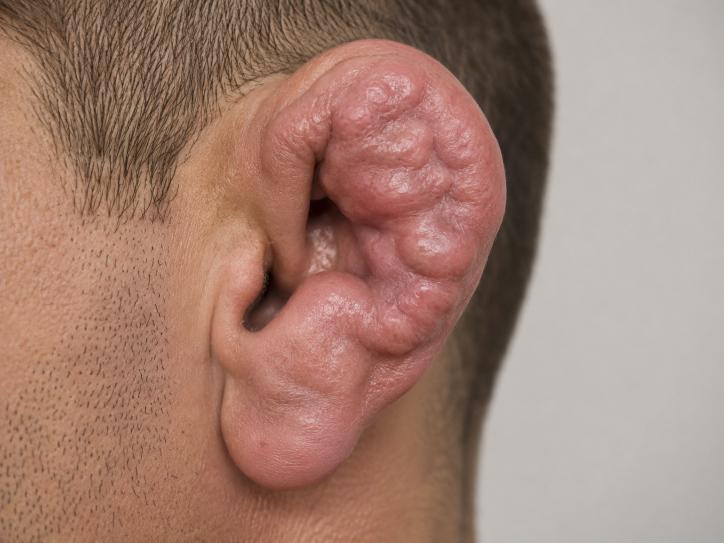
Ask any ringside doctor what they do when a fighter’s ear balloons between rounds: drain it before the damage sets. Online, that logic is now being inverted. The deformity that surgeons work to prevent has become something men are paying for, and in some cases, doing to themselves.
Cauliflower Ear: A Symbol of Manhood?
Cauliflower ear, if left untreated, can harden into a fixed lump of scarred tissue and cartilage. It can lead to serious impairment, make infections more common and harder to treat, lead to chronic pain and tenderness, and, in more serious cases, contribute to hearing loss. Once the cartilage has hardened into its deformed shape, correction usually requires reconstructive surgery, often with limited ability to restore the ear fully.
While the dangers may seem clear and not worth it, multiple DIY methods for inducing cauliflower ear are circulating on social media and drawing millions of views. From a clinical perspective, it’s a serious injury we work to prevent at every stage, not an aspiration to be popularised online.
When a patient visits our practice with acute trauma to the outer ear, it’s critical to prioritise early intervention by draining and restoring blood supply as soon as possible to limit the damage. To deliberately reproduce it and accept the lifelong consequences should be seen as deeply concerning, both medically and socially.
Reversing the trauma is not easy
Many people are surprised to learn that reconstructive surgery does not necessarily restore the ear to how it looked before the injury. Once the deformity matures, the cartilage scars and separates internally, almost like plywood coming apart, leaving surgeons to sculpt what remains into the closest possible version of a normal ear.
The goal is usually improvement rather than perfection. Depending on how severely the cartilage has been altered, patients may require more than one procedure, and even then, some degree of asymmetry, thickening, contour irregularity, or recurrence can remain. Even in successful cases, reconstruction may leave evidence of the original injury – patients can spend years trying to reconstruct tissue distorted in a matter of days. And while it might seem like a badge of honor today, fads go away quickly, and you may feel different about a permanent change years from now.
Addressing the social pressures behind dangerous trends
The medical reality is only half the story.
This sits inside a larger online ecosystem pressuring young people, especially men, to optimise their bodies at any cost. Self-induced cauliflower ear belongs to a wider group of unsafe looksmaxxing trends.
These range from mewing, which claims to reshape the jawline by pressing the tongue against the roof of the mouth, to jaw filler procedures that can cause nerve injury or chronic swelling if done badly. More extreme examples include leg-lengthening surgery, which involves surgically breaking the femur or tibia, and the growing normalisation of anabolic steroids in some gym cultures.
What worries me most are the young viewers who see only the aesthetic and not the price. They don’t see the chronic pain, infections, nerve damage, scarring, hormonal disruptions, psychological distress, or years of corrective treatment that may follow these decisions. They see a look that TikTok has translated into toughness.
Takeaway
I urge parents, coaches, and teachers to treat this as any other risky online phenomenon. This includes speaking openly with the young people in their lives about the difference between a preventable injury and an identity built around serious bodily harm, and seeking medical advice before procedures that leave lasting changes to the body.
A scar earned in a contest of skill is one thing. A scar inflicted in a bathroom for an algorithm is something else entirely – and there is no version of manhood worth that trade.
Want to know more?
“Fake dimple” clips continue to flood TikTok, Facebook, and Instagram feeds. What many online videos present as a quick enhancement may, in reality, be a medical procedure that can carry serious physical, emotional, and financial consequences if performed incorrectly. Find out more here.

![women [longevity live]](https://longevitylive.com/wp-content/uploads/2020/01/photo-of-women-walking-down-the-street-1116984-100x100.jpg)