

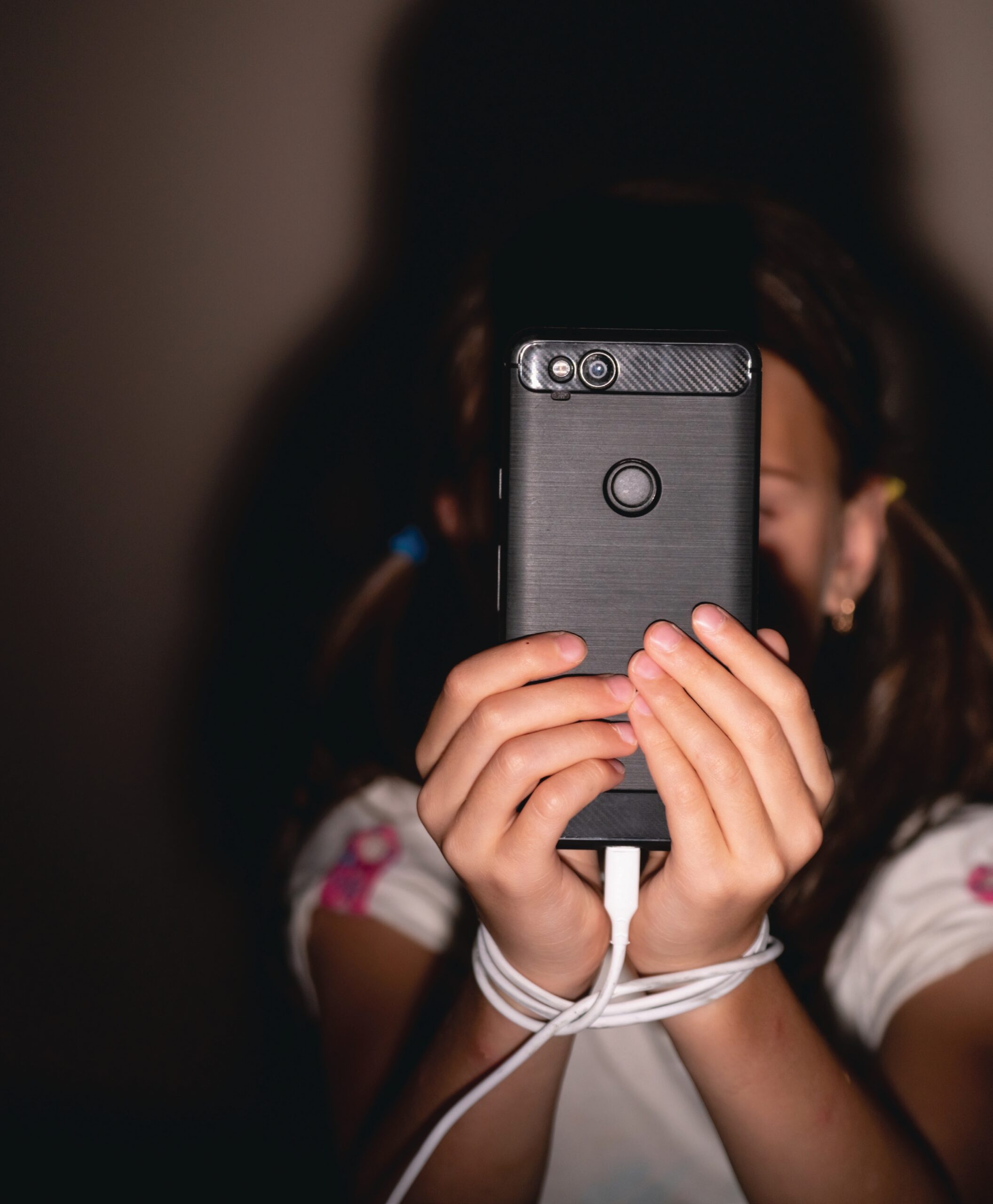
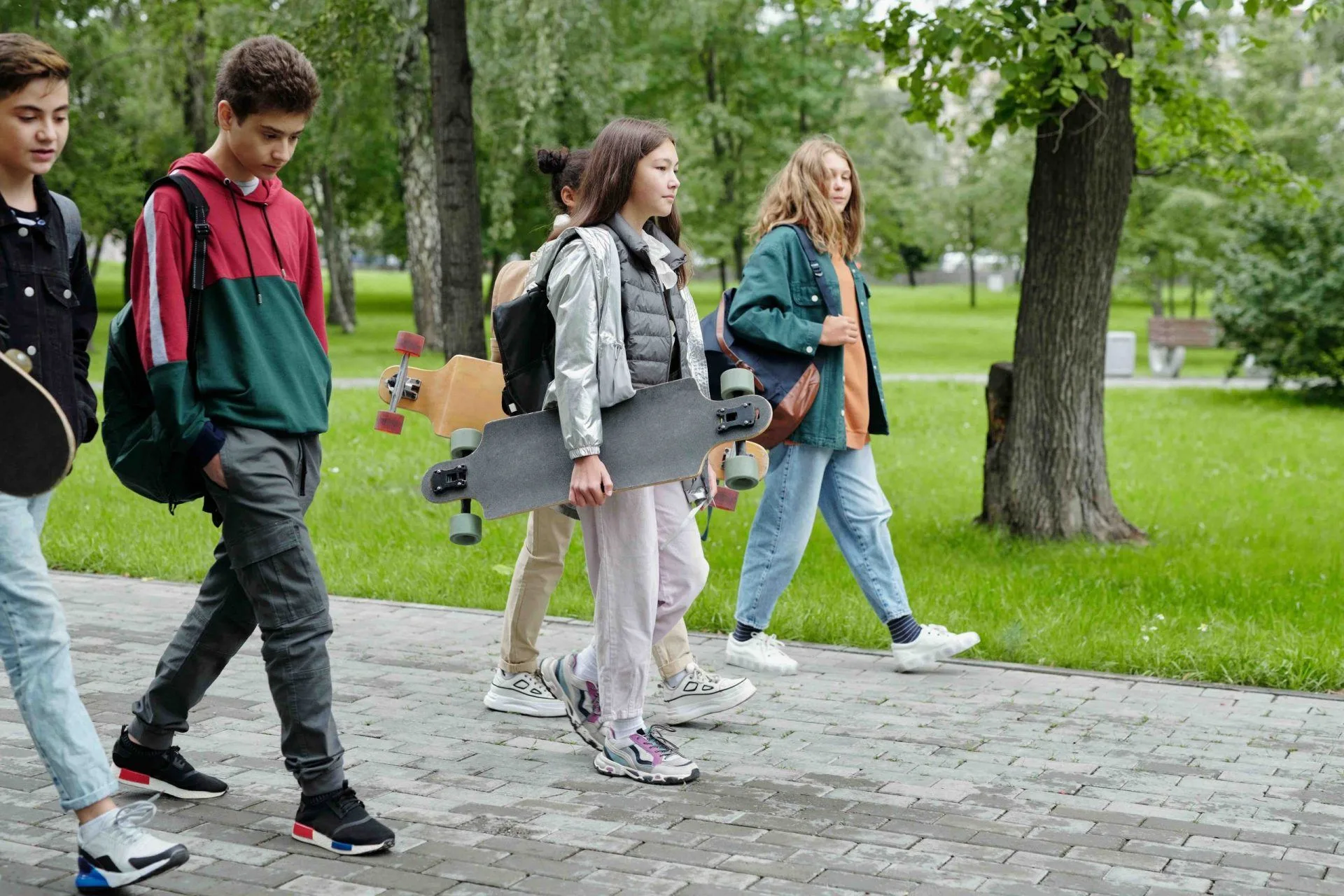
Two years ago, The New York Times published an article – which ironically went viral – on the Luddite Club of Brooklyn, New York. A group of teenage skeptics would gather in Prospect Park to enjoy nature, listen to the sounds of the wind, read Dostoevsky, Kerouac, and Vonnegut, and sketch and paint. Eschewing smartphones or social media during their free time, contrary to the activities of their peers, this was seemingly fairly radical. But it captured the public’s attention and drew awareness to the dangerous effects of social media on young people.
Much of the Luddite Club’s conversation was about how TikTok was dumbing down their generation.
The Luddite Club: Social Media’s Antithesis
Over the last two years, the Luddite Club movement has grown significantly, with offshoots at various high schools and colleges in different states in the US. They now have an uncluttered website that helps to spread the word, while one of the founding members is in the final stages of turning the club into a registered non-profit organization.
“We like to say we’re a team of former screenagers connecting young people to the communities and knowledge to conquer big tech’s addictive agendas,” says Logan Lane, one of the founders. She recently delivered a talk at a symposium examining technology’s effects on society at the Museum of Modern Art in Manhattan.
Screenagers
Speaking before a crowded auditorium, she depicted a sad picture of her life before the Luddite Club, when everything revolved around what was going on in social media.
“Like other iPad kids, I found myself, from the age of 10, longing to be famous on apps like Instagram, Snapchat, and TikTok,” she said. “My phone kept the curated lives of my peers with me wherever I went, following me to the dinner table, to the bus stop, and finally to my bed, where I fell asleep groggy and irritable, often at late hours in the night, clutching my device.”
When she turned 14, however, she had an epiphany.
“Sitting next to the Gowanus Canal in Brooklyn one afternoon, I felt the sudden urge to throw my iPhone into the water,” she told the audience. “I saw no difference between the garbage on my phone and the garbage surfacing in the polluted canal. A few months later, I powered off my phone, put it in a drawer, and I signed off social media for good. Thus began my life as a Luddite.”
“For the youth of today,” she said in closing, “the developmental experience has been polluted; it’s been cheapened. ‘Who am I?’ becomes ‘How do I appear?’”
A mental-health crisis
“I would rather my kids smoke than be on social media,” says Dr. Meg Meeker, an American pediatrician and author. She believes parents need to rethink the social media habits their family endorses.
“If you smoke from age 13-18 and you stop, your lungs will regenerate and you’ll be fine. If you’re on social media from age 13-18 a lot and you’re addicted to it, and [then] you stop, it has changed your brain. We know there’s brain mapping going on during the teen years, and what kids take in visually and emotionally has a profound effect on brain development. By the time they’re 19, a lot of that is set in place, and it’s not going to change.”
Recently, former U.S. Surgeon General Vivek Murthy made a recommendation that social-media platforms should carry warning labels to inform users that they’re “associated with significant mental-health harms for adolescents”.
In an opinion piece for The New York Times, he wrote that the mental-health crisis among young people is an emergency, and social media has emerged as an essential contributor.
“One of the worst things for a parent is to know your children are in danger, yet be unable to do anything about it. That is how parents tell me they feel when it comes to social media – helpless and alone in the face of toxic content and hidden harms. I think about Lori, a woman from Colorado, who fought back tears as she told me about her teenage daughter, who took her life after being bullied on social media. Lori was diligent, monitoring her daughter’s accounts and phone daily, but harm still found her child.”
Teenagers spend more than three hours a day
“There is no seatbelt for parents to click into, no helmet to snap into place, no assurance that trusted experts have investigated and ensured that these platforms are safe for our kids. There are just parents and their children trying to figure it out on their own, pitted against some of the best product engineers and most well-resourced companies in the world.”
Research shows that adolescents who spend more than three hours a day on social media face double the risk of anxiety and depression symptoms. The average daily use in this age group in the US is nearly five hours, and this number keeps growing. In addition, almost half of all adolescents say social media makes them feel worse about their bodies.
 Marketing and advertising
If you’re a smartphone owner and on social media, you may have noticed a phenomenon where people talk about a specific brand or something you’re considering buying. The next moment, you’ll see an ad for that exact item on social media. That’s because, as a user, your attention is the currency, and your phone’s settings are designed to zone in on whatever your next purchase may be.
Social psychologist and author of The Anxious Generation: How the Great Rewiring of Childhood is Causing an Epidemic of Mental Illness, Jonathan Haidt, explains that these companies can track exactly what’s happening in their users’ phones and use this information to their advantage.
“For example, when a girl deletes multiple selfies on her phone, that’s the moment they hit her with an advertisement for beauty products. Somebody figured out that if [a girl] is deleting multiple selfies, she must not be satisfied with how she looks. So, [the thinking goes], let’s give her beauty products. They’re actively playing on girls’ insecurities and making them feel like they have to spend their lives trying to make themselves more beautiful, and spend their money on more makeup products.”
Haidt added, “All over the world, family life has turned into a fight over screen time. We’re all fed up; we want to do something about it.”
Regulations and support
A study by UNICEF South Africa and the South African Department of Social Development produced some shocking findings around the risky online behavior of South African children:
- 70% of children surveyed use the Internet without parental consent;
- 25% confirmed that they have added people they’ve never met face-to-face to their friends or contacts list;
- 18% have sent a photo or video of themselves to a person they’ve never met face-to-face; and
- 67% of child participants who’d seen sexual images were exposed to them on an online device.
In early 2025, Denmark prepared to ban mobile phones entirely in both schools and after-school programs, following a recommendation from a government commission. Other European governments are similarly trying to impose tighter regulations.
In 2018, France had already banned primary and secondary pupils from using phones during school hours, and was trialling a “digital pause” for children up to the age of 15. Last year, President Emmanuel Macron announced a social media access ban for children under the age of 15 within “a few months”, if it doesn’t happen first at the European level.
In Norway, the government recently announced a minimum age limit on social media of 15.
What can parents do to protect their children?
- Set a healthy example. If you’re on your phone constantly, why should your children do anything different?
- Decide on an appropriate age for your child to have a smartphone or their first social-media account. Most experts agree that children under the age of 16 should have neither.
- Set screentime limits as a family. It’s also helpful to check a device’s screen time activity breakdown, as this provides insight into where the most time is spent and when.
- Use parental-control software. This will help you to control, filter, and monitor content, block specific websites, track location, and manage devices.
GRAB A COPY OF OUR LATEST LONGEVITY
 This article, and many others, can be found in our latest “Back to the Earth” edition.
Drawing on expert insights from Dr. Zach Bush, Oscar Chalupsky, Dr. Ela Manga, Dr. Maureen Allem, Dr. Anushka Reddy, Dr. Des Fernandes, Dr. Craige Golding, and many more, this issue explores a range of topics, including food, clean beauty, sustainable living, fashion, travel, and other mindful choices.
While available nationally in Southern Africa at your nearest Woolworths, Exclusive Books, and selectively at Superspar, Pick’n Pay, Airport lounges, and your local garage shop, you can also buy a digital copy at Zinio.com.

![women [longevity live]](https://longevitylive.com/wp-content/uploads/2020/01/photo-of-women-walking-down-the-street-1116984-100x100.jpg)