


Our food system is slick on the outside, but hollow at the core. Shelf-stable, chemically enhanced, and wrapped in plastic, it’s nutrient-poor, wasteful, and unsustainable. It’s not that we long for simpler times; it’s about willful ignorance. The facts are known – they’re just being outright ignored.
Regenerative Farming Will Save The Food System and The Planet
Chemical farming is a dead-end
Pesticides, synthetic fertilizers, and monocropping are baked into industrial agriculture. They’re efficient, sure, but that efficiency comes at a cost: depleted soil, polluted water, and long-term health risks that don’t show up on the label. We’ve normalized chemicals in food the way we’ve normalized smog in the air. And the fallout? Weak immune systems, endocrine disruption, and chronic illness. It’s not alarmism – it’s data.
70% of pesticides are indeed excreted from the body through feces, but the remaining 30% remain in the body, causing long-term harm.
Glyphosate, used on over 80% of our crops, is pervasive in our food system. These chemicals are slowly accumulating in our bodies, causing a range of problems that become evident only over time, and we don’t automatically make the connection.
We don’t need to reinvent farming; we just need to do it differently. Regenerative agriculture isn’t a trend; it’s a practical response to a system that’s eating itself. Build soil health. Ditch synthetic inputs. Protect water. Feed people real food. That’s it.
Farmers are building a different kind of value
Just like large-scale farmers, small farmers have to make it work. They’re managing margins, risks, and tough markets. But some are choosing a different lane, one where the product is clean, the inputs are lower, and customers are asking for what they’re growing. It’s a business; it’s just built differently. And when we support those choices, we back soil, health, and food systems that can hold up over time.
Packaging is the mess we keep ignoring
We obsess over what’s in our food, but ignore what it’s wrapped in. Single-use plastics dominate. Most compostables don’t break down unless they hit perfect conditions, which most waste systems can’t deliver, so it ends up in landfills anyway. It’s overkill. And we’re footing the bill.
We waste a third of our food. That’s not a stat; that’s a failure
Between supermarkets tossing unsold stock and households binning what doesn’t get eaten in time, we’re wasting around 35% of our food, gone because of poor planning, bad distribution, and a warped idea of what’s “fresh”. Meanwhile, people are hungry, and land is overworked to produce more.
It’s all one system
Soil. Food. Health. Economy. Climate. It’s not five different issues; it’s one ecosystem. And right now, we’re draining it faster than we’re replenishing it. Regenerative practices don’t just “help the planet”; they make sense – for business, for food security, for basic survival.
The takeaway
We have to look the system in the eye and say: it’s broken, but there’s something that can be done about it. We need to take responsibility and take very real steps to bring clean food to market.
Who is the author?

Gary Jackson is the founder and CEO of Jackson’s Real Food Market, a brand that connects independent organic small-scale farmers and producers directly to health-conscious consumers.
His vision is driven by a personal ethos of leaving behind a better world for future generations.
About the Longevity annual
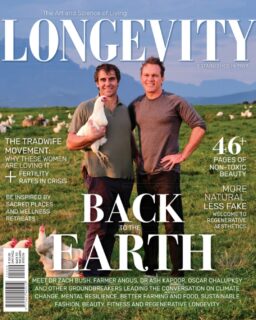 This article was featured in the 2025/6 annual print and digital edition, alongside other incredible articles and features. Our “Back to Earth” issue is Longevity’s must-have edition for anyone ready to reflect on what we put in and on our bodies.
Buy a digital copy at Zinio.com

![women [longevity live]](https://longevitylive.com/wp-content/uploads/2020/01/photo-of-women-walking-down-the-street-1116984-100x100.jpg)