

As the English mathematician and philosopher A.N. Whitehead remarked, “Civilization advances by extending the number of important operations that we can perform without thinking about them.” In our themed digital magazine edition,Living Beyond 100 we looked at the concept of Living Beyond 100. In this article we explore the race to achieve longevity escape velocity.
Longevity Escape Velocity
If we were to expand this concept to our lifespan, and how we’ve been extending it over the last few decades, it’s safe to say some considerable leaps have been made for our civilization. A 2022 estimate by the United Nations (UN) puts the number of centenarians across the world at around 593,000, and projects there will be 3.7 million centenarians living by 2050.
At the same time, longevity has succeeded in developing a science of its own, albeit an unconventional one at times. Some even believe we’re on the brink of ending aging entirely.
One of the notions making headlines in this regard is longevity escape velocity (LEV). It asserts that, as we improve our understanding of how to keep rejuvenating our cells, we’ll succeed at improving the quality of our life at a rate faster than we’re aging, thus staying ahead of the curve.
Ahead of the aging curve
In his book Ending Aging, Cambridge researcher Aubrey de Grey explains that, with the improvement of treatment strategies and technologies, life expectancy at each age increases slightly every year. Currently, over a year’s worth of research is needed to manage each additional year of expected life. When this ratio is reversed, we achieve longevity escape velocity, and life expectancy increases faster than one year per year of research.
Since the 1970s, there have been many in scientific circles developing and contributing to this ideal. They say that, given enough ambition, money, and assistance from AI, humanity will soon come to the point where aging will be entirely optional. Given the rapid advances in aging science, they’re becoming more hopeful each year.
Harvard geneticist George Church discussed the possibility that we could reach this point in our lifetime. Sourav Sinha, head of strategy at the Longevity Vision Fund, agreed with this concept during a recent panel discussion on age-related diseases, where it was suggested that, under the right conditions, LEV could be here in a couple of decades.
The Dublin Longevity Declaration
At the end of 2023, many leading researchers in the field of anti-aging science signed on to what is being called the Dublin Longevity Declaration. The declaration called on governments, funding agencies, and the public to accelerate their support for the “promising interventional ideas that exist today to fight age-related suffering and disease, and for the generation and exploration of more such ideas”.
The declaration says that trying to improve aging the old-school way – by going after one disease at a time – is “overly pragmatic” and takes too much time.
There is growing consensus among longevity scientists that aging isn’t inevitable, and that early scientific results are suggesting that an individual’s biological age is modifiable.
“Everyone knows aging is bad, everyone says it’s bad, but nobody does anything about it,” De Grey said at the time. “Like bad weather – people are stuck in the assumption that nothing can be done, even if we try. We wanted to put that assumption to rest.”
The race to live forever is no longer restricted to the esteemed laboratories of the world’s leading universities and research institutions.
Silicon Valley weighs in
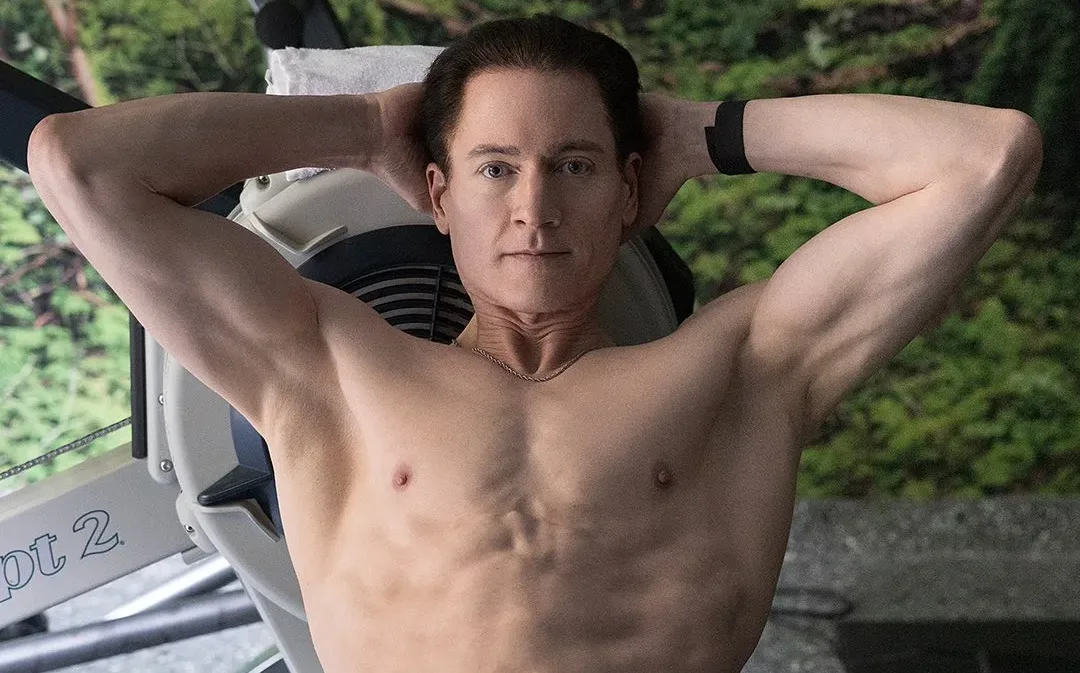
Silicon Valley billionaires have started turning their sights to the promise of eternal youth. And while there’s no shortage of Silicon Valley millionaires in the race to live forever, Bryan Johnson has arguably led the charge for the last few years. Since 2021, the biohacker and tech executive has been spending $2 million every year to closely monitor his health and measure his body processes to the finest detail – all for reversing his aging process through a program he named Project Blueprint.
“Many people believe that anti-aging, the fountain-of-youth radical type, is decades, if not centuries, away (if ever), and will arrive in the form of a magic pill,” he said in a Medium article.
“Blueprint is a stock ticker of sorts that will reveal, through the tracking of my biological versus chronological age, the status of today’s anti-aging science (even if an N=1 for now). With my world-class team of doctors, researchers, and clinicians, if I can reverse my measured biological age by 1.01 years for every one year that passes, that is evidence that we have reached the first stage of aging escape velocity, where life expectancy increases faster than passed time.”
Establishing a blueprint
“Each month, my team and I publicly journal our efforts, similar to how explorers Lewis & Clark and Ernest Shackleton chronicled their adventures. Thus far, we have produced some exciting results. For example, we increased my HRV to 54ms, up from 37ms (Whoop 14-day average RMSSD deep sleep 5 min), in five months. This is equivalent to reducing the sympathetic nervous system vagal nerve tone biomarker of biological age from 54 to 39.6. We also reversed oral age (pocket depth) by 17 years in 120 days (see August notes), without surgical intervention.”
“For every measurement and intervention process, we identified literature that establishes an age reference range. We then identified gold-standard randomized controlled trial (RCT) scientific evidence to reverse the age marker, and began trialing interventions. We partner with local practitioners, custom-compounding pharmacies, and other partners, and iterate on our novel approaches. In September, my oral age reversal progress plateaued. We are now reassessing this next phase of age reversal gains.”
Bryan Johnson’s Routine
Johnson believes his strict routine has already borne fruit. His website states that he, at the legal age of 4, already had the maximum heart rate of a 37-year-old and the lung capacity of an 18-year-old.
His routine updates regularly, so this article may not necessarily reflect the most recent adjustments to the Blueprint program.
In addition to eating a rotation of the same three vegan meals (mostly a variation of nuts, seeds, berries, lentils, vegetables, and roots), he spends an hour every day exercising and swallows around 111 pills daily. He estimates that he spends about $44.91 a day on food and $11.24 a day on supplements.
He also takes his skincare seriously, applying around seven different creams daily, containing vitamins C, E, B3, ferulic acid, and azelaic acid, as well as a 0.% tretinoin topical cream. Notably, he cleanses with CeraVe’s Acne Control Cleanser and uses its SPF30 moisturizer. In addition, he performs weekly acid peel, microneedling, laser therapy, micro-Botox injections for pore shrinkage, and collagen stimulation injections. Fat injections (from a donor, because he doesn’t have sufficient body fat to use his own) are also administered regularly.
In 2024, after looking at DNA methylation tests, Johnson claimed he has successfully reversed his epigenetic age by 5.1 years.
Unsurprisingly, he has also developed a lifestyle business from this longevity mission. On his Blueprint website, you can buy supplements, prepackaged meals, extra-virgin olive oil, nut butter, and smoothie powders.
Bryan Johnson’s approach is single minded
In an interview with The New York Times in 2024, Johnson said he didn’t care what present-day people thought of him. “I’m more interested in what people of the 25th century will think of me,” he said. “The majority of opinions now represent the past.”
He asks: What if you could maintain near-perfect health without spending your precious energy thinking about or managing it?
“While this idea might sound scary at first, this leveling up has been happening for a very long time. Hand-stitch to the loom, wagons/horses to the combustion engine, the abacus to computers. These things normalize over time, and then we can’t imagine life without them. While that level of capability is likely a ways off, it’s not so far off that we can’t aspire towards it and make it a top priority.”
SuperAgers living longer, but not better
The fact is, despite all the attention around the concept of longevity, immortality, or simply just living beyond 100, it’s controversial, even among scientists.
If you throw enough money at the problem of aging
According to gerontologist Thomas Perls, who has been involved in one of the world’s most extensive studies of centenarians, the idea doesn’t hold water. Speaking to Insider, he said he supports investors donating money towards fighting age-related issues, such as Alzheimer’s, finding cures, or discovering new ways to delay diseases. But, considering we’ve yet to understand how to allow our elderly to live in reliably good health, he considers pursuing the end of aging a waste of time and energy.
“These billionaires, of course, they’ve seen: if you throw enough money at a particular problem, you solve it,” Perls said. Instead, he advises spending the time gaining a better understanding of why SuperAgers continue to outlive others with good cognitive and physical health.
“We want to do what we can to delay, or even avoid, aging-related diseases that may increase life expectancy or lifespan a little for people. But in no way do I think that’s going to lead to the notion of living forever.”
Editor’s note
This article first appeared in our magazine edition titled Living Beyond 100. The field of longevity is advancing rapidly, hence this article may not necessarily reflect today’s most up to date information.
GRAB OUR LATEST LONGEVITY EDITION
 While the aforementioned article featured in the previous issue of Longevity, titled Living Beyond 100, our latest issue includes even more incredible articles and features. Our “Back to Earth” issue is Longevity’s must-have edition for anyone ready to reflect on what we put in and on our bodies.
From expert insights with Dr. Zach Bush and Dr. Ash Kapoor to Oscar Chalupsky, Dr. Ela Manga, Dr. Maureen Allem, Dr. Anushka Reddy, Dr Des Fernandes, Dr. Craige Golding, and many more, this issue explores everything from food, clean beauty, sustainable living, fashion, travel, and other mindful choices.
While available nationally in Southern Africa at your nearest Woolworths, Exclusive Books, and selectively at Superspar, Pick’n Pay, Airport lounges, and your local garage shop, you can also buy a digital copy at Zinio.com

![women [longevity live]](https://longevitylive.com/wp-content/uploads/2020/01/photo-of-women-walking-down-the-street-1116984-100x100.jpg)