

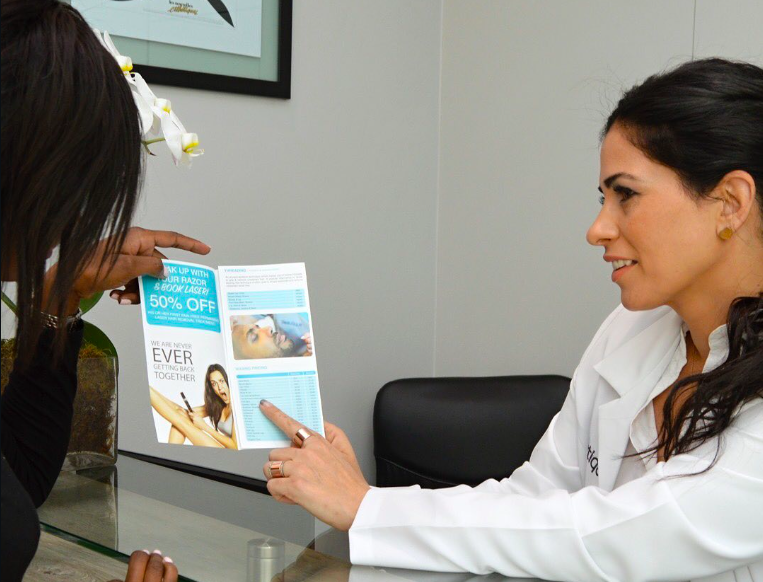
Tzvia Hermann, founder of Laser Beautique, joined Longevity Live’s weekly Wednesday Wellness session to discuss the origins of her business, the science behind laser hair removal, and the safety issues she says still plague the industry.
Hermann has spent close to two decades disrupting the beauty and aesthetics industry. In 2009, she made history by bringing Africa its first pain-free, permanent laser hair removal device via Laser Beautique — one designed to work safely across all skin tones, including darker skin, which older laser technologies had long struggled to treat without burning or scarring.
She later introduced further innovations, including the Apilus electrolysis system, which addressed light, blonde, red, grey and white hair types that standard lasers can’t target. Today, Laser Beautique has grown into an award-winning, 14-branch franchise across South Africa, with newly opened doors in Botswana and inquiries arriving from as far afield as Kenya.
Hermann’s Path Into the Beauty Industry
“I was raised in a house full of women, I’ve got two sisters and my mom. And my mom is a beautician. My sister’s a beautician. So I grew up in my mom’s beauty salon.”
Blessed with strong Mediterranean genes and gorgeous hair to match, Hermann was by her own account,
“one of those kids that was teased for having a little mustache.”
In 2008, while perched on her mother’s couch watching an American medical talk show, a panel of doctors introduced what they called the first pain-free permanent laser hair removal device. Hermann googled the manufacturer of this device that same night. Soon after, she flew overseas to test the device out herself.
She was gobsmacked when it actually worked. Flying home, Hermann wrote a five-year business plan intended for a bank loan. When she showed it to her boyfriend, now husband, he offered to fund it and the two became 50-50 partners.
“The rest is really history”
The Industry’s Open Secret: Fly-By-Night Clinics
Much of the conversation turned to safety — a subject close to Longevity Live’s own history of readers reporting burns from unqualified beauty salons. Hermann didn’t mince words about why this keeps happening: the laser and aesthetics industry remains largely unregulated.
“Technology advances at such an incredible pace that the law can’t sort of keep up with it. Anyone can buy a laser and anyone can just get trained on performing laser.”
As a result, a two-tier industry is formed. Reputable operators who use approved and modern devices, with trained therapists, and “fly-by-night” operations who chase quick profits with outdated equipment. Hermann explained that older-generation lasers are particularly dangerous for darker skin types. The older technology cannot safely distinguish between pigment in the skin and pigment in the hair.
Her advice to consumers is blunt: buyer beware. Check that the devices which will be used on your body are approved and that the therapists are properly trained.
Laser is not IPL: Tzvia Hermann explains the difference
There’s one message that Tzvia Hermann would like to drill into the public. Laser hair removal treatment and IPL (Intense Pulsed Light) are not the same thing, and clinics that blur the line are doing their clients a disservice.
Laser hair removal uses a filtered and targeted beam that follows melanin down into the hair follicle. It heats up the tiny capillaries feeding it until they cauterize shut. In contrast, IPL emits an unfiltered, broad-spectrum light that treats the surrounding skin as much as it does the hair. It is a genuinely useful technology for skin rejuvenation but according to Hermann, is a poor tool for hair removal. Clinics that push underpowered IPL machines while marketing them as a “laser” often compensate by cranking up the heat. This shortcut can lead to clients experiencing skin damage and burns.
With regards to the booming market for at-home IPL devices, Hermann states,
“I don’t understand it. It’s such a waste of money… it lands up just collecting dust at home.”
How Modern Laser Technology Evolved
According to Hermann, modern laser technology differs from the treatment that many people remember. Older devices used an abrasive “zap and move” technique, blasting each hair follicle with a single burst of high heat. Newer technology instead delivers a rapid series of much gentler pulses that gradually raise the skin’s temperature, much like easing into a bath that starts lukewarm and gradually warms. Capillaries melt and shut without any added discomfort or pain.
However, clients still need patience. Body hair cycles through growth phases (anagen, catagen, telogen and exogen), and laser treatment only works on hair that remains actively attached to its follicle in the anagen phase.
Clients typically need eight to twelve sessions, spaced a few weeks apart initially and lengthening over time. Dormant hair follicles can also “wake up” years later — often when hormonal shifts like menopause trigger them — meaning clients may need occasional touch-ups even after completing an initial course of treatment.
A limit that Hermann makes clear about laser hair removal treatment is that it cannot treat light, grey, red, white or blonde hair, because the technology relies on pigment and it simply isn’t there to grab onto. For those cases, she pointed to electrolysis as the only real option — including the Apilus electrolysis system, a computerized 27.12 MHz high-frequency device made by Canadian manufacturer Dectro International.
One Franchise at a Time
Hair removal is one of the most common aesthetic treatment in South Africa. Cutting across gender, age, and community lines, from teenagers dealing with unwanted facial hair to competitive swimmers and cyclists chasing marginal performance gains. That scale of demand is driving Laser Beautique’s expansion strategy, built around an owner-run franchise model rather than a corporate rollout.
“It gives women the opportunity to open up their own business in an environment where there is so much support,”
The model is a turnkey solution, covering everything from marketing and websites to point-of-sale systems. She positioned it as a chance for women to be,
“in business, not by herself, but for herself.”
With franchises already open across South Africa and its first international branch newly launched in Botswana, Hermann says the company is fielding franchise inquiries from other African markets, including Kenya, and will expand wherever the demand is.
Hermann also flagged a growing environmental angle to the laser hair removal conversation: because clinics ask clients to stop waxing, plucking and threading during their treatment course (these methods remove the very follicle the laser needs to target), many end up shaving instead. In response, Laser Beautique launched what it describes as Africa’s first biodegradable razor — called BeauRaze, made from 100% biodegradable wheat straw and retailing at around R25 a pack — sold to clients as an alternative to single-use plastic razors, which, she noted, can take roughly 500 years to break down.
The Secret to Tzvia Hermann’s Glow
What about Hermann’s own longevity protocols?
Hermann’s personal approach to longevity circles back to where her career began: skincare.
“Definitely looking after skin is a biggie, especially in my 40s,”
She has since launched her own science-backed skincare line. It is in many ways an extension of the philosophy that built her laser treatment business. Every product is developed with client education in mind, mirroring the flip-chart consultations her clinics use to walk laser clients through the science before they commit to treatment.
“If you’re going to be investing your hard-earned money in products, make sure that you know what you’re investing in and what’s in the bottle, and why.”
View this post on Instagram

![women [longevity live]](https://longevitylive.com/wp-content/uploads/2020/01/photo-of-women-walking-down-the-street-1116984-100x100.jpg)